 Guide On Map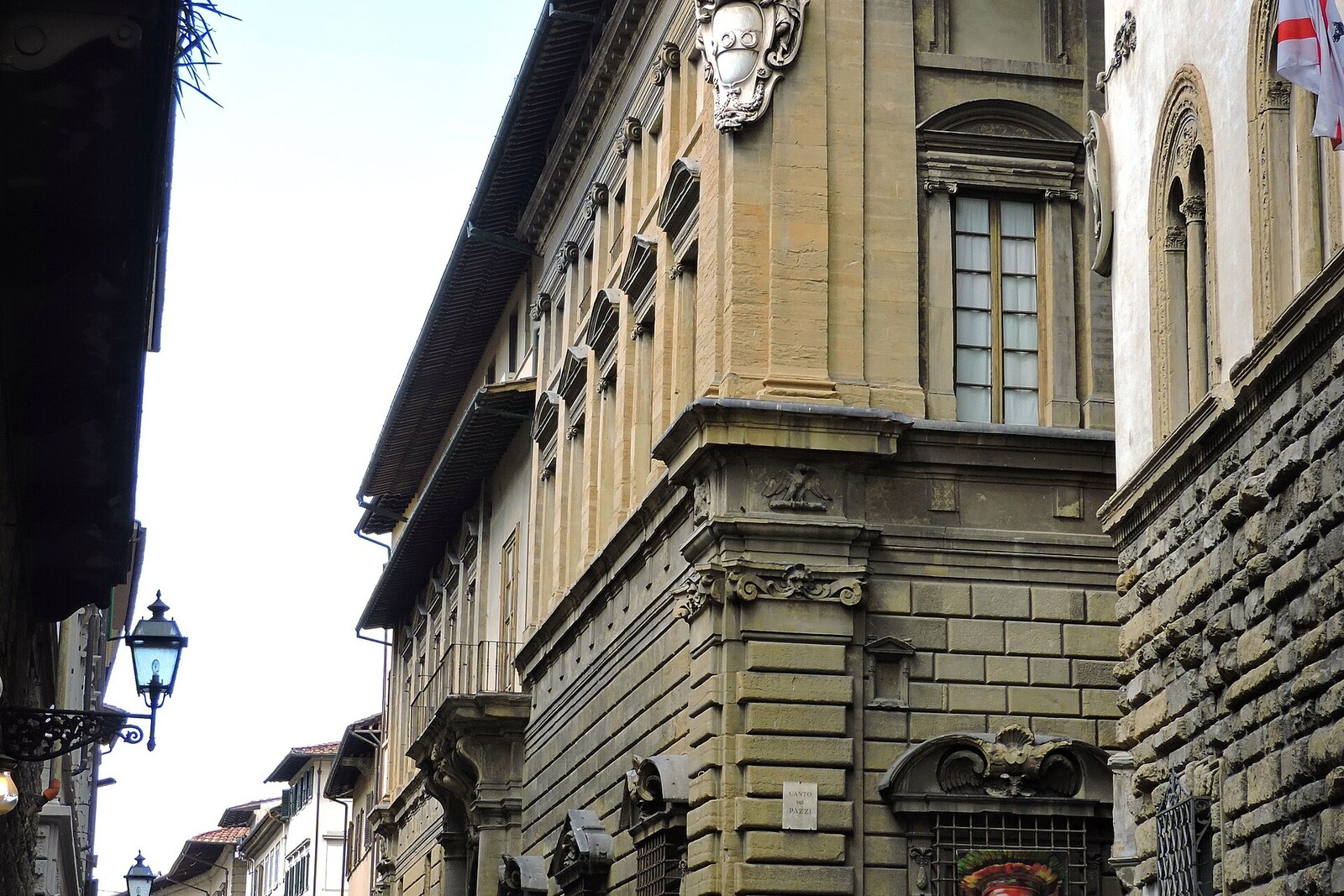
Look around first
What to notice
- Inscription above the entrance
- Coats of arms above the entrance
- Fragments of frescoes in the former hall
The story of the place
At the intersection with Via dei Pandolfini stands an unassuming house with an inscription and coats of arms above the entrance. This was the residence from which Via del Proconsolo took its name. Proconsul is the name of an office, not a person: from thirteen seventeen onward, this was the title given to the head of Florence’s Guild of Judges and Notaries. He presided over its court and held first place among the leaders of all the city’s guilds.
For a notary, this house determined the question of earning a living. Notaries drew up wills, contracts, inventories of property, and other documents on which inheritance, debts, and ownership of houses depended. A candidate underwent a preliminary examination before six members of a commission, then took two further public examinations. The guild admitted him to the profession, heard accusations of forgery and extortion, and judged disputes among its members.
The statute of thirteen forty-four required the proconsul and consuls to maintain a special court near the Palace of the Podestà—today’s Bargello. They were therefore based precisely here. Just a few years later, documents mention the Palazzo del Proconsolo, with a meeting hall on the first floor. There, candidates answered examiners, notaries litigated against one another, and consuls delivered decisions.
One member of the guild was Coluccio Salutati, a notary who earned his living by drawing up documents and later became chancellor of the Florentine Republic. Even while heading the city chancellery, he did not leave the professional association: in fourteen oh two, he himself held the office of proconsul, and later sat here as a consul.
After Salutati’s death in fourteen oh six, his colleagues decided to leave his likeness in the courtroom. They had already sent a delegation and a large banner bearing the guild’s emblem to the funeral, but they did not stop there. In August, the consuls commissioned the artist Ambrogio di Baldese to paint two portraits—of Salutati and the ancient poet Claudian. He was paid twenty-four gold florins, one lira, and four soldi for the work and the blue paint. The notary Domenico Silvestri, a friend of the deceased chancellor and one of the consuls, composed the inscriptions for the figures.
That is how Salutati came to appear on the wall beside Dante, Petrarch, Boccaccio, and Zanobi da Strada, who had already been painted here. The judges and notaries placed the poets in their working hall because they themselves lived by the written word: they checked other people’s wording, certified it, and bore responsibility for the consequences of every entry. Salutati entered this gallery at once as a man of letters and as their former proconsul.
The guild was abolished in seventeen seventy-seven, the Palazzo del Proconsolo was remodeled, and the paintings disappeared beneath later decoration. In eighteen seventy-eight, the new owner, the notary Costantino Puccianti, installed a commemorative inscription and coats of arms above the entrance; four years later, traces of the old frescoes were discovered inside. Fragments of the cycle survive in the former meeting hall. The inscription on the façade identifies the Palazzo del Proconsolo, while the street sign preserves the office that has no longer existed for more than two centuries.
Useful on site
Accessible around the clock; shops and workshops usually open from 10 a.m. until evening.
Checked: June 17, 2026. Check the official source before visiting.Plan primarily for viewing from outside: do not assume that palaces are freely accessible. Stop where you will not block the narrow sidewalk or entrances.