 Guide On Map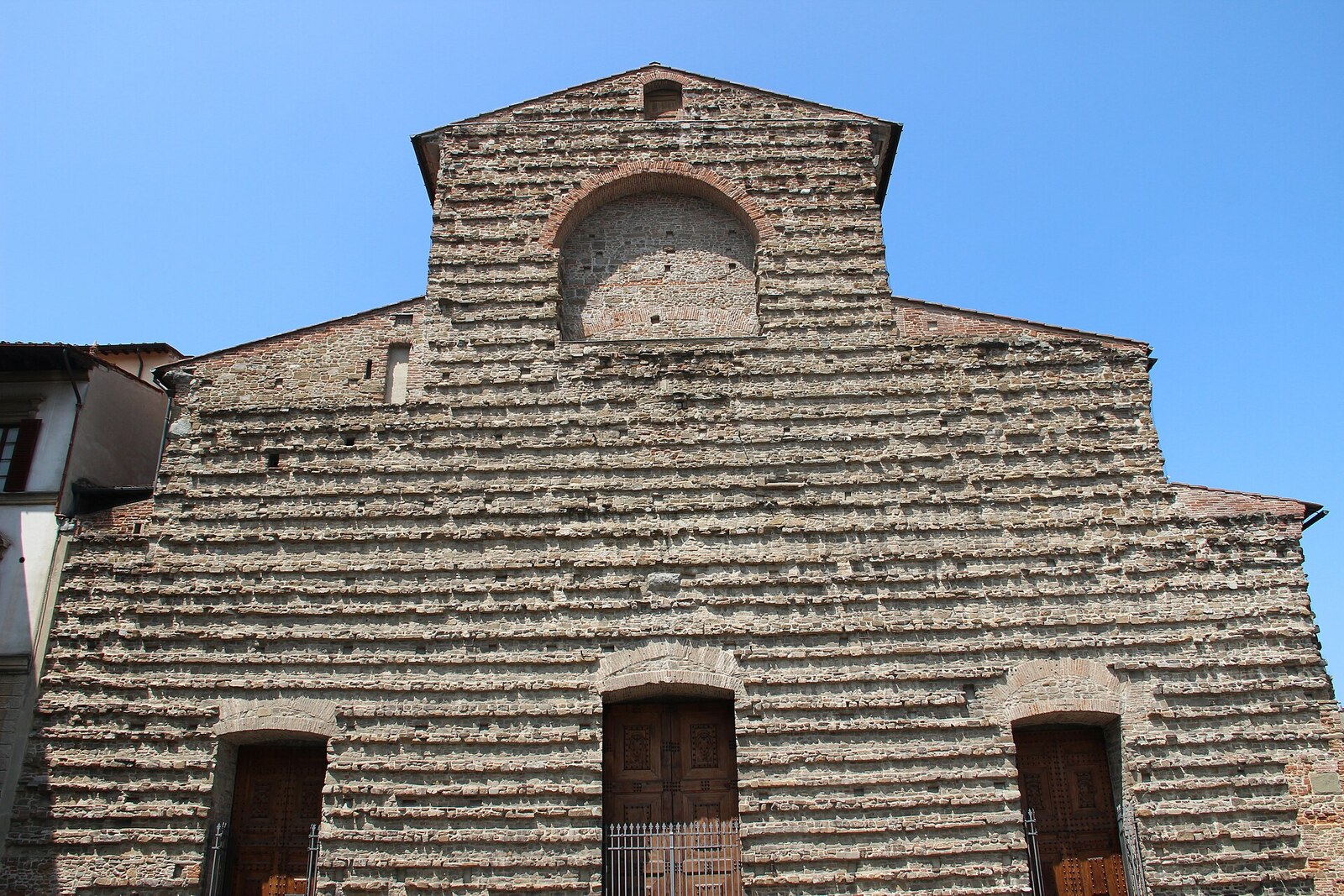
Look around first
What to notice
- Unfinished stone facade
- Old Sacristy
- Marble table above the sarcophagus
- Tomb slab before the main altar
The story of the place
The unfinished stone facade belongs to an active basilica. San Lorenzo means the church of Saint Lawrence—a Roman deacon executed during the persecution of Christians in the third century. The first church on this site, dedicated to him, was consecrated as early as three hundred ninety-three. The Medici came here a thousand years later.
In the early fifteenth century, San Lorenzo was the parish church of the neighborhood where the family lived. Giovanni di Bicci de' Medici, founder of the family bank, made his fortune in banking and wanted to dispose of his money with his own death in mind. According to the beliefs of the time, the dead faced purgatory, and Masses and prayers from the living could shorten that ordeal.
In fourteen nineteen, Giovanni commissioned Filippo Brunelleschi to build two chapels and a new sacristy at San Lorenzo—a room where priests kept relics, prepared for services, and put on vestments. The place was chosen precisely. Clergy constantly passed through the sacristy on their way to the altar, giving them repeated reason to remember the deceased person buried nearby. Giovanni wanted care for his soul built into the church’s daily routine.
Before his death, he asked those close to him to pray for the safe journey of his immortal soul. In fourteen twenty-nine, the banker was buried here with his wife, Piccarda Bueri. The canons carried out the prescribed commemoration: records report services for Giovanni even several years after his burial.
His son, Cosimo de' Medici, continued what Giovanni had begun. In fourteen forty-two, he took on the cost of rebuilding the entire basilica, and after his death he was buried before the main altar, at the crossing of the main nave and transept. The city authorities granted him the posthumous title Father of the Fatherland and ordered those words placed on his tombstone. Later generations of the Medici baptized their children here, married, held funerals, and buried relatives around the church.
In the Old Sacristy, the shared sarcophagus of Giovanni and Piccarda still stands beneath a large marble table on which priestly vestments were laid out. Cosimo’s slab lies in the floor before the main altar. The family tombs occupied two places that clergy passed during a service: the sacristy, where they prepared for it, and the altar, where they conducted it.
Useful on site
Mon–Sat 10:00–17:30; last entry 16:30. Sunday – services; tourist entrance closed. Closed 1 January, 6 January, and 10 August.
Checked: June 17, 2026. Check the official source before visiting.This is an active church: speak quietly, take services into account, and follow the dress and photography rules. The unfinished facade is clearly visible from outside, but the tombs and ambons are inside only.