 Guide On Map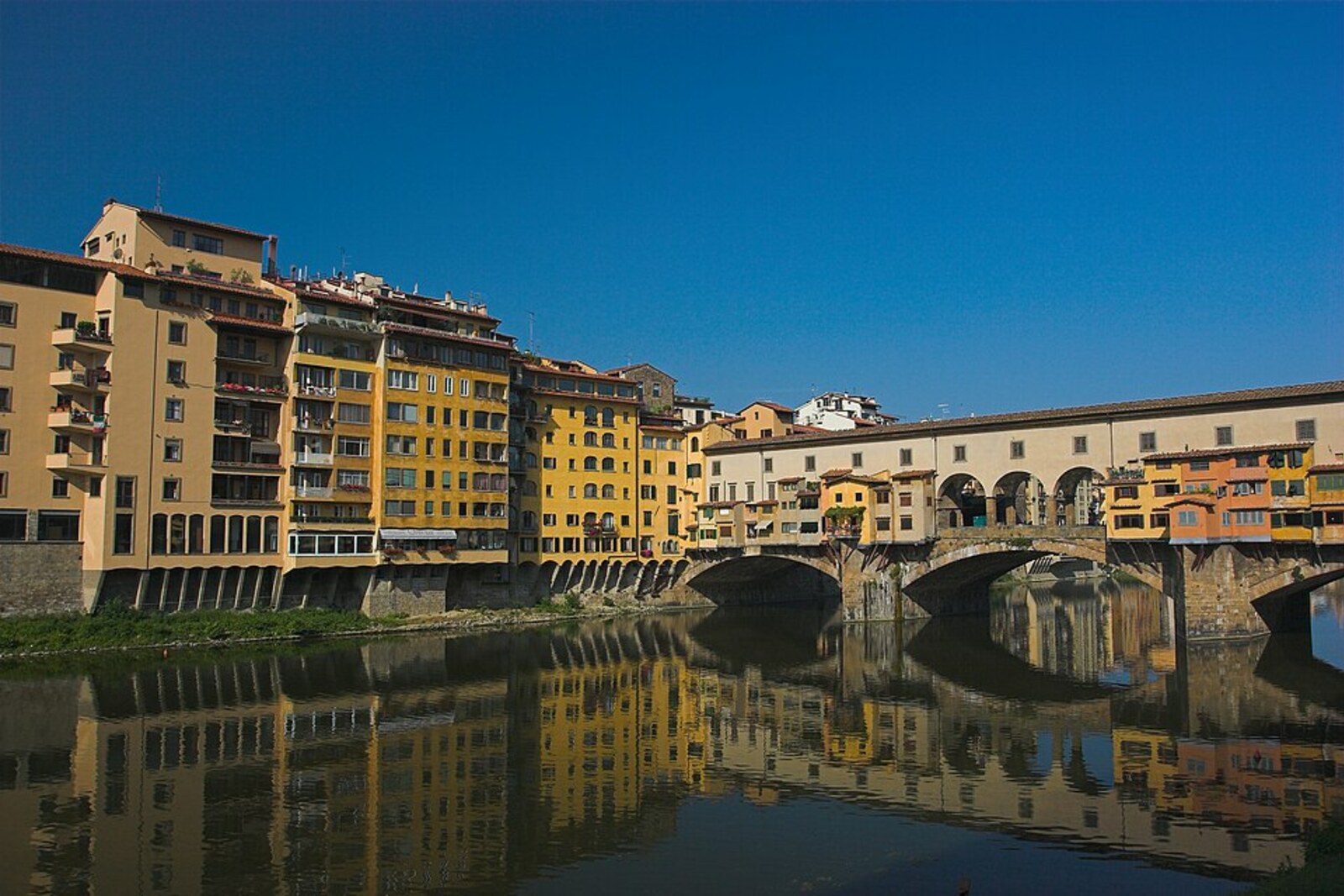
Look around first
What to notice
- Jewelry shops
- The corridor above the bridge
- Folding display-window panels
- Stone arches
The story of the place
On September twenty-fifth, fifteen ninety-three, Grand Duke Ferdinand I de' Medici ordered the merchants of Ponte Vecchio to vacate their shops by the following May. The premises were to be handed over to jewelers, goldsmiths, and silversmiths. That is how today's row of jewelry began—with an eviction.
Before that, meat, grain, shoes, and everyday small goods were sold on the bridge. After the flood of thirteen thirty-three, the Florentine Commune rebuilt the crossing and set up forty-four shops along its sides. The rent helped maintain the bridge. Butchers found it especially convenient here: they could throw waste straight into the Arno instead of leaving it on the streets among residential houses. For the owner of such a shop, it was a counter, a workshop, and a daily income in one space.
Another route ran above the merchants. In fifteen sixty-five, Duke Cosimo I de' Medici commissioned the architect Giorgio Vasari to link, by an enclosed passage, Palazzo Vecchio, where state affairs were decided, with the family residence in Pitti Palace. Cosimo wanted to travel between home and work without going out into the city crowd. The construction was timed to the wedding of his son Francesco de' Medici to Joanna of Austria, so Vasari built the corridor, about seven hundred sixty meters long, in just five months. It is called the Vasari Corridor after its architect.
The crossing over the Arno had to run above Ponte Vecchio. Ordinary trade continued below, while the Medici walked to Pitti above the shops through the enclosed gallery. Ferdinand, Cosimo's younger son and the new grand duke, received this structure already completed. His decree explained what he sought: the mandatory passage to the ducal palace was to become more proper for courtiers and visitors. The butchers and other merchants were given several months to leave; goldsmiths were ordered to occupy the vacated premises.
The replacement did not happen at once. By the end of the sixteenth century, jewelers and silversmiths were already forbidden to keep open shops elsewhere in Florence, and in sixteen sixteen the order had to be repeated: all premises on the bridge were again assigned to merchants selling precious goods. What began as clearing the route to Pitti became a compulsory jewelry quarter.
Ponte Vecchio translates as “the old bridge.” It came to be distinguished this way from Florence's second crossing, which in the thirteenth century was called Ponte Nuovo. The present stone arches are newer than that name, but the street-on-water arrangement has survived: shops stand on both sides of the roadway, and the Vasari Corridor runs above them. When jewelers close the wooden and iron folding panels, the display windows turn into locked boxes for expensive goods. Not a single shop remains here from the meat market beneath the windows of the ducal route.
Useful on site
Exterior viewing of the bridge is available around the clock; the Vasari Corridor—only with a separate museum ticket and time slot.
Checked: June 28, 2026. Check the official source before visiting.The bridge remains an ordinary city passage: do not linger in the middle of the flow.
View the corridor from outside; entry to it is arranged separately.