 Guide On Map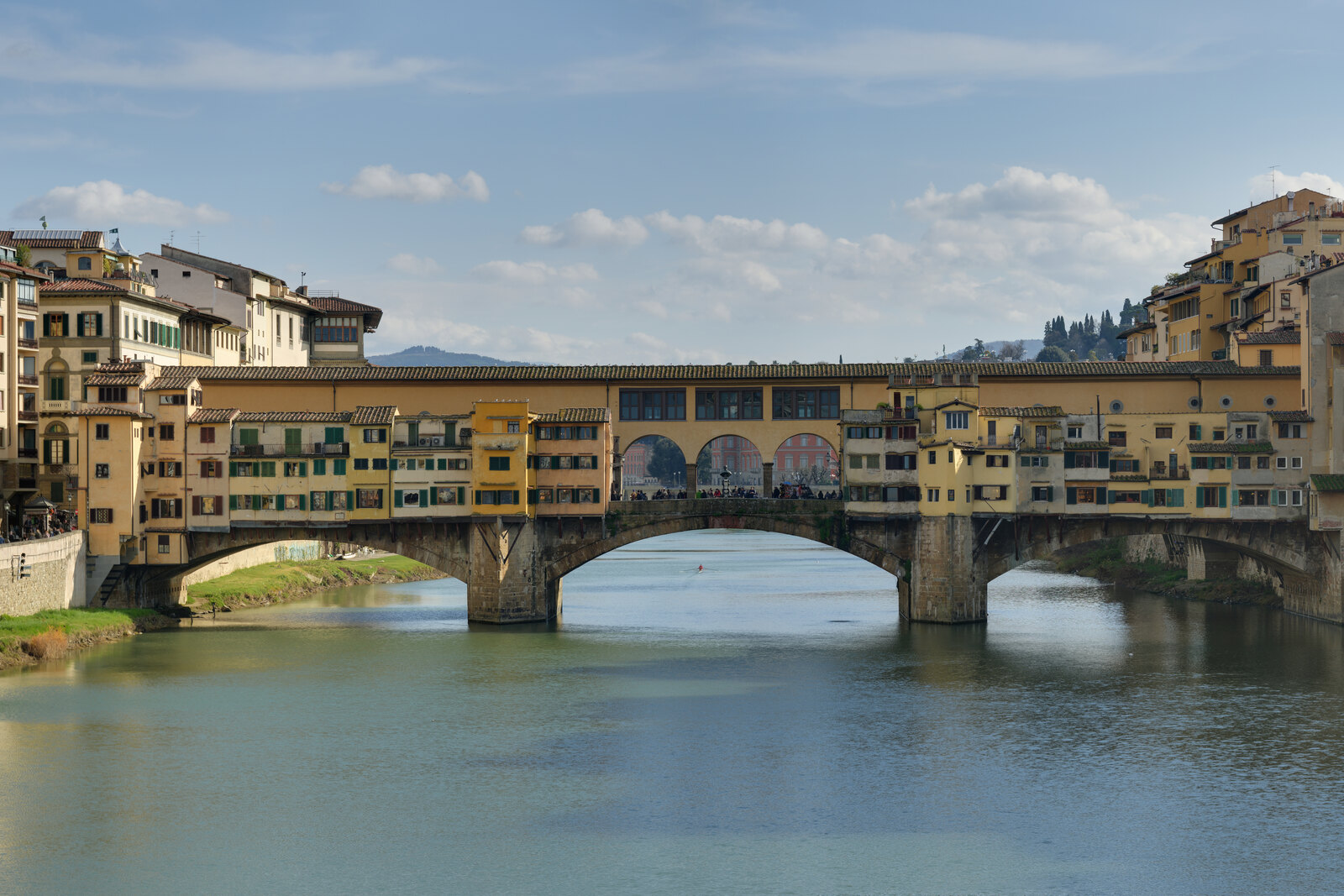
Look around first
What to notice
- Jewelry shops
- The corridor above the eastern row of shops
- Stone arches
- Arno
The story of the place
Jewelry shops appeared on Ponte Vecchio by order of a man who crossed above the meat stalls without stepping onto the bridge.
Ponte Vecchio means “Old Bridge.” This is what the crossing over the Arno was called after twelve twenty, when a second bridge—the New Bridge—was built downstream. The present stone arches came later: a flood destroyed the previous crossing, and the Florentines completed its restoration in thirteen forty-five.
In fourteen forty-two, city officials ordered butchers to move their shops here. The meat trade supported a whole group of families, but it left behind blood, offal, and other waste. On the bridge, all of it could be thrown directly into the river, away from the palaces in the city center. Thus, the commercial street above the water became a meat market; fishmongers and tanners worked nearby.
More than a hundred years later, Cosimo I de' Medici wanted to move safely between Palazzo Vecchio, where the government offices were located, and his residence, Palazzo Pitti, on the other bank. In fifteen sixty-five, Giorgio Vasari ran an enclosed corridor from the already familiar Uffizi courtyard. It still crosses the Arno above the eastern row of shops today.
Cosimo's son, Grand Duke of Tuscany Ferdinando I de' Medici, inherited this elevated route and used it to travel from the palace to service rooms. Beneath the corridor's windows, carcasses continued to be butchered and leather processed. Ferdinando wanted to turn the bridge into a worthy approach to his residence and a place for wealthy visitors.
On September twenty-fifth, fifteen ninety-three, he ordered the removal of the butchers, fishmongers, tanners, and other traders whose occupations were considered dirty. For them, this meant losing their place above the river, where city officials themselves had once ordered them to move their trades. Goldsmiths, silversmiths, and sellers of jewelry were permitted to occupy the vacated premises.
The decree determined the bridge's occupation for the next four centuries. At street level, gold and jewelry are still sold, and directly above the shop roofs runs the corridor because of which the butchers lost Ponte Vecchio.
Useful on site
The bridge is always open as a city crossing; shop hours on the bridge depend on the specific tenants and the season.
Checked: June 27, 2026. Check the official source before visiting.The bridge is crowded, so do not stop at shop entrances. The complete silhouette of the structure and its additions is best seen from the neighboring embankment.