 Guide On Map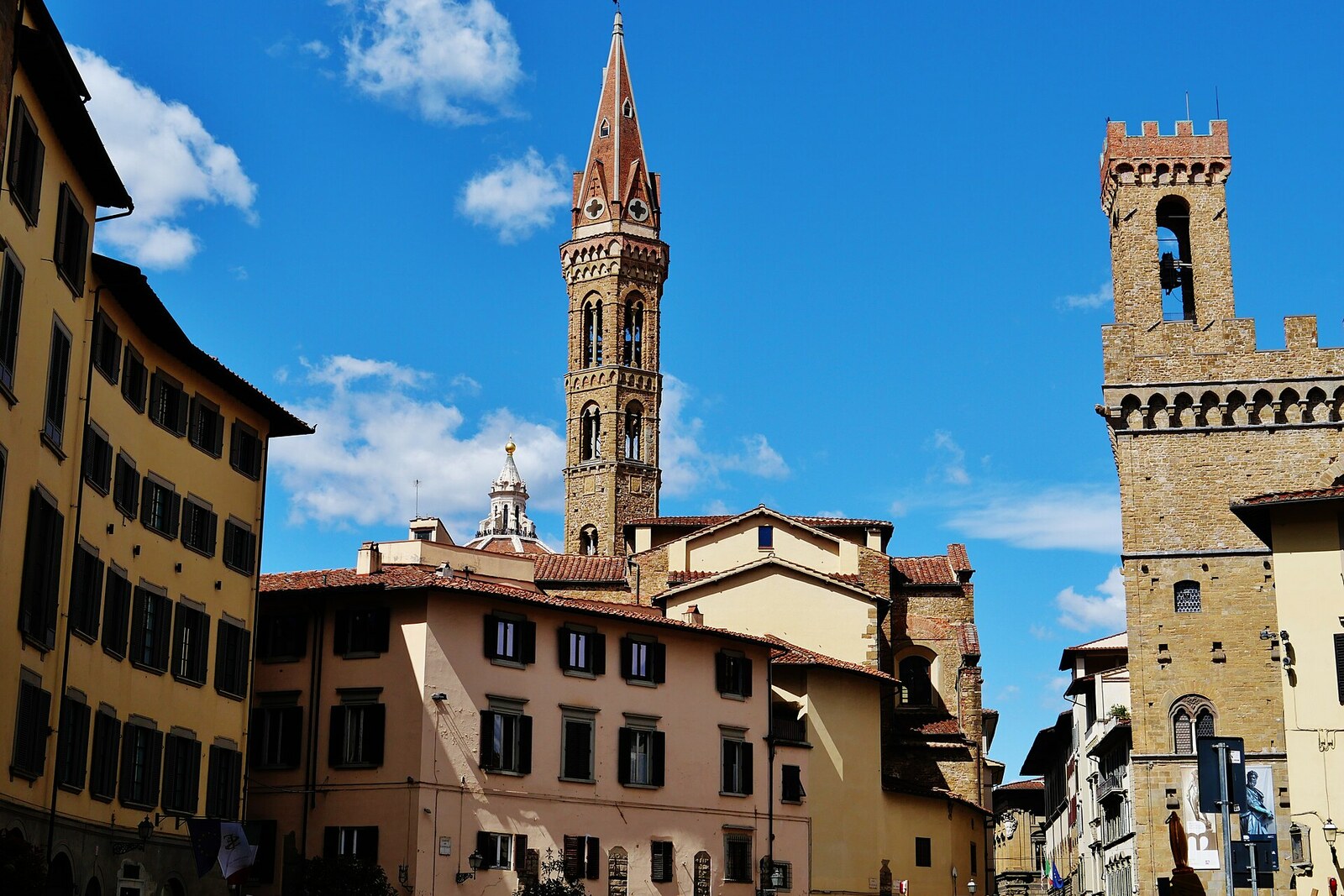
Look around first
What to notice
- Church of Badia
- Pandolfini Chapel
The story of the place
“Badia” means “abbey” in Tuscan. This complex grew up around a Benedictine monastery founded by Margravine Willa of Tuscany in nine seventy-eight. The church is dedicated to the Assumption of the Virgin Mary, and monastic life continues here even now: the brothers and sisters of the Jerusalem Communities gather for prayer three times a day.
Dante is connected with the small Church of Santo Stefano, which once stood beside the abbey. In thirteen seventy-three, a group of Florentines asked the city council to hire a scholar capable of reading and explaining The Divine Comedy to anyone who wished. Seventy-one years had passed since the sentence passed on Dante, already mentioned. Now the townspeople were demanding that the municipality pay for the public study of the condemned poet’s book.
The councils approved the proposal by a majority vote and chose Giovanni Boccaccio—a sixty-year-old writer who had spent many years gathering information about Dante, copying his poem, and compiling his first detailed biography. Boccaccio sought recognition for Dante as a great poet, although some educated contemporaries considered a work in the vernacular unsuitable for a serious scholar.
He was assigned one hundred gold florins for a year of teaching. The money was substantial: Boccaccio lived in constrained circumstances and was already seriously ill, suffering from scabies and other ailments. On October twenty-third, he began the course here, in the Church of Santo Stefano. Merchants, artisans, guild members, townspeople without academic degrees, and men of letters attended the classes. Boccaccio read passages from The Divine Comedy, examined their meaning, and explained the people and events that Dante introduced into the poem without introductions.
It was precisely the makeup of the audience that drew criticism. Opponents reproached Boccaccio for giving difficult poetry to an uneducated crowd. Yet he held about sixty classes. His illness worsened, and at the beginning of the seventeenth canto of the Inferno, the course broke off. Friends took the teacher to Certaldo; he could not complete the commentary and died less than two years later. The notes from the classes became his Expositions on Dante's Comedy, and the course begun here became a model for public readings of Dante, later continued by other commentators.
The medieval Church of Santo Stefano no longer exists. The Pandolfini Chapel has been made in its place within the Badia. The course that began the city’s tradition of publicly explaining Dante survives in Boccaccio’s manuscript; the space where he lectured survives only within the boundaries of today’s chapel.
Useful on site
Access to the church for tourists only on Mondays 15:00‑17:30 (last entry 17:00); closed in August.
Checked: June 17, 2026. Check the official source before visiting.This is an active church with variable access. If the doors are open, do not disturb prayer or a service; if they are closed, limit yourself to a quiet look from outside.