 Guide On Map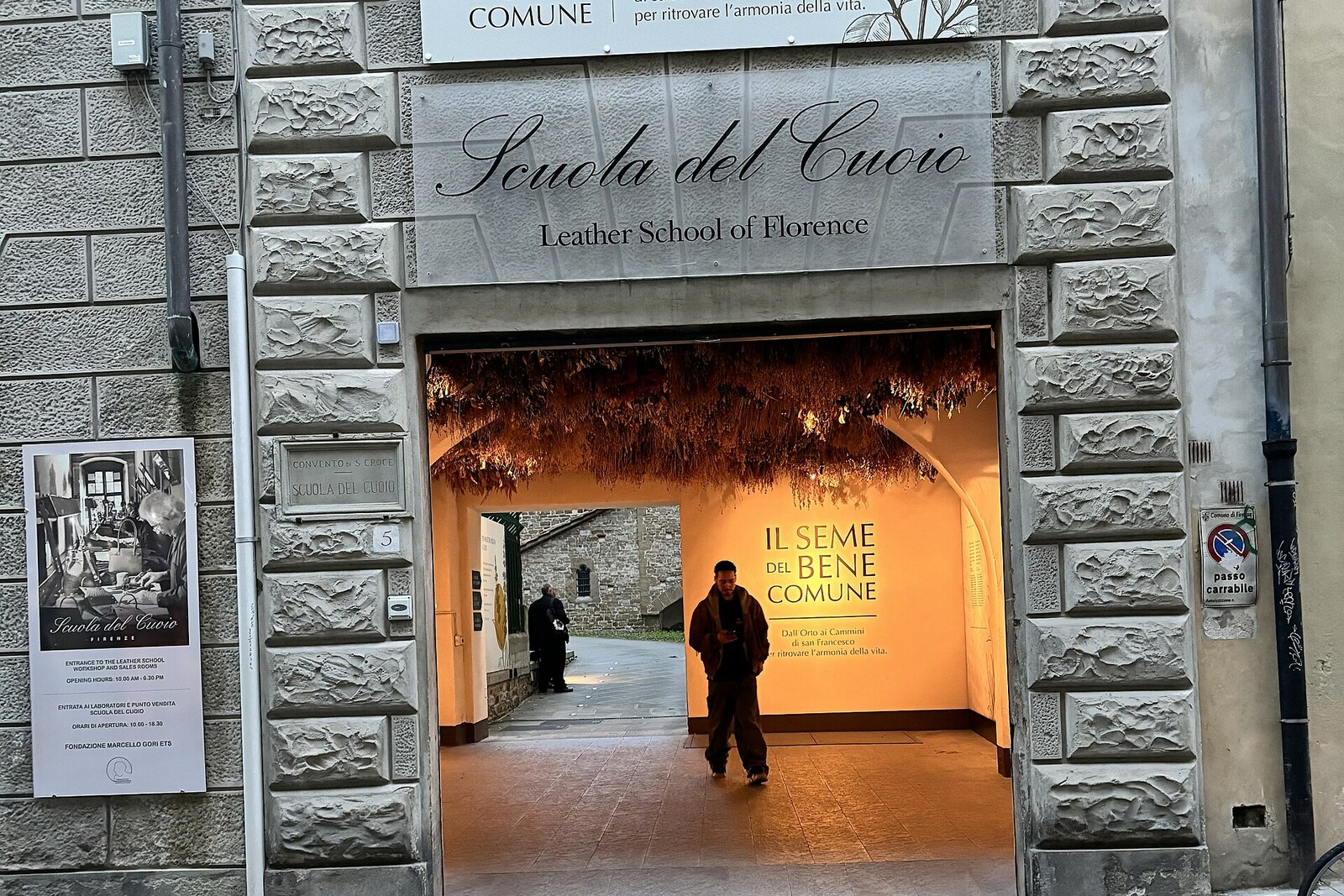
Look around first
What to notice
- The long monastery corridor
- The first worktables
- Leather bags
- Gold stamping
The story of the place
“Scuola del Cuoio” means “School of Leather.” In nineteen fifty, the Franciscan friars of the Monastery of Santa Croce were looking for a craft they could teach teenagers orphaned after the war. The friars had a space: the former dormitory for novices, with a long corridor. What they lacked were masters.
Marcello Gori and his brother-in-law Silvano Casini earned their living making leather goods in a family workshop on Via del Corso. The Franciscans offered them the chance to move their equipment here and teach the boys the same trade that supported their own families. Gori and Casini agreed. Worktables were set up in the monastery corridor, and the first students were residents of Pisa’s City of Boys orphanage.
They began by learning to distinguish grades of leather and cut it by hand. Then the students sewed smaller items and bags; the most capable were allowed to do hot stamping in twenty-two-carat gold on desk blotters and boxes. In May nineteen fifty, the authorities officially registered the school, and the Gori family began selling goods made in its workshops. Training took place within a working production facility: an item went the entire way from a piece of leather to the buyer.
One of the residents was eighteen-year-old Vasco. After the orphanage, he got involved with a bad crowd, and Marcello Gori decided to keep him in check through a trade and personal responsibility. He entrusted the young man with the workshop keys and warned him that he would hold him accountable for anything that went missing. Vasco did not miss a single working hour. Even on his days off, he came to open and close the premises. Years later, at Gori’s funeral, the master’s daughters saw Vasco crying by the coffin of the man who had once given him those keys.
Marcello Gori and Silvano Casini died in two thousand three. Gori’s daughters—Laura Gori, Francesca Gori, and Barbara Gori—took over the workshop and the school, and then the grandchildren joined the work. Leather goods are still made here, orders are accepted, and the craft is taught.
The first worktables, installed in the monastery dormitory in the early nineteen fifties, were never replaced. They stand in the very corridor to which Gori and Casini moved the workshop from Via del Corso for the first students.
Useful on site
Nov–Mar: Mon–Sat 10:00–18:30; Apr–Oct: Mon–Sun 10:00–18:30. Artisans work Mon–Fri 10:00–18:30.
Checked: June 17, 2026. Check the official source before visiting.This is a working school and workshop, not just an exhibition. Demonstrations depend on current work; ask the artisans for permission before photographing them, and purchasing goods is not required.