 Guide On Map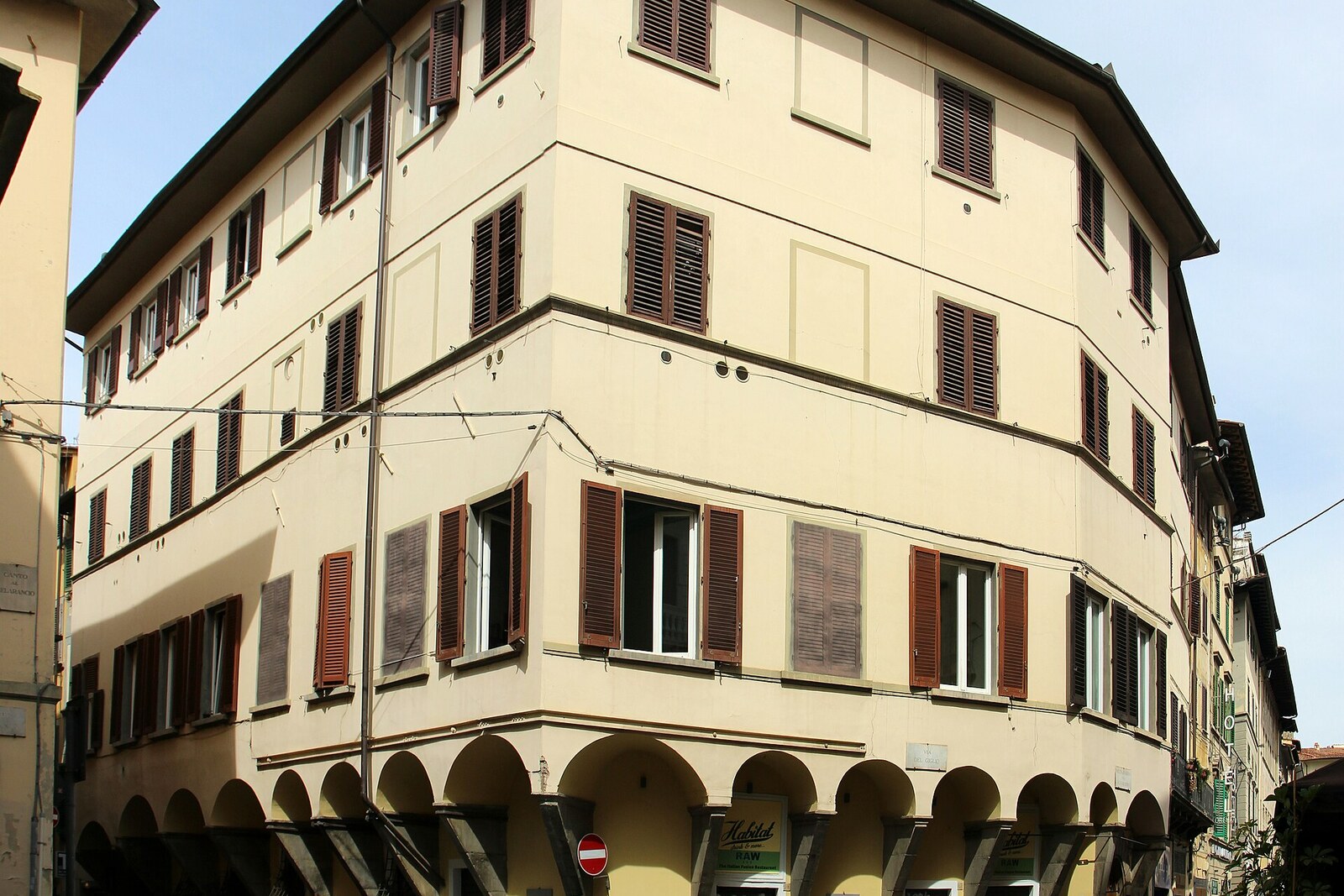
Look around first
What to notice
- Plaques with the square’s name
- Palazzo Aldobrandini at number 8
- Exposed fragments of old stonework
- Portal without a coat of arms
The story of the place
At number eight stands a three-story palazzo, assembled in the late seventeenth and early eighteenth centuries from several family houses that had stood here earlier. Its plastered façade faces the square, while fragments of old stonework have been left visible on the Via del Giglio side—the only discernible traces of the earlier buildings. The family coat of arms once stood above the portal; after the palazzo was sold in the nineteenth century, it was removed.
The word “madonna” on the local plaque means the old form of address “my lady.” The square is not named in honor of the Virgin Mary. It refers to Giovanna Altoviti, the wife of the Florentine merchant Benci Aldobrandini.
The couple lived here, in the family houses on what was then Campo Corbolini. Trade provided the household’s means, while Giovanna devoted herself to charitable work. An old Florentine tradition explains her epithet precisely through this help: her fellow citizens began to call Giovanna Madonna—Lady with a capital L. She needed neither ecclesiastical rank nor membership in a ruling dynasty for this.
Giovanna died in thirteen ninety-five. By fourteen oh four, documents already mention a road to “Madonna Square.” The epithet outlived the woman almost immediately after her death, and then passed on to her descendants: archival records called one branch of the family Aldobrandini di Madonna. The family thus received its name from its relative, and the space in front of her houses from the way her neighbors addressed her.
The city authorities approved the present name only in July eighteen sixty-two. They made official the words Florentines had already been using for more than four centuries.
The three-story Palazzo Aldobrandini at number eight appeared much later than Giovanna. In the late seventeenth and early eighteenth centuries, her descendants combined the family houses that stood here into one building. Fragments of old stonework have been left exposed on the plastered wall facing Via del Giglio, but Giovanna’s houses did not survive in their entirety. In the nineteenth century, after the palazzo was sold, the Aldobrandini coat of arms above the portal was removed as well. The woman’s name remained on the square’s plaques.
Useful on site
Open around the clock, free access.
Checked: June 17, 2026. Check the official source before visiting.The square can be viewed from the street, while the related basement drawings cannot be seen from here. Treat the account of Michelangelo’s refuge as a debated hypothesis, not an established fact.