 Guide On Map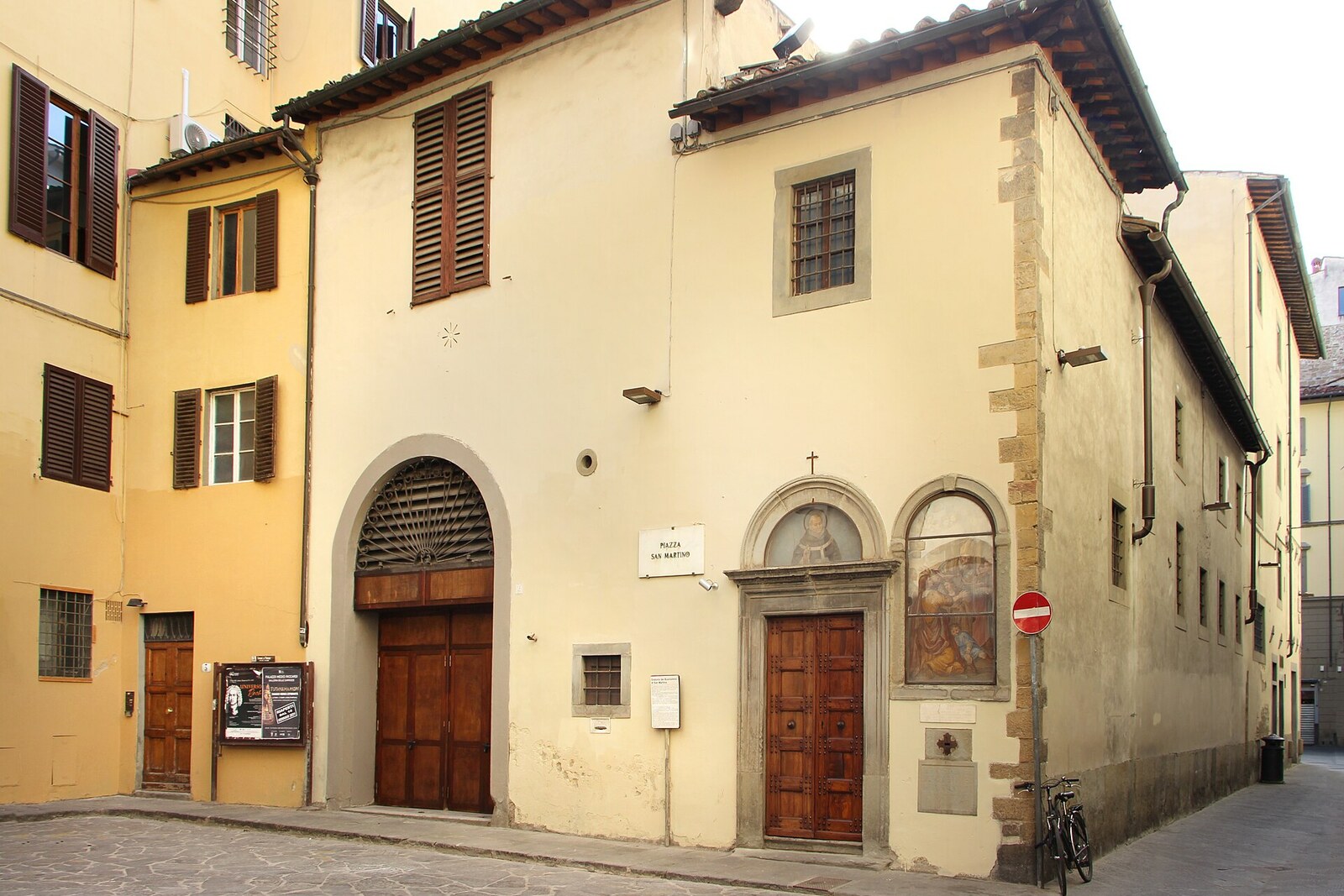
Look around first
What to notice
- Donation slot
- Image of Saint Martin above the entrance
- Fresco with a chicken, wine, and cloth
The story of the place
The Oratory of Buonomini di San Martino occupied premises beside the remains of the old Church of Saint Martin, where the confraternity moved from the shoemaker’s house. Behind its narrow façade fit a chapel and rooms in which Florentines, whose poverty had previously been concealed by their customary self-reliance, were supported with collected donations. Above the entrance, Saint Martin shares his cloak with a poor man, while the frescoes inside show the confraternity’s work: recording property, food for a woman after childbirth, bread, and clothing. Beneath the saint’s figure, a slot for coins is visible; when the treasury was empty, a lamp was lit by the door without naming those who needed help.
Every Friday, twelve trustees and six assistants gather behind this door. They consider requests for assistance and vote with beans: a white one rejects a payment, a black one approves it. The applicants’ names are not disclosed. The small oratory serves them at once as a chapel, meeting room, and treasury of a charitable confraternity.
On February first, fourteen forty-two, twelve Florentines wrote the reason for their association into its statutes: the city was enduring a famine, and among those in need were many people “unaccustomed to asking alms.” They were called the shamefaced poor. These were families that had formerly supported themselves through trade or a craft and now concealed their need, afraid of losing their good name along with their money.
Later tradition attributed the founding of the confraternity to Antoninus Pierozzi, then prior of the Dominican San Marco Convent and the future Archbishop of Florence. His name does not appear in the founding statutes themselves. Instead, they list the first twelve trustees and their lifelong obligation: to collect donations from those able to give, seek out families concealing their poverty themselves, and distribute everything received.
At first, the twelve met in the house of one of them, a shoemaker. By fourteen eighty-two, they had moved here and bought the premises beside the remains of the old Church of Saint Martin. That same year, the name Filippo di Baldo appeared several times in the confraternity’s account books.
Filippo was a goldsmith and a maker of stage mechanisms for religious performances. He had been entrusted with looking after the property of another confraternity; once, he proudly told a tax collector that he had achieved more than his tailor father, who had owned almost nothing. Then his earnings ceased to be enough. The records do not state the reason. They record the result: in fourteen eighty-two alone, the Buonomini assisted Filippo at least six times, continued the payments in the following year, and again recognized him as needy in fourteen eighty-four. Assistance for his sick son was recorded separately. Whether the master ever definitively escaped poverty is unknown. One thing is known: his family was supported for several years, without forcing Filippo to beg for alms in the street.
It was these twelve trustees who came to be called the Buonomini—the good men. They chose Saint Martin as their patron. According to the Christian life of the saint, Martin was a Roman soldier who cut his cloak in two to give half to an unclothed poor man. Inside, this episode is painted above the altar, while the other frescoes show the confraternity’s work: a trustee records the property of an impoverished family; two men bring a woman after childbirth a chicken, wine, and cloth; other people in need receive bread and clothing. The church’s old dedication and the confraternity’s chosen saint coincided, so the name also became an address: Buonomini di San Martino.
A donation slot remains on the façade beneath the image of the saint. When no money was left in the treasury, a small lamp was placed by the door. Local tradition links it to the Tuscan expression “to come down to the candle stub”—to be left with almost no means. The lamp told the city that the treasury was empty; the names of those for whom it was lit remained behind the closed door.
Useful on site
Mon–Thu 10:30–12:30 and 14:30–17:00; Fri–Sat 10:30–12:30; Sun closed.
Checked: June 17, 2026. Check the official source before visiting.The space is very small and continues to serve the confraternity. Enter quietly, do not block the passage, and do not photograph people or meetings without permission.