 Guide On Map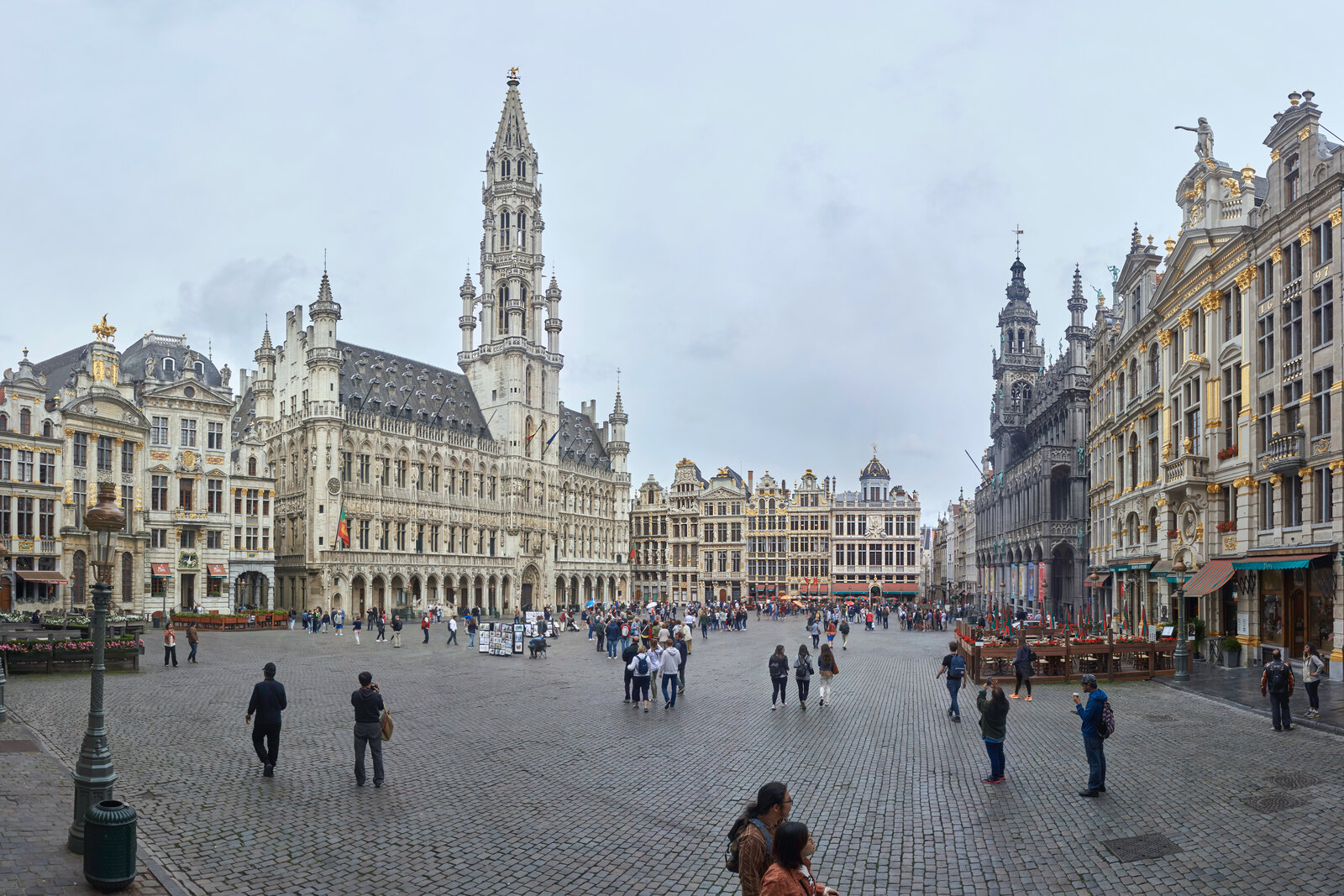

This place does not have an audited photo yet.
Selected place
Brussels Town Hall
Local name: Hôtel de Ville de Bruxelles / Stadhuis van Brussel
The surviving stone shell will show the extent of the destruction the square endured.
Start with 27 highlights or open the complete catalog of 142 curated places.
Highlights include Brussels Town Hall, Grand-Place, Hôtel Tassel, Manneken Pis, Royal Museums of Fine Arts, Royal Palace of Brussels.
We have connected important places into ready-made walks with a clear order, stories and practical details.
Start with 27 highlights, or reveal all 142 curated places.
Local name: Hôtel de Ville de Bruxelles / Stadhuis van Brussel
The surviving stone shell will show the extent of the destruction the square endured.
The surviving stone shell will show the extent of the destruction the square endured.
A broad overview connects the market, the city court, and celebrations through one open space.
Here, the layout shows how a narrow Brussels plot stopped dictating a dark center to the house.
The finale will explain why the theft of a small figurine became a matter for the whole city.
The story of the first curator explains how requisitioned paintings became a public collection and a school for artists.
Maps of Africa, copper, and an empty ceiling will bring together the palace reconstruction and the history of Congo.
Here you will see why the lower neighborhood needed a direct route to Place Poelaert.
Here, the refusal to finance construction led to an unusual arrangement that shaped both the building and its program.
Here you will first test what the archive confirms in Bruegel’s biography and what it leaves as a family story.
A legend of a stolen statue will link a craftswoman, crossbowmen, a Gothic church, and the city's Ommegang.
The underground rooms will show which part of the palace builders chose not to demolish after the fire.
Here you will understand why the architect needed two entrances and one interior passage.
The finale will show which city quarter and which temporary garden disappeared to make way for the present terrace.
The story of the arson will let you see in the present dome the result of postwar reconstruction, rather than the original structure.
The finale will make it possible to compare the everyday trade in second-hand goods in the Marolles with the weekend antiques market in the Sablon.
The relocation of the trade will explain how scrap dealers preserved their livelihood after being driven from the new central boulevards.
Here you will see how city councilors assigned places in shared memory to the counts, their contemporaries, and craftspeople.
Here you will see how a strolling layout turned four days of fighting into a dead end for a regular army.
This stop connects how the trading floor worked with the disappearance of its former purpose.
This stop connects the freedom of a wealthy client with the long rescue of an intact interior.
Here you will see how a city architect reassembled a lost past.
This stop shows how an architect’s own address became his first portfolio.
Here, the family’s interests must be reconstructed through fabric, glass, furniture, and archives.
The ceremony at this site will explain why the Belgian monarch first makes a promise to the country’s representatives.
The garage explains why the familiar rooms had to be raised above street level.
The finale returns the district to the church site from which Saint-Gilles grew.
This stop shows how a professional archival conjecture acquired a façade, an address, and protected status.
Nearest audio-route stop: Guild Houses — 10 m in a straight line, route Old Brussels: Grand-Place, the Brussels Stock Exchange, and Manneken Pis
Nearest audio-route stop: Brussels Park — 40 m in a straight line, route Royal Quarter: Palaces, Museums and Mont des Arts
Nearest audio-route stop: Mont des Arts Garden — 70 m in a straight line, route Royal Quarter: Palaces, Museums and Mont des Arts
Nearest audio-route stop: Royal Palace of Brussels — 50 m in a straight line, route Royal Quarter: Palaces, Museums and Mont des Arts
Nearest audio-route stop: Brussels Stock Exchange — 140 m in a straight line, route Old Brussels: Grand-Place, the Brussels Stock Exchange, and Manneken Pis
Nearest audio-route stop: Manneken Pis — 40 m in a straight line, route Old Brussels: Grand-Place, the Brussels Stock Exchange, and Manneken Pis
Nearest audio-route stop: Place du Jeu de Balle and the flea market — 40 m in a straight line, route Marolles and Sablon: Markets, Memory, and Justice
Nearest audio-route stop: Royal Palace of Brussels — 60 m in a straight line, route Royal Quarter: Palaces, Museums and Mont des Arts
Nearest audio-route stop: Rue Haute and Bruegel House — 140 m in a straight line, route Marolles and Sablon: Markets, Memory, and Justice
Nearest audio-route stop: King's House — 120 m in a straight line, route Old Brussels: Grand-Place, the Brussels Stock Exchange, and Manneken Pis
Nearest audio-route stop: Square du Petit Sablon — 130 m in a straight line, route Marolles and Sablon: Markets, Memory, and Justice
Nearest audio-route stop: Brussels Town Hall — 70 m in a straight line, route Old Brussels: Grand-Place, the Brussels Stock Exchange, and Manneken Pis
Nearest audio-route stop: Mont des Arts Garden — 40 m in a straight line, route Royal Quarter: Palaces, Museums and Mont des Arts
Nearest audio-route stop: Square du Petit Sablon — 130 m in a straight line, route Marolles and Sablon: Markets, Memory, and Justice
Nearest audio-route stop: Place du Grand Sablon — 110 m in a straight line, route Marolles and Sablon: Markets, Memory, and Justice
Nearest audio-route stop: Mont des Arts Garden — 120 m in a straight line, route Royal Quarter: Palaces, Museums and Mont des Arts
Nearest audio-route stop: Place Royale — 50 m in a straight line, route Royal Quarter: Palaces, Museums and Mont des Arts
Nearest audio-route stop: Coudenberg Archaeological Site — 30 m in a straight line, route Royal Quarter: Palaces, Museums and Mont des Arts
Nearest audio-route stop: Mont des Arts Garden — 70 m in a straight line, route Royal Quarter: Palaces, Museums and Mont des Arts
Nearest audio-route stop: Poelaert Elevator and Viewing Platform — 80 m in a straight line, route Marolles and Sablon: Markets, Memory, and Justice
Nearest audio-route stop: Place Royale — 80 m in a straight line, route Royal Quarter: Palaces, Museums and Mont des Arts
Nearest audio-route stop: Mont des Arts Garden — 70 m in a straight line, route Royal Quarter: Palaces, Museums and Mont des Arts
Nearest audio-route stop: Coudenberg Archaeological Site — 50 m in a straight line, route Royal Quarter: Palaces, Museums and Mont des Arts
Nearest audio-route stop: Centre for Fine Arts (BOZAR) — 40 m in a straight line, route Royal Quarter: Palaces, Museums and Mont des Arts
Nearest audio-route stop: Place Royale — 50 m in a straight line, route Royal Quarter: Palaces, Museums and Mont des Arts
Nearest audio-route stop: Mont des Arts Garden — 120 m in a straight line, route Royal Quarter: Palaces, Museums and Mont des Arts
Nearest audio-route stop: Brussels Stock Exchange — 130 m in a straight line, route Old Brussels: Grand-Place, the Brussels Stock Exchange, and Manneken Pis
Nearest audio-route stop: Royal Palace of Brussels — 120 m in a straight line, route Royal Quarter: Palaces, Museums and Mont des Arts
Nearest audio-route stop: Poelaert Elevator and Viewing Platform — 110 m in a straight line, route Marolles and Sablon: Markets, Memory, and Justice
Nearest audio-route stop: Place Royale — 30 m in a straight line, route Royal Quarter: Palaces, Museums and Mont des Arts
Nearest audio-route stop: Centre for Fine Arts (BOZAR) — 50 m in a straight line, route Royal Quarter: Palaces, Museums and Mont des Arts
Nearest audio-route stop: Coudenberg Archaeological Site — 70 m in a straight line, route Royal Quarter: Palaces, Museums and Mont des Arts
Nearest audio-route stop: Centre for Fine Arts (BOZAR) — 60 m in a straight line, route Royal Quarter: Palaces, Museums and Mont des Arts
Access and construction years come from OpenStreetMap and Wikidata, snapshot of August 25, 2026: database data, not a check on the ground.