 Guide On Map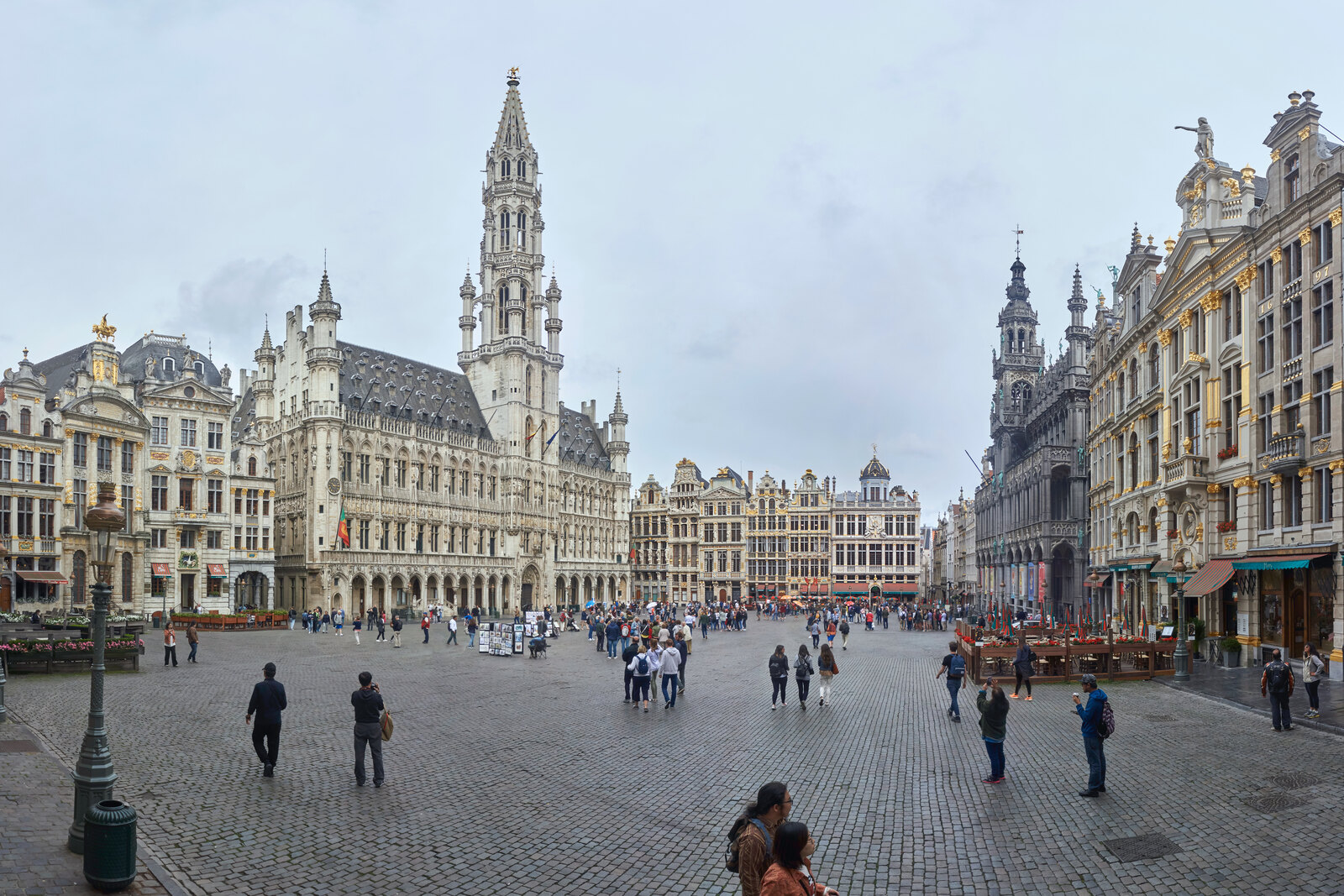
Look around first
What to notice
- Central tower
- Statue of Charles V
- Facade galleries
- Sculptural decoration
The story of the place
Opposite the town hall, behind narrow galleries, a tower, and dense stone carving, stands Brussels City Museum. The Dutch name, Bread House, recalls the bakers who sold bread here; later, judges and tax collectors of the dukes of Brabant occupied the premises. The French name arose from the institutions of Charles V, although the sovereign himself never lived here. The figure of Charles on the central tower appeared much later than Charles himself.
Pierre-Victor Jamaer was the son of a baker and lived on a salary from the Brussels municipal service. In eighteen forty-seven, he joined it as a draughtsman, and seventeen years later became the city architect. The final twenty-two years of this career were taken up by King's House.
The city bought the dilapidated building in eighteen sixty and initially intended to restore it. However, in eighteen seventy-three, the city council decided that the building would have to be demolished. Jamaer was tasked with rebuilding it and restoring the appearance of an era from which too little reliable evidence remained.
Before the demolition, the architect measured the old walls and made casts of the surviving carvings. He worked in archives and compared the Brussels building with the town halls of Mons and Oudenaarde. When information was lacking, he completed the whole from examples of the same era. This is how an ideal Gothic version of King's House appeared, with galleries, a tall central tower, and dense sculptural decoration. Nothing from the sixteenth-century building has survived here.
Jamaer was returning King's House to the time of Charles V, because it was from this sovereign that the French name remained. In the thirteenth century, Brussels bakers sold bread on this site. The Dutch name, “Bread House,” still preserves their former trade. Then the bakers began selling bread from house to house, while the dukes of Brabant placed their tax collectors and judges here—directly opposite Brussels Town Hall.
At the beginning of the sixteenth century, the owner of the plot was Charles V, Duke of Brabant, who needed a more representative building for his institutions. The old bread hall was demolished, and from fifteen fifteen a new stone house was built here. When Charles became King of Spain, French-speaking Brussels residents began calling the administrative building Maison du Roi d'Espagne. The king himself never lived here.
A statue of Charles V stands on the central tower of the present facade, but it was placed there only during Jamaer’s reconstruction. Brussels City Museum opened its first rooms here in eighteen eighty-seven, while the finishing work was still underway. In eighteen ninety-five, the tower and sculptures were completed, and Jamaer retired. The city gave him an ivory figurine: in one hand it held the former King's House, and in the other, the new one. The architect’s descendants gave the gift to the museum, which now occupies the second-hand building.
Useful on site
Brussels City Museum: Tue–Sun 10:00–17:00; closed Mon, and also closed on certain public holidays. Free on the first Sunday of the month.
Checked: July 1, 2026. Check the official source before visiting.The facade’s political program is easy to read from outside, but the museum’s story is inside. To see the collection and the original Manneken Pis, plan a separate visit and check access in advance.