 Guide On Map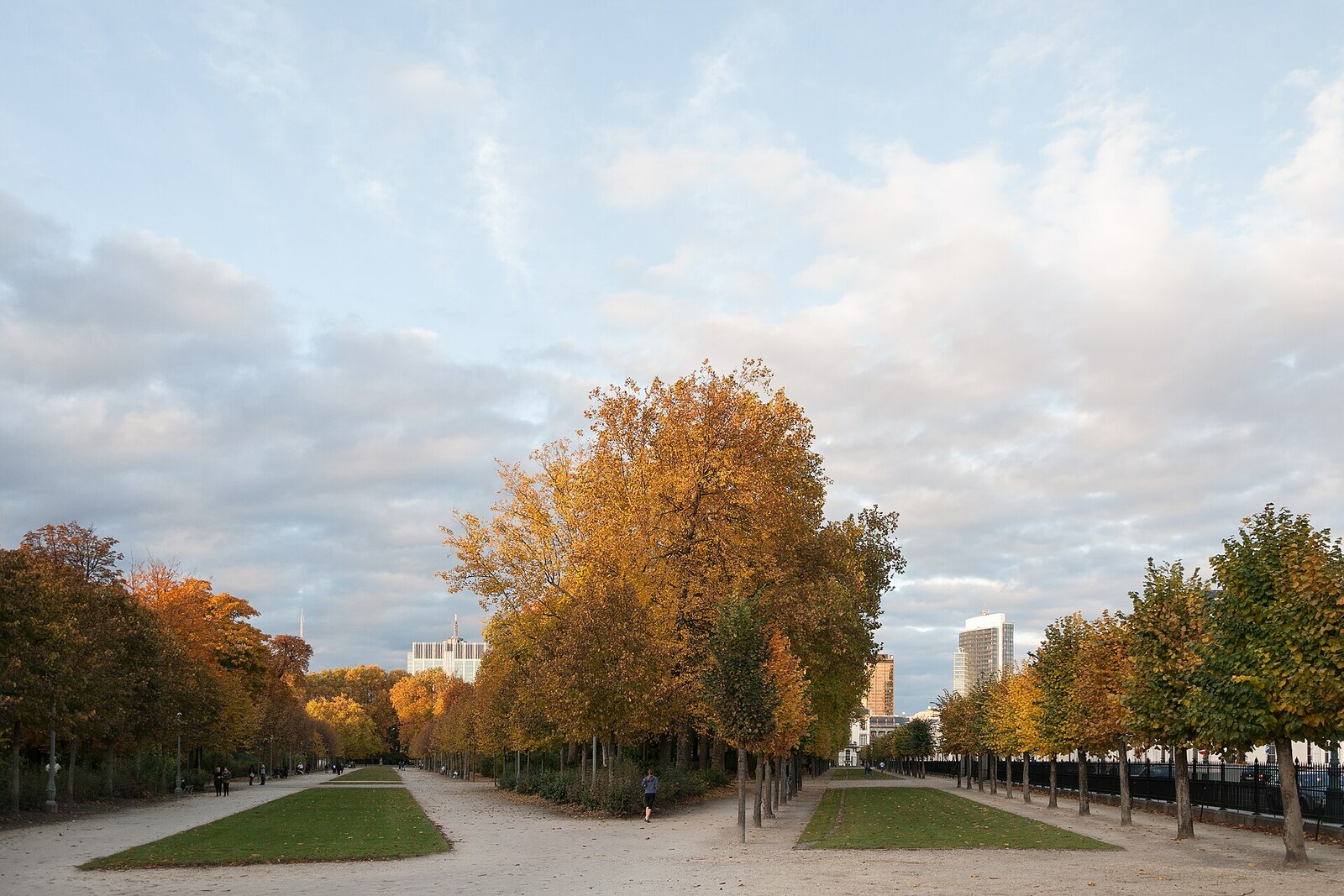
Look around first
What to notice
- Large circular basin
- Statue of Venus at the basin’s northwestern edge
- Straight central avenues
- Official buildings around the perimeter
The story of the place
In September eighteen thirty, grenadiers of the army of the United Kingdom of the Netherlands stood on the central avenue of Brussels Park. Belgium did not yet exist: after the Napoleonic Wars, the northern and southern Netherlands were united under the crown of William the First. When the Brussels militia demanded separate administration for the southern provinces, the king refused and sent troops here.
They were commanded by Prince Frederik, William’s second son: he was to return Brussels to his father’s rule. Volunteers determined to hold the city stood against the army. They were mainly people without a military profession. Among the wounded rebels whose occupations were recorded in Brussels hospitals, the overwhelming majority were day laborers; builders, weavers, tanners, carpenters, and small traders were listed alongside them. They risked their lives and the daily wages their families lived on.
On September twenty-third, Colonel Clerck’s grenadiers fought their way to the park. Some soldiers occupied the royal buildings, some the Palace of the States General—that is, the parliament of the united kingdom—and the rest formed up along the central avenue. Frederik ordered Clerck to hold the park and wait for the main forces to arrive.
Clerck carried out the order literally. At nine thirty in the morning, the neighboring Place Royale was almost undefended. About an hour later, volunteers had already taken up positions in the houses around it and opened fire on the park’s exits. The grenadiers occupied the avenues but left the buildings around the perimeter to the enemy. The exposed strolling area became a cramped camp for them.
They stopped here because half a century before the fighting, the Brussels magistrate and the government of the Austrian Netherlands had remade the former Warande—a palace hunting preserve—into the city’s first publicly accessible strolling area. They leveled the ground above old Brussels, laid out straight avenues, and surrounded it with streets and official buildings. In eighteen thirty, this geometry made it possible to station soldiers, but the houses along the edges gave their opponents cover.
For four days, the positions barely changed. The number of volunteers grew; they fired from windows and broke through the walls of neighboring cellars to approach the Palace of the States General unseen. The soldiers’ strength was running out, and there was no news of reinforcements. Frederik could either shell the city or leave. Late in the evening of September twenty-sixth, he ordered a retreat. During the night, the army left the park and headed for Antwerp. The revolutionary committee coordinating the volunteers became a provisional government and proclaimed Belgium’s independence on October fourth.
No fortifications or cannons remain from the four-day camp. At the northwestern edge of the large circular basin, the present statue of Venus stands in place of Thetis, which was destroyed in eighteen thirty. The straight avenues where Clerck left his grenadiers to wait for reinforcements have survived; the sculpture that stood here during the fighting is no longer there.
Useful on site
Open city park; weather- and event-related restrictions are possible.
Checked: June 28, 2026. Check the official source before visiting.The park matters as an open space: walk along at least one central avenue and compare the views in different directions.