 Guide On Map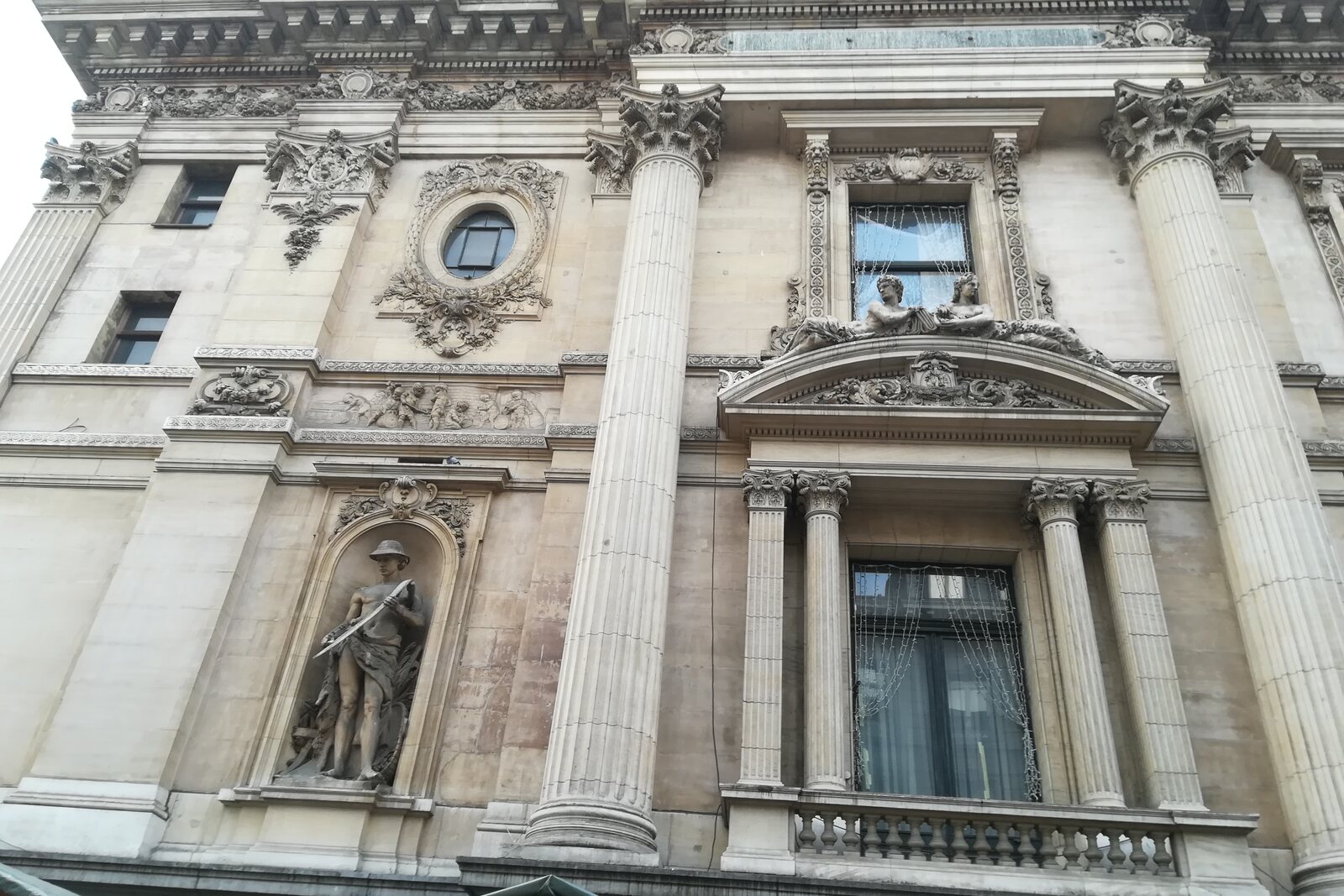
Look around first
What to notice
- Central gallery
- Benches in the gallery
- Exhibition spaces
- Restaurant spaces
The story of the place
The Butter Market once stood on this site. The city council allotted it to the Brussels Stock Exchange in the middle of the new Central Boulevard, laid above the Senne after it had been enclosed in vaults, to bring commercial life back to the Lower Town. The hall was built for face-to-face meetings among those who made transactions, not for quiet individual work. Now the central gallery is open for free passage, with benches inside and exhibition and restaurant spaces alongside.
On the night of November twenty-ninth, nineteen ninety, a fire began in one of the stockbrokers' booths on the first floor. These booths were occupied by people who took clients' orders, matched buyers with sellers, and received payment for acting as intermediaries. For them, the room was part of the transaction itself: without access to the hall, an order could not be carried out according to the accepted procedure.
Every trading day, brokers and representatives of brokerage firms gathered around enclosures called baskets. They announced aloud how much they were willing to pay or at what price to sell securities. An exchange commissioner set the opening price, then a quotation clerk wrote the subsequent prices on a board in chalk. This is what the Brussels Stock Exchange was for.
The city council allotted this site to it in eighteen sixty-five, when it chose the design by architect Léon-Pierre Suys. Beneath the Lower Town, the Senne was being enclosed in vaults, and a broad Central Boulevard was laid above it. Officials hoped to bring commercial life back here, so they placed the Brussels Stock Exchange in the middle of the new street, on the site of the former Butter Market. In eighteen seventy-three, the brokers received a hall designed specifically for face-to-face meetings and the announcement of prices.
After the fire, repairs cost one hundred seventy-one million Belgian francs. The insurance company paid one hundred thirty-four million; the missing thirty-seven million came from the pooled funds of the brokers' association. They restored their workplace, although its former purpose was already disappearing.
A year before the fire, the exchange's leaders launched electronic trading. At first, computers matched orders for only a few securities, but a broker no longer needed to come to the basket: an order could be sent from the office. By nineteen ninety-six, ordinary spot transactions were being concluded this way as well. The daily meetings stopped. Brokerage firms continued to trade, but they no longer needed the repaired hall.
In two thousand fourteen, the last six employees of the Euronext exchange company left this place. After another conversion in two thousand twenty-three, the city opened the central gallery for free passage, placed benches, exhibition spaces, and restaurant spaces inside, and gave part of the building to Belgian Beer World.
Shares are no longer traded here. Both the building and the square in front of it are still called the Brussels Stock Exchange; the brokers who gave them that name now meet buyers and sellers on screens in other buildings.
Useful on site
Exterior viewing without a ticket. For interior access and the archaeological site, there is a discrepancy concerning Monday as of the date checked: the Brussels Stock Exchange site lists 09:00–22:00 daily, while the museum association and tourist card list Tue–Sun 09:00–22:00. Belgian Beer World and the roof have separate hours and tickets; check on the day of your visit.
Checked: July 1, 2026. Check the official source before visiting.The facade and the scale of the building are best appreciated from the opposite side of the square. The public areas, Belgian Beer World, and the archaeological level have their own access conditions; before going inside, check which spaces are open.