 Guide On Map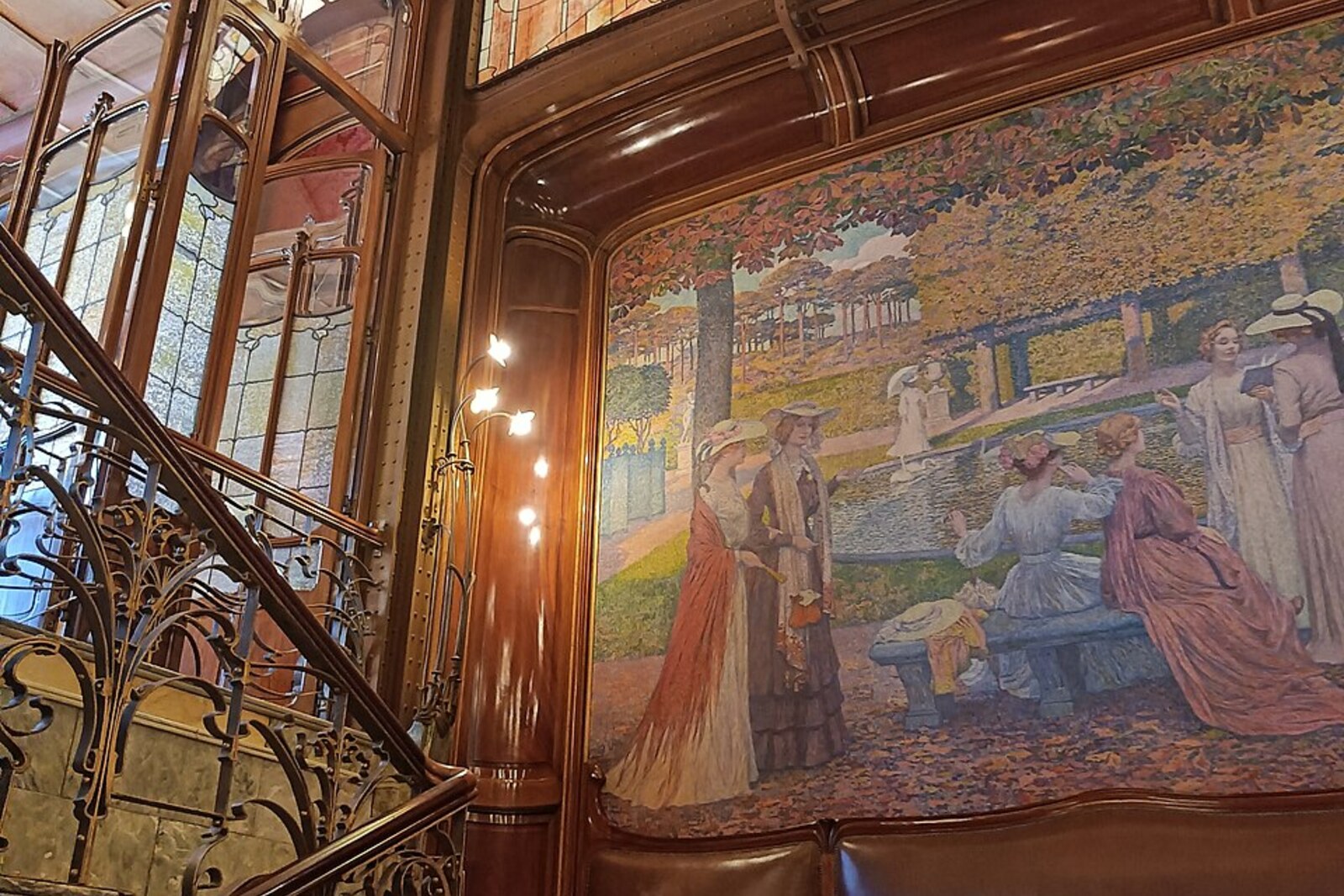
Look around first
What to notice
- Restored lower level of the façade
- Doorbell
- Light fixtures
- Furniture
The story of the place
The lower level of the façade, freed from the later display windows, has been reassembled according to its former pattern. Behind it, the town mansion rests on a unity rare for a private house: the staircases, rooms, furniture, carpets, light fixtures, and even small details were conceived as a single interior. Later, a haute couture house used the rooms for workshops and shows, and the lightwell was blocked by added floors. They have now been removed, and the private museum preserves not only the walls but also most of the furnishings made for the first owners.
The French “hôtel” in this name means a town mansion. There was never a hotel here. Solvay is the surname of the first owner, the industrialist Armand Solvay, who wanted to establish a family home for himself and Fanny Hunter on Avenue Louise.
After the success of Hôtel Tassel, Armand Solvay commissioned Victor Horta to build the new house. The chemical company of Armand’s father, Ernest, had made the family fortune, so in eighteen ninety-four the client gave the architect an almost unlimited budget and freedom. Horta designed the rooms, staircases, furniture, light fixtures, carpets, and even the doorbell as parts of a single interior. Construction was completed by eighteen ninety-eight, but the architect worked on the furnishings for another five years. Armand received a house arranged specifically for his family down to the last handle; Horta received the opportunity to carry his vision further than in any previous private commission.
Half a century later, that very unity became a problem. The mansion had become outdated in the eyes of property owners and was under threat of demolition. In the late nineteen fifties, Louis and Berthe Wittamer-De Camps bought it—couturier spouses who earned their living through their own haute couture house. They needed workshops and rooms where they could show dresses to clients. The purchase preserved the building, but for their work the couple enclosed the southern lightwell with additional floors, dismantled the lower part of the façade, and cut two large display windows into it for new models.
When the workshops moved away in the nineteen seventies, the Wittamers did not sell the vacated mansion for another alteration. They set about restoring Horta’s house. The restorers removed the floors inserted into the lightwell, returned the lower level of the façade to its former pattern, and restored the original colors. The family preserved the furniture, light fixtures, finishes, and most of the fittings made for Armand Solvay.
Since twenty twenty-one, a museum has operated here, and it remains the private property of the Wittamers. The façade no longer has the two display windows of their fashion house. Behind it, the interior has survived—the one for which Armand Solvay once allowed Horta to design even the doorbell.
Useful on site
Brussels Museums states: Thu 10:00-14:00, Sat 10:00-18:00; closed on other days. Check time slots on the website before purchasing.
Checked: June 28, 2026. Check the official source before visiting.The interior requires separate visit arrangements; confirm access in advance rather than relying on chance. Without it, the stop remains a comparison between the street appearance and the story of hidden luxury.