 Guide On Map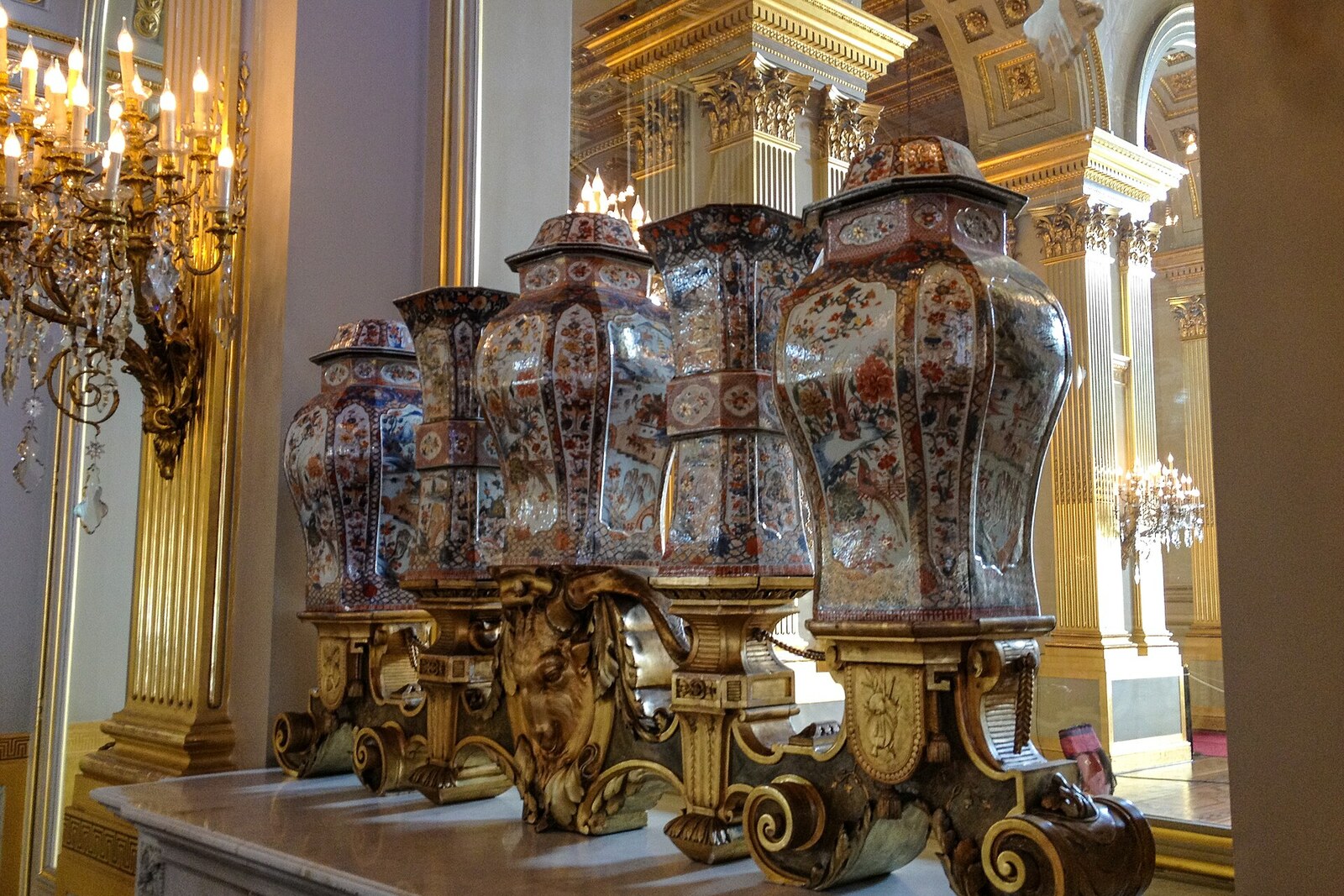
Look around first
What to notice
- The long palace facade
- The frieze with Leopold's monograms
- The windows of the state rooms
The story of the place
The long palace facade serves as the official stage of the Belgian state: ceremonies of the monarchy take place behind its windows. Repeated monograms of the ruler who initiated the palace's expansion run along the frieze; they remained on the wall after its former appearance was dismantled. Inside is the Hall of Mirrors, with mirrors between the columns, where foreign ambassadors present their credentials.
The royal family does not live behind this facade: its home is in Laeken, in northern Brussels. The king comes here to work. Inside are his office, the court staff, and the state rooms where ministers, heads of state, and ambassadors are received.
The palace's current appearance was largely conceived by Leopold II—the second King of the Belgians—who wanted to give the young monarchy an appropriate scale, as he saw it. After ascending the throne in eighteen sixty-five, he called the former facade “terrible” and expanded the palace for decades. In nineteen oh four, on his orders, the old outer wall was dismantled. Leopold's monograms still repeat along the frieze of the new facade.
Behind these windows, the king ordered a separate room devoted to Congo. By then, Leopold was the personal sovereign of the Congo Free State—a vast African territory that formally did not belong to Belgium. He personally approved all major decisions of its administration. Ivory and especially rubber brought in revenue; to meet quotas, residents were forced to work, while punitive detachments used hostage-taking, corporal punishment, and murder.
Leopold wanted to present this possession in the main working palace as his own achievement. Maps of Africa appeared above the fireplaces in the future room. Copper mined in Congo was chosen for its decoration. Allegorical paintings about Africa were to be placed between the columns, and the ceiling was to be painted.
But reports by missionaries, diplomats, and eyewitnesses about forced labor and killings caused an international scandal. In nineteen oh eight, the Belgian state annexed Congo as a colony, and Leopold lost his personal control of the territory. He died a year later, without seeing either the room or the palace facade completed.
His nephew and successor, Albert I, ordered the room to be finished differently. Instead of the intended African scenes, workers installed mirrors between the columns and left the ceiling empty. Thus the unfinished Congo Hall acquired its present name—the Hall of Mirrors.
The copper, maps of Africa, and mirrors have survived. It is now in this very room that foreign ambassadors present their credentials to the king.
Useful on site
Summer 2026: 3 July-16 August, except Mon and 15/16/21/22 July; 10:30-17:00, last entry 16:00.
Checked: June 28, 2026. Check the official source before visiting.The main account works from outside; plan any possible visit to the rooms separately and check access in advance.