 Guide On Map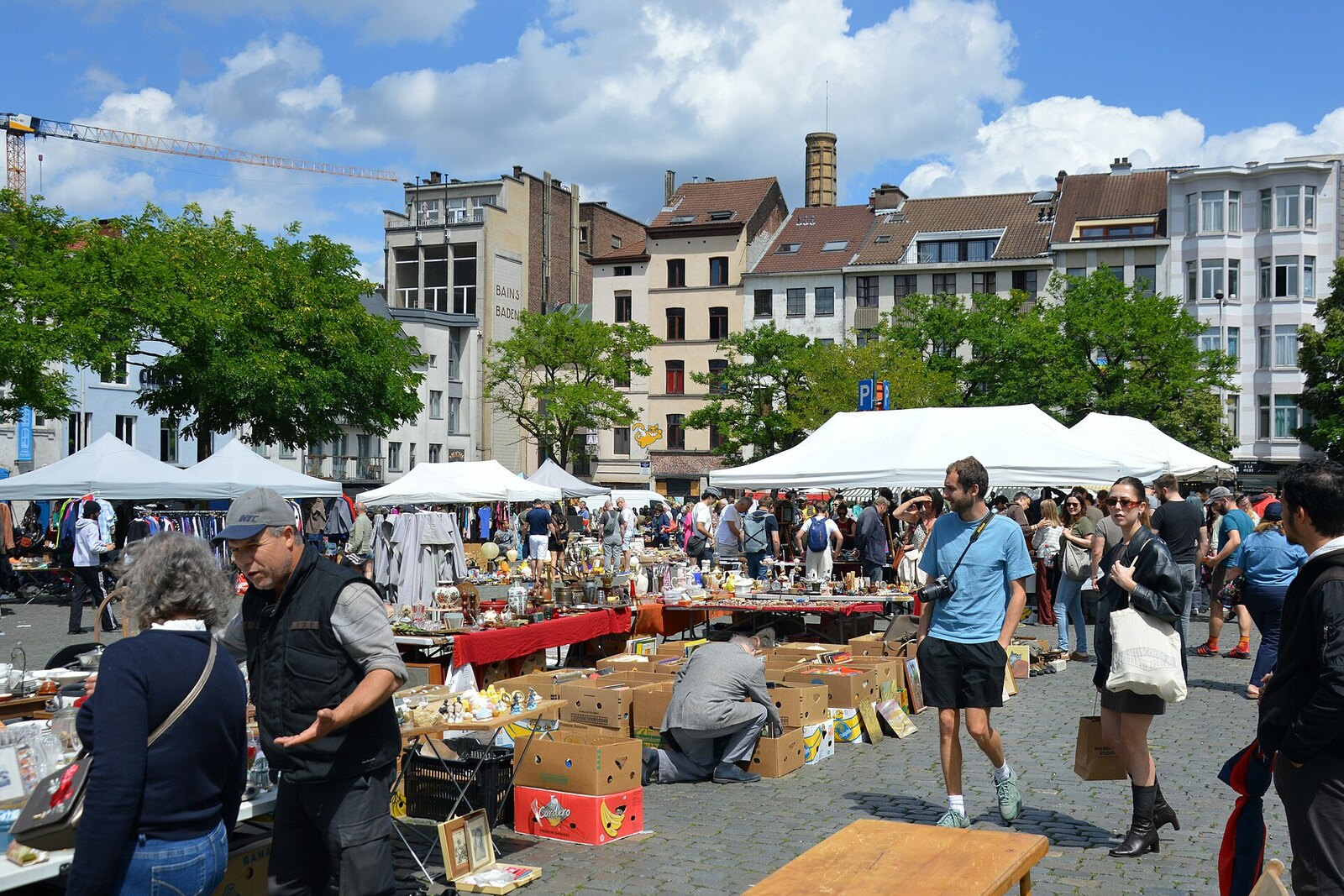
Look around first
What to notice
- The long rectangular square
- Clothing and household goods on the ground
- Old iron
- Trading spaces
The story of the place
On February tenth, eighteen seventy-three, Charles-Henri Lemayeur, Brussels alderman for public works—a member of the city administration responsible for the streets—demanded that the Old Market be removed from what is now Place Anneessens. In the record of his report, the merchandise is described briefly: old iron and other things. According to Lemayeur, such displays noticeably spoiled the appearance of the new central boulevards.
Behind “other things” lay the livelihood of scrap dealers, ragpickers, and used-clothing merchants. They collected, sorted, and resold what others threw away or gave up for next to nothing. Their customers included both collectors of rarities and people who could not afford a new item. The market had occupied its former site since the seventeenth century, but after the Senne was covered over and broad boulevards were laid above it, expensive shops opened nearby and affluent townspeople moved in. The city administration found their complaints justified.
The decision was not to ban the trade, but to move it away from the new ceremonial streets. From March fifteenth, sellers were ordered to lay out their wares here, in the Marolles. For them, this meant the risk of losing their regular customers, but they retained the right to trade every day, and their clientele gradually followed the market to its new location.
An empty plot was already ready. Until the middle of the nineteenth century, the Société du Renard machine and locomotive factory operated here. The city bought its land, the factory buildings were demolished, and by eighteen sixty-three a long rectangle had been cleared. Residents played pelota on it: two teams passed a small ball back and forth by striking it with the palm of the hand. That is why the French name means “ball-game square.” Its Dutch name, meaning “Fox Square,” preserves the memory of the factory.
On the cleared seven thousand square meters, scrap dealers spread clothing, household goods, and iron directly on the ground. The name Old Market moved here with the traders: it was the market itself that was old, not the square that was new to it. The former site on Place Anneessens was cleared for the renewed city center, while the traders continued to make their living by reselling other people’s belongings in the Marolles.
Now the market opens here every morning. City regulations allocate it three hundred seventy trading spaces and permit the sale only of items that have already been used. That same “old iron and other things” that Lemayeur removed from the new boulevards still has an officially designated place in the square.
Useful on site
The market is held daily: on weekdays approximately 09:00–14:00, on weekends and holidays approximately 09:00–15:00; it is most substantial in the morning.
Checked: July 1, 2026. Check the official source before visiting.Come in the morning for the trading, ask permission before photographing people, and confirm the price before buying. Do not consider the underground shelter an ordinary accessible site.