 Guide On Map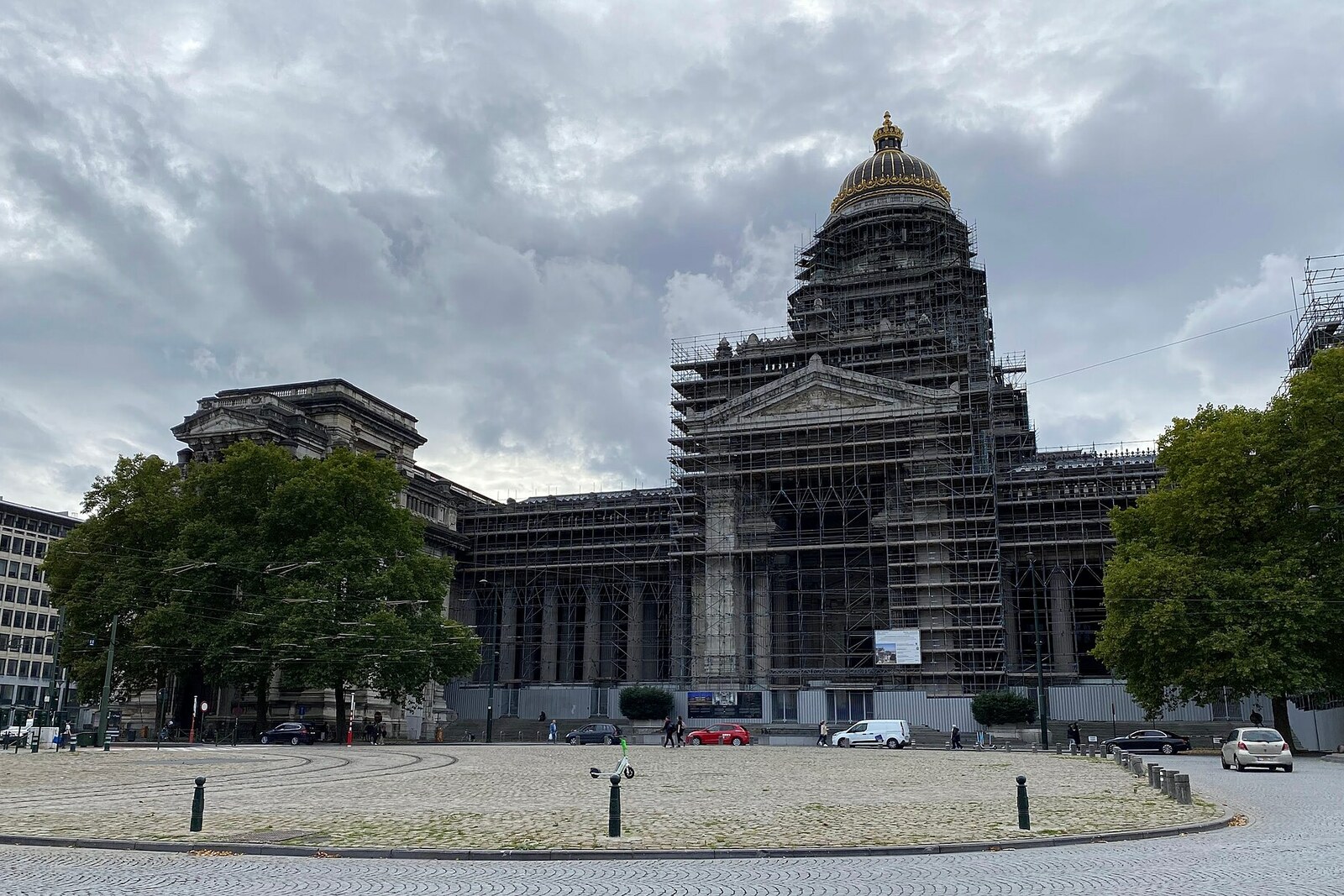
Look around first
What to notice
- The dome
- The main façade
- Place Poelaert
- The upper elevator bridge
The story of the place
Courts at different levels operated under one roof in the Palace of Justice. Behind the main façade, rooms for hearings, staff offices, and case-file storage were allocated to them; the Court of Cassation still sits here today. The dome above Place Poelaert rises over these courtrooms and archives, which cannot be seen from the street.
On September third, nineteen forty-four, German soldiers were preparing to leave Brussels. Allied troops were already approaching the capital. The occupiers occupied the Palace of Justice and set up radio posts and observation points under its dome: from that height, there was a view over the city.
Inside were courtrooms, offices, and archives for a whole hierarchy of courts, from the police court to the highest Court of Cassation. The occupation services, including the Gestapo, also kept there the documents they had collected. After liberation, these papers and Belgian court files could be needed in trials of collaborators and German war criminals.
At around half past twelve, the retreating soldiers doused the dome with fuel and set it on fire. In the basements, they left incendiary bombs and explosives. The dome soon collapsed; the fire spread to the library, the commercial court office, the jury courtroom, and archive rooms.
The firefighters could not cope with such a volume of fire, and several people were injured. Then residents of the surrounding streets, judges, and palace staff joined them. A human chain stretched from the inner staircase across Place Poelaert. At first, buckets of water were passed along it; then people began carrying out books and bundles of documents. Some case files were saved, while some court archives disappeared forever.
Court staff returned to the damaged building immediately after the fire. As early as September fifteenth, twelve days after the arson, the next judicial year was opened here. The usual ceremonial hall had been destroyed, so the judges gathered in another room; some offices were temporarily moved out of the palace, but the handling of cases resumed.
Albert Storrer, an engineer-architect and custodian of the Palace of Justice, took charge of the restoration. He was responsible for ensuring that the enormous building remained fit for the work of the courts. Three years later, the main damage had been repaired. Storrer replaced the destroyed dome with a new steel structure and raised it two and a half meters higher than the former one.
The Court of Cassation still sits in the palace today. And the dome above it is the one Storrer erected in place of the one that collapsed on September third.
Useful on site
It is more reliable to plan an exterior view from Place Poelaert; access to the entrances, courtyard, and interior areas changes because of restoration work and court operations.
Checked: July 1, 2026. Check the official source before visiting.Treat this stop above all as an exterior view: restoration work may alter approaches and close parts of the façade. Do not count on visiting the interior without checking separately.