 Guide On Map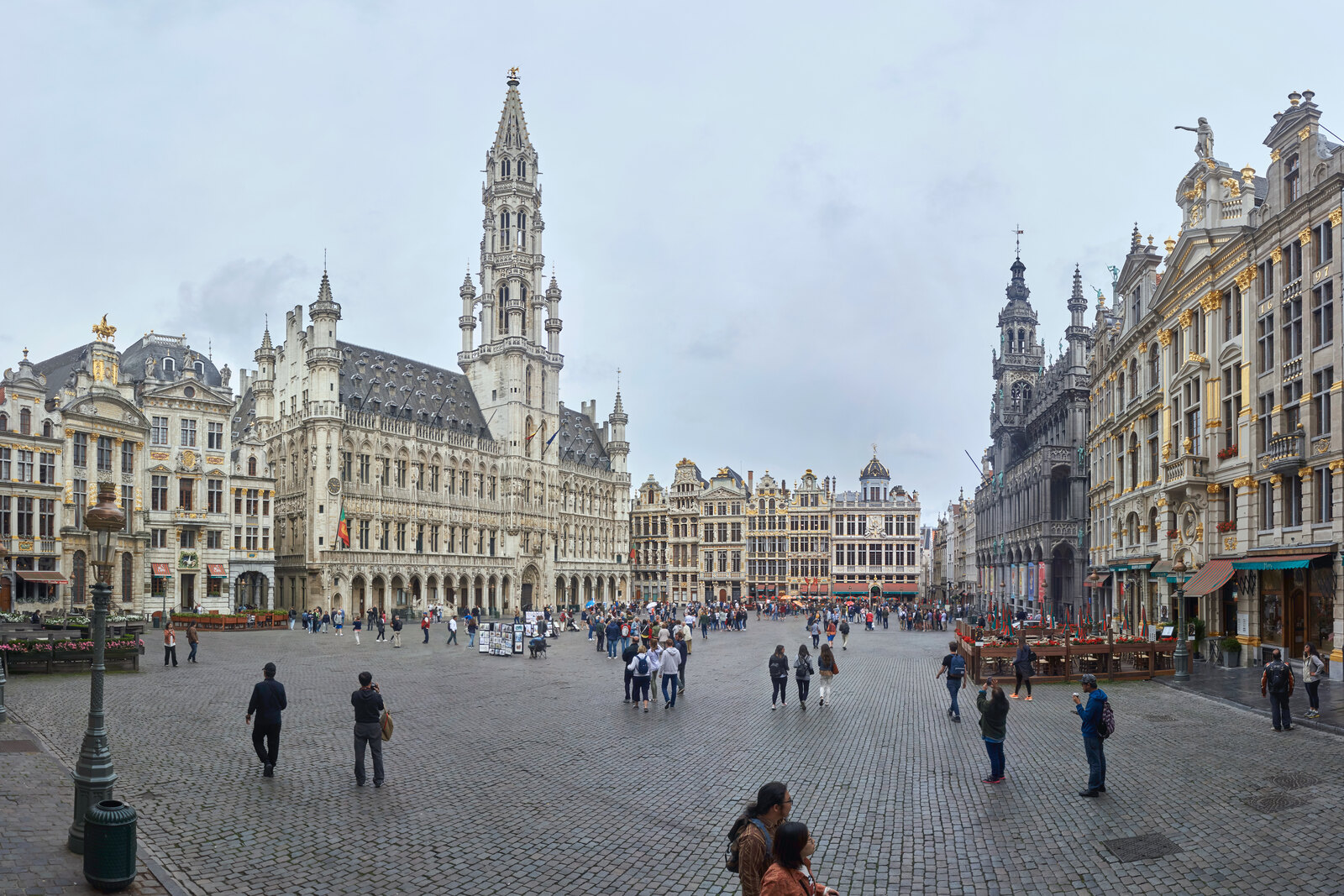
Look around first
What to notice
- The ship's stern of Le Cornet
- Tools in the bases of the columns of Le Sac
- Gilded facades
- Maison du Roi d'Espagne
The story of the place
In these houses, the elders of craft associations gathered for councils and kept a common treasury, while bakers, boatmen, tailors, coopers, and cabinetmakers worked in workshops throughout the city. The ship's stern on the roof of Le Cornet and the tools by the columns of Le Sac left traces in stone of those who met behind the windows. After artillery fire destroyed the early row, the city council required owners to have models of the new facades approved. Unauthorized construction threatened the owner with a fine and demolition.
On January twenty-seventh, fourteen twenty-one, masters of Brussels guilds occupied the Lower Town market in front of the new town hall. The gilded facades around it did not yet exist. There were market stalls, wooden houses, and the city council, which did not admit craftsmen.
A guild brought together masters of one trade. It set the length of apprenticeship, charged an admission fee, checked the quality of goods, and decided who could open a workshop. For a baker, cooper, or cabinetmaker, membership meant the right to earn a living through the trade. Meanwhile, seats on the city council went to representatives of seven patrician lineages—families that passed offices down within their own circle.
Philip of Saint-Pol, the younger brother of Jean IV, Duke of Brabant, decided to take advantage of this discontent. Philip sought the regency and won the support of the Estates of Brabant and the Brussels guilds. Jean returned to the city with a detachment made up mainly of German knights. The craftsmen who had supported Philip expected reprisals. They gathered precisely here: in front of the town hall, where their opponents met, and at the market on which their livelihoods depended.
A few days later, Jean's supporters were expelled or arrested. On February eleventh, Philip confirmed a new system of government for Brussels. The guilds were grouped into nine so-called nations—these were groups of trades, not peoples or states. Their representatives received city offices alongside the patricians. When Jean IV returned, he recognized this agreement. The craftsmen who had come to the square expecting reprisals remained participants in city government for almost four centuries.
After that, the guilds began to occupy houses around the town hall. Inside were meeting halls and common treasuries; the masters themselves worked in their workshops throughout the city. Boatmen, bakers, tailors, haberdashers, cabinetmakers, and coopers settled here. That is why the houses are named after trades and their symbols: a facade announced whose elders met behind its windows.
The first guild houses almost disappeared in August sixteen ninety-five, when French artillery burned most of the square. The owners had to rebuild, but the city council did not allow them to restore the former disorderly row. The wealthy guild of bakers was ordered to sell its old premises and build the present-day Maison du Roi d'Espagne on the corner. From April twenty-fourth, sixteen ninety-seven, every owner and builder was required to submit a facade model in advance. Unauthorized work carried a fine of one hundred patacons, and the building had to be dismantled at the violator's expense.
The guilds followed the overall design, but left their own trades in the stone. The bases of the columns of Le Sac are carved with the tools of cabinetmakers and coopers. The top of Le Cornet, which belonged to the boatmen, is shaped like a ship's stern. Its present-day crowning feature was recreated at the turn of the nineteenth and twentieth centuries from an old drawing.
In seventeen ninety-five, the French administration abolished the Brussels guilds, confiscated their houses, and sold them to private owners. The boatmen no longer meet beneath the ship's stern, but it still hangs above the sixth house and indicates who gained a place on this square in fourteen twenty-one.
Useful on site
Exterior viewing on an open square; individual museums, halls, and establishments in the houses follow their own schedules.
Checked: July 1, 2026. Check the official source before visiting.Do not try to make out the entire row from one point: walk along the perimeter and compare the sculptural symbols of the individual houses. A visit to the Museum of the Belgian Brewers inside L'Arbre d'Or is not automatically included in the street walk.