 Guide On Map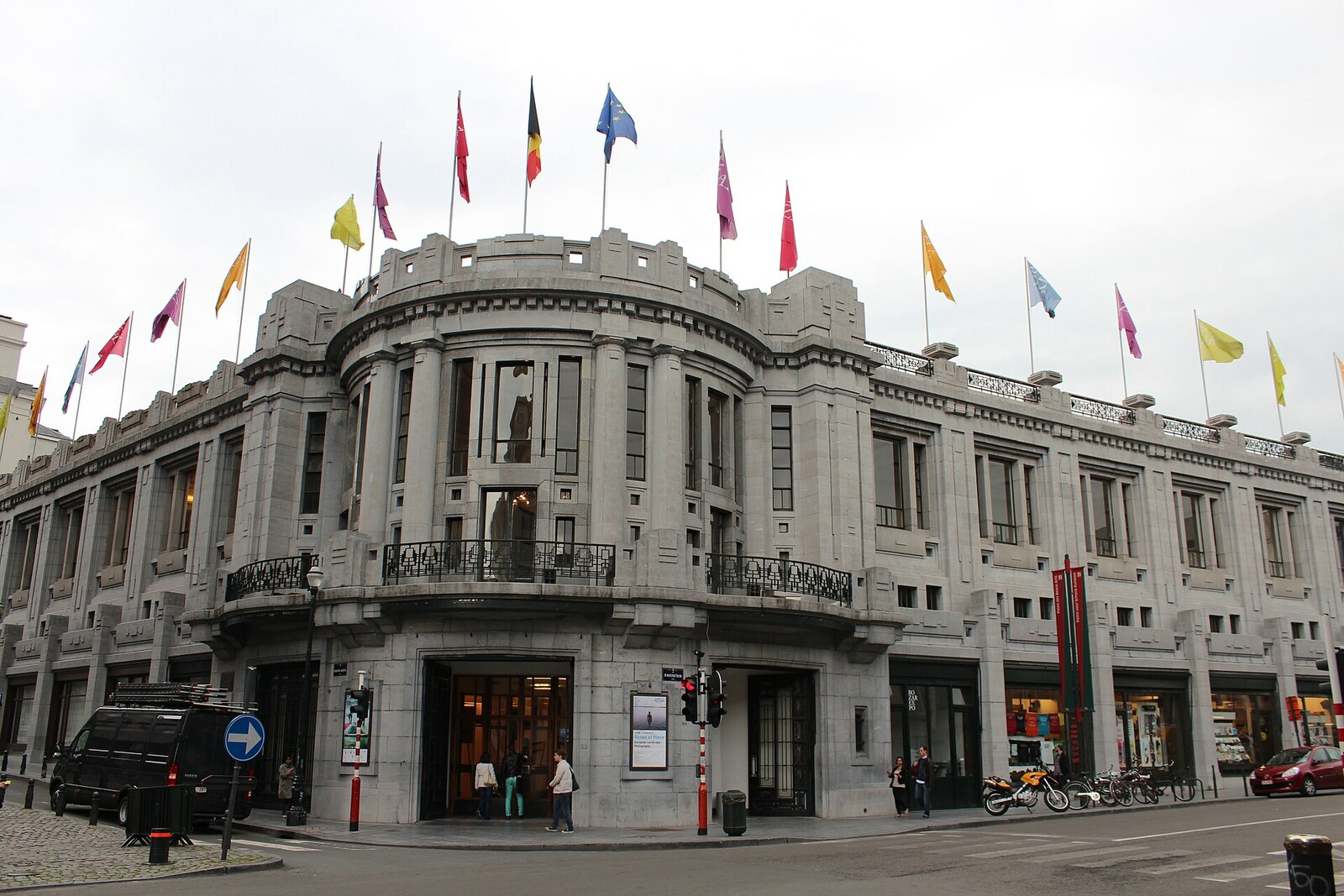
Look around first
What to notice
- Low roofline
- Facade on the slope
- Interior passages between levels
- Large oval hall
The story of the place
A substantial part of the Centre for Fine Arts is built into the steep slope above Rue Ravenstein. Under the city conditions, the view from the top of the hill could not be blocked, and small shops were required along the street. The large concert hall was placed below, with differently lit halls for sculpture and painting above it; corridors link these levels, while the low roof leaves the hill open. From the first seasons, separate associations handled concerts, exhibitions, performances, lectures, and film screenings here, each with its own committee and guarantee fund.
In the summer of nineteen twenty, the Belgian government asked Parliament for nine million francs to build exhibition halls and a large concert venue. The Chamber of Deputies agreed unanimously, but the senators considered the expense excessive and refused. The project, already entrusted to architect Victor Horta, was left without funding.
Then Adolphe Max, the mayor of Brussels, who was determined to see the construction through, invited Henri Le Bœuf. Le Bœuf's main profession was banking; he devoted his free time to music criticism and organizing concerts. Now both of his trades were needed at once: to find a way to pay for the building and to understand in advance what would fill its halls.
On April fourth, nineteen twenty-two, the founders registered a nonprofit association with private management and a public mission. The city transferred the site to it, the association issued bonds for fifteen million francs, and the state guaranteed the interest and repayment of the loan. The senators rejected a direct budget payment; they accepted a debt guarantee for an independent organization. Le Bœuf became its managing director.
That is why the Centre for Fine Arts appeared here. The city provided an awkward site on a steep slope between the square in front of the Royal Palace of Brussels and Rue Ravenstein. City conditions prohibited blocking the view from the top of the hill and required a row of small shops along the street. Horta, who had to fit in exhibitions, concerts, and public gatherings, redrew the plans five times. He placed the large concert hall in the lower part of the site; above it, he arranged rooms for sculpture and painting, which needed different lighting. Hence the low roofline and the interior passages between several levels: a substantial part of the centre lies below the facade in front of which the public stands.
Le Bœuf also intervened in Horta's work. They argued especially over the large concert auditorium. At first, the architect conceived a hall in the shape of a Latin cross. When the contractor proposed replacing the steel frame with cheaper reinforced concrete, Horta chose an oval plan. Le Bœuf feared for the acoustics and demanded that the architect study the finest European halls. Horta refused. The banker then sent the drawings to an acoustics specialist in Paris himself and continued discussing the stage, the spacing between seats, and the lighting with the architect. A mistake would have damaged both of his reputations: he was responsible for both the loan and the future concerts.
The large hall opened on October nineteenth, nineteen twenty-nine. It was later named after Henri Le Bœuf. The oval form remained, and the quality of its acoustics was compared with halls in Vienna, Amsterdam, and Boston.
After the opening, Le Bœuf brought practices familiar from banking into the schedule. Separate associations handled concerts, exhibitions, performances, and lectures; each had its own committee and guarantee fund, and they rented premises from the Centre for Fine Arts. From the very first seasons, contemporary painting was shown here, orchestras and lecturers were invited, and film screenings were held. The centre did not depend on a single collection or a single art form.
Today, concerts, temporary exhibitions, film, performances, and public talks still appear together on one program. Since two thousand two, the name “BOZAR” has designated this cultural program; the official name of the building and institution has remained the same—Centre for Fine Arts. Behind its low facade, the main oval hall still bears the name of the banker who was called in after the refusal to provide funding.
Useful on site
Exhibitions usually Tue–Sun 10:00–18:00; ticket office 10:00–17:00, Mon closed.
Checked: June 28, 2026. Check the official source before visiting.From outside, the architectural compromise is easy to read; concerts and exhibitions require separate planning.