 Guide On Map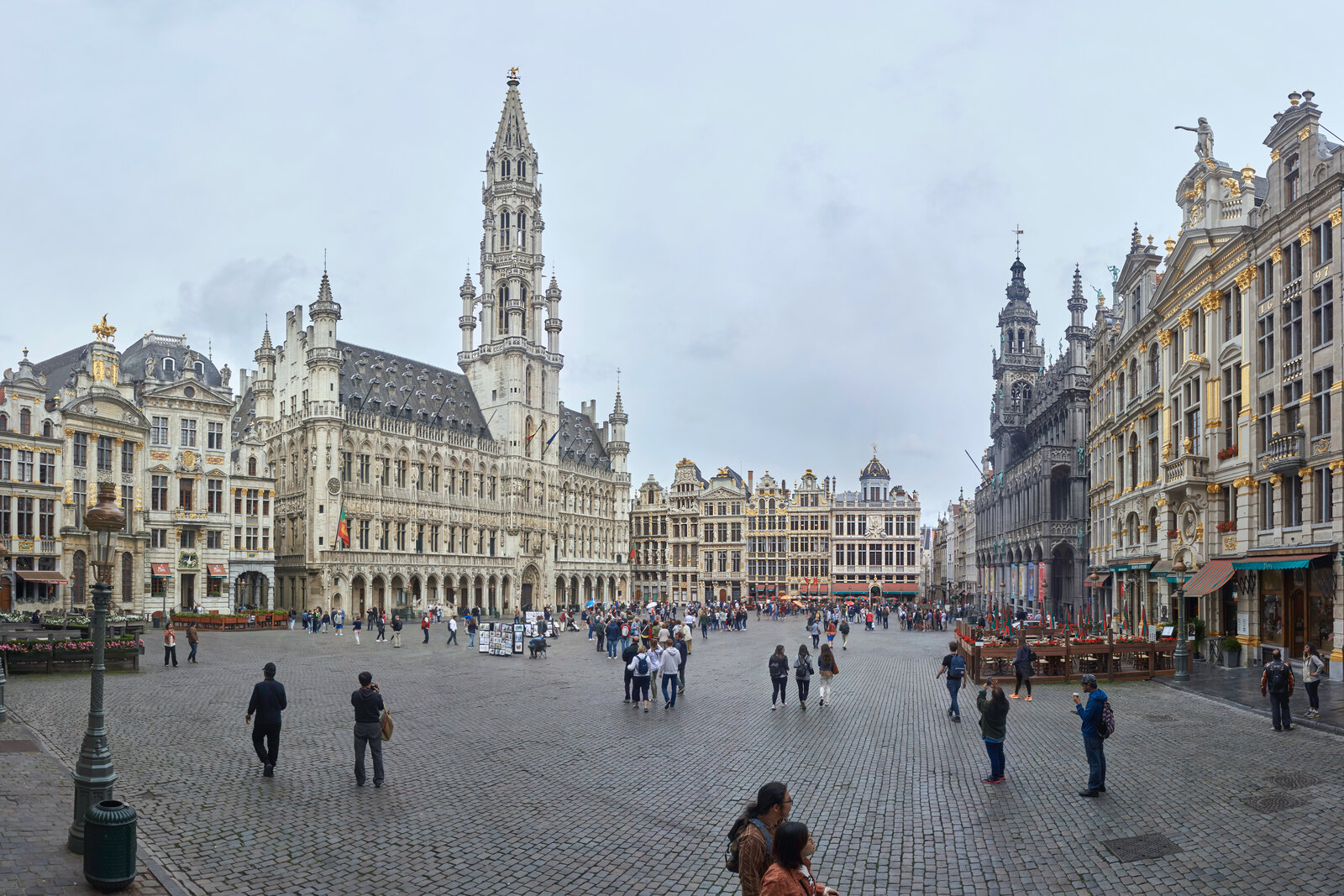
Look around first
What to notice
- Stone facade
- Tower with a spire
- Statues on the facade
The story of the place
The Gothic town hall runs along one side of Grand-Place, and its old structure is continued by later wings enclosing an inner courtyard. The stone facade with its statues looks entirely medieval, although many of the figures appeared during the building's nineteenth-century renovation. Members of the city council met here, important documents and art collections were kept here; today the mayor's office and the city college work here, ceremonies take place, and marriages are concluded.
In August sixteen ninety-five, French artillerymen aimed their guns at the spire of this town hall. The tower served as their target. Marshal François de Neufville, Duke of Villeroy, commanded the French army in Flanders and was supposed to force the allied troops to withdraw from outside Namur.
Three years earlier, the French king Louis XIV had personally accepted the surrender of Namur, one of the strongest fortresses in the Low Countries. His engineers had managed to reinforce the captured citadel. Now William III, the English king and commander of the allied army, had laid siege to it in order to take it from France. Villeroy could not lift the siege with a direct attack. Louis then ordered Brussels shelled: destroying the capital of the Spanish Netherlands was meant to force William to send troops here.
After a warning, most residents had time to flee. French batteries fired for nearly two days. The fire destroyed about a third of the city. The town hall, where city councilors met and where archives and works of art were kept, burned out from within. Almost all the houses of Grand-Place collapsed around it.
Villeroy's calculation did not work. William did not lift the siege, and a few weeks later the French garrison of Namur surrendered. Louis lost the fortress for which he had ordered Brussels shelled.
The town hall's stone facade and the tower chosen by the artillerymen as a target remained standing. City councilors restored and expanded the building: new wings appeared behind the Gothic structure around an inner courtyard. Most of the statues on the facade were installed during the nineteenth-century restoration, but the tower itself survived that shelling.
Behind this facade, the mayor of Brussels and the city college still work, official receptions are held, and marriages are registered. Above them stands that very spire at which Villeroy ordered the guns to be aimed, to save Namur.
Useful on site
Official visits: Mon and Wed 11:00–17:00, Fri–Sat 15:00–19:00, Sun 11:00–17:00; closed Tue and Thu. Last entry one hour before closing. Panoramic ascent of the tower — on weekends on a separate schedule.
Checked: July 1, 2026. Check the official source before visiting.Compare the wings from some distance away: right beside the facade, the asymmetry almost disappears. The courtyard and interiors require a separate access check; the original figure from the spire is kept in Brussels City Museum.