 Guide On Map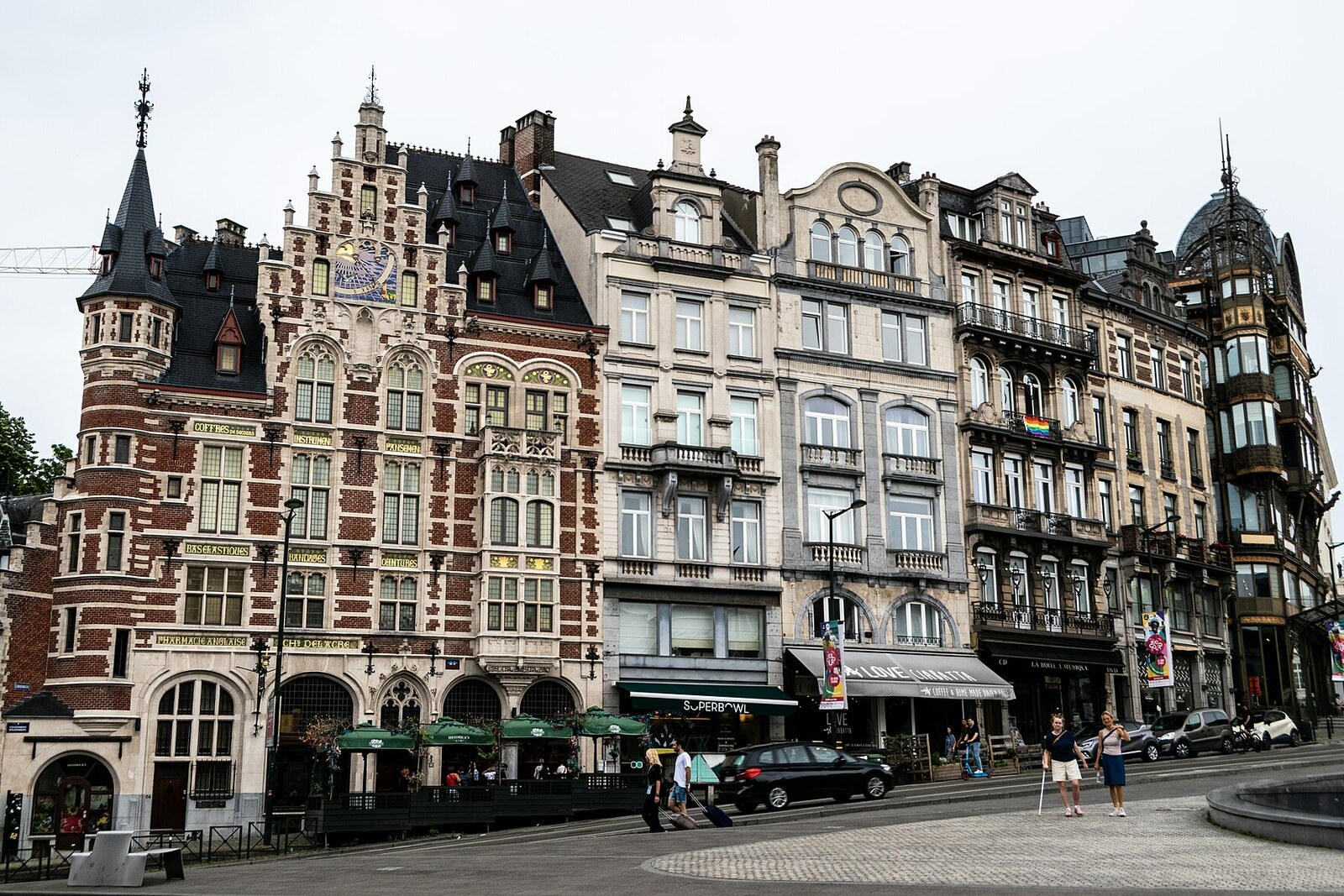
Look around first
What to notice
- Lower stone walls of the palace
- Cellar rooms
- Stone support of the palace
The story of the place
Beneath Place Royale stretch the stone cellars and lower walls of Coudenberg Palace. They held the buildings on the hillside; when the new square with its houses appeared above, this lower level ended up beneath their foundations. The palace housed the court of the rulers of the Austrian Netherlands: there were private quarters, reception rooms, and kitchens here. Now, beneath the square, remain the stone supports that once carried the palace.
On the night of February third to fourth, seventeen thirty-one, Maria Elisabeth of Austria returned to the private quarters of the palace on Coudenberg. She was the ruler of the Austrian Netherlands: she lived here, received ministers, and governed the lands on behalf of her brother, Emperor Charles VI.
After a hard day, Maria Elisabeth fell asleep without ordering the candles and braziers to be put out. The fire spread to the wooden paneling. Around midnight, the neighboring rooms caught fire.
Under court protocol, no one was allowed to enter the ruler's private quarters without permission. The servants and palace guards observed this prohibition even when they needed to reach the seat of the fire. The city militia, which quickly came to help, was pushed back from the palace amid the confusion. Water was freezing, and there were not enough hand pumps or leather buckets.
One grenadier did break protocol: he smashed down the doors to the quarters and carried Maria Elisabeth out. She survived; other people died. By morning, the fire had destroyed the main residential wing and the kitchens, where the ruler's court was housed.
An investigation then began. Witnesses avoided directly accusing Cappellini, Maria Elisabeth's favorite lady's maid, who had been with her in the quarters. The official conclusion named the kitchen servants as those responsible. They were blamed for carelessness while making jam for a grand ball scheduled two days later. Surviving case materials show that this version protected both the ruler and her favorite. Cappellini was not named guilty, and Maria Elisabeth retained her post until her death.
The court moved into the neighboring Hôtel de Nassau. Maria Elisabeth herself preferred the country Mariemont Castle and died there ten years later. She became the last ruler of the Austrian Netherlands to live in Coudenberg Palace.
For about another forty years, the charred buildings were called the Burnt Court. In the seventeen seventies, Empress Maria Theresa allowed the remains of the palace to be demolished and the hill to be leveled for the new Place Royale. The upper floors were dismantled. The lower rooms, which held the buildings on the slope, were filled in or adapted by the builders as foundations for new houses.
These very cellars and lower walls make up the present archaeological site. Maria Elisabeth's quarters and the door smashed down by the grenadier have disappeared. Beneath the square remains the stone support of the palace, which after the fire was decided not to remove from the hill.
Useful on site
Tue-Fri 9:30-17:00; weekends and July-August 10:00-18:00; Mon closed.
Checked: June 28, 2026. Check the official source before visiting.The underground visit is self-guided; check access in advance and allow for the cool temperature, steps, and uneven floor.