 Guide On Map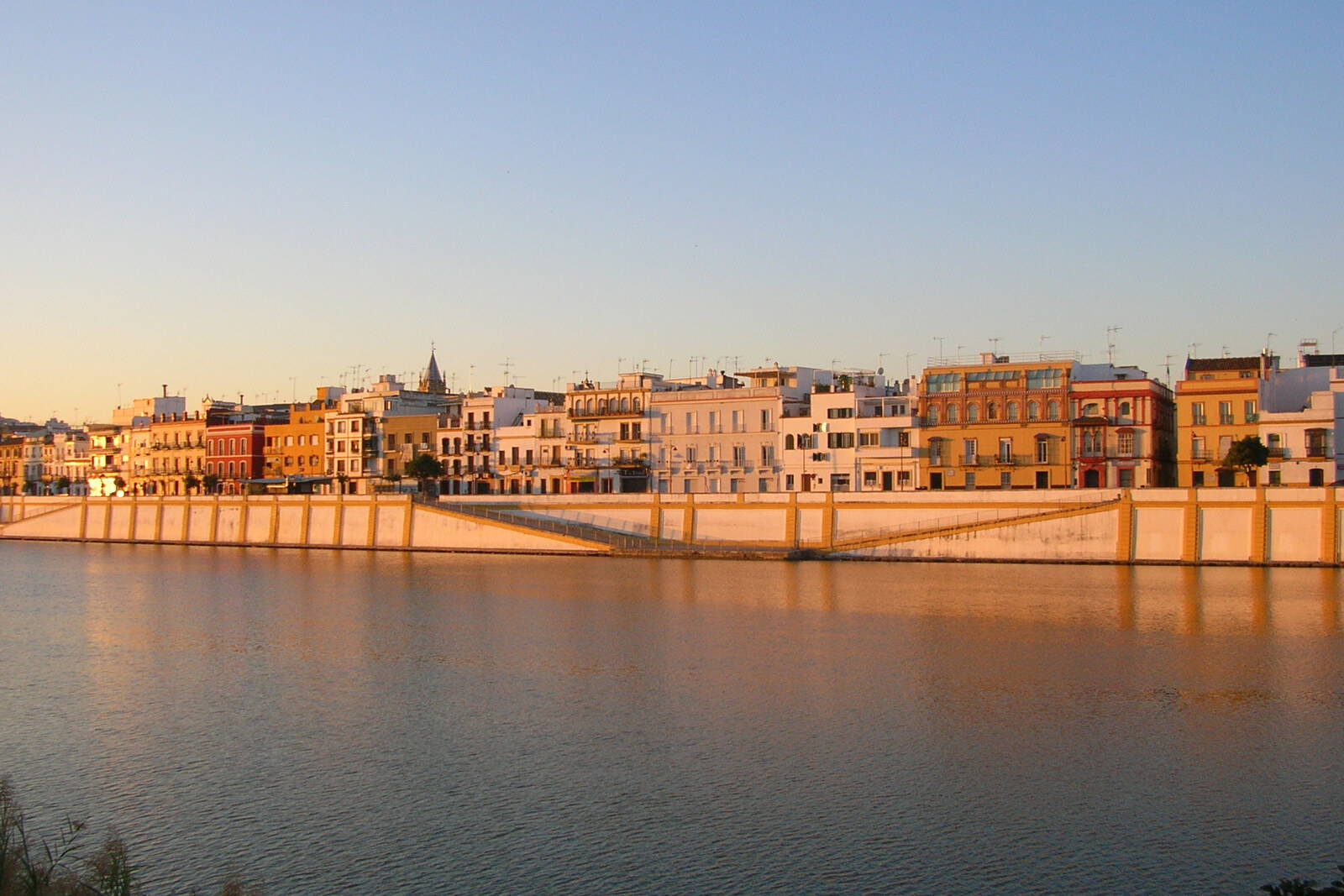

This place does not have an audited photo yet.
Selected place
Betis Street
Local name: Calle Betis
The ending will show how the bank was both protected from water and left open for vessels.
Start with 22 highlights or open the complete catalog of 157 curated places.
Highlights include Betis Street, Calle Mateos Gago, Callejón del Agua, Centro Cerámica Triana, Church of Santa María la Blanca, General Archive of the Indies.
We have connected important places into ready-made walks with a clear order, stories and practical details.
Start with 22 highlights, or reveal all 157 curated places.
Local name: Calle Betis
The ending will show how the bank was both protected from water and left open for vessels.
The ending will show how the bank was both protected from water and left open for vessels.
The width of the street will become tangible evidence of the old neighbourhood's struggle with the new procession route.
This stop will link the fortress wall to the workings of the medieval city water supply.
The factory complex will make it possible to see the production that usually remains behind finished painted ceramics.
Here, medieval walls, a Baroque commission, and the empty spaces left by Murillo’s originals come together.
This stop will show how a commission for one book led to the creation of an entire state archive.
The history of the commission will explain the price the caster paid to raise an enormous bronze weather vane onto the tower.
At the end, you will see the permanent home that was created after decades of temporary shelters.
The ceramic panel shows how an image was preserved and how credit for the work was assigned.
Here, the boundary that was moved back to open the neighbourhood to city traffic will come into view.
The final stop will show how a legend helped keep in place an object threatened with disappearance.
The old pulpit will preserve the trace of a preacher whose name the clergy decided to remove.
This present-day small square will take its place in the history of Seville theater, its debts, and its complete disappearance.
This stop will show how, after the church was demolished, the square preserved its memory without preserving the exact location of the main burial.
The square explains why the crossing made this corner of Triana both a military and an urban junction.
Here a small monument will link an earthquake, a cathedral ceremony, and the square’s very name.
The bullring will show how a single evening could restore a professional reputation before the most demanding audience.
Under these vaults, the port's history becomes a history of supplies, labor, and risk, not just of great voyages.
Here, the sword of a dead king will become the guarantee of two campaigns and of his grandson's political fate.
The tower will pose the walk's central question: what residents are willing to defend when the old stands in the way of the new.
Here, the familiar old silhouette is separated from the new deck in a structure that connects the two banks.
The market will add to the route the story of traders who fought to return to their former site.
Nearest audio-route stop: Plaza de Doña Elvira — 70 m in a straight line, route Santa Cruz neighbourhood and Seville’s former Jewish Quarter
Nearest audio-route stop: Giralda — 90 m in a straight line, route Seville Between Seville Cathedral, the General Archive of the Indies, and the Royal Alcázar of Seville
Nearest audio-route stop: Centro Cerámica Triana — 140 m in a straight line, route Guadalquivir River: from El Arenal to Triana
Nearest audio-route stop: Seville Cathedral — 20 m in a straight line, route Seville Between Seville Cathedral, the General Archive of the Indies, and the Royal Alcázar of Seville
Nearest audio-route stop: Plaza del Altozano — 70 m in a straight line, route Guadalquivir River: from El Arenal to Triana
Nearest audio-route stop: Plaza de Santa Cruz — 80 m in a straight line, route Santa Cruz neighbourhood and Seville’s former Jewish Quarter
Nearest audio-route stop: Calle Mateos Gago — 60 m in a straight line, route Santa Cruz neighbourhood and Seville’s former Jewish Quarter
Nearest audio-route stop: Callejón del Agua — 70 m in a straight line, route Santa Cruz neighbourhood and Seville’s former Jewish Quarter
Nearest audio-route stop: Centro Cerámica Triana — 10 m in a straight line, route Guadalquivir River: from El Arenal to Triana
Nearest audio-route stop: Hospital de los Venerables — 80 m in a straight line, route Santa Cruz neighbourhood and Seville’s former Jewish Quarter
Nearest audio-route stop: Plaza de Doña Elvira — 60 m in a straight line, route Santa Cruz neighbourhood and Seville’s former Jewish Quarter
Nearest audio-route stop: Royal Shipyards of Seville — 80 m in a straight line, route Guadalquivir River: from El Arenal to Triana
Nearest audio-route stop: Plaza del Altozano — 120 m in a straight line, route Guadalquivir River: from El Arenal to Triana
Nearest audio-route stop: Church of Santa María la Blanca — 120 m in a straight line, route Santa Cruz neighbourhood and Seville’s former Jewish Quarter
Nearest audio-route stop: Plaza de Santa Cruz — 50 m in a straight line, route Santa Cruz neighbourhood and Seville’s former Jewish Quarter
Nearest audio-route stop: Church of Santa María la Blanca — 40 m in a straight line, route Santa Cruz neighbourhood and Seville’s former Jewish Quarter
Nearest audio-route stop: Patio de los Naranjos — 120 m in a straight line, route Seville Between Seville Cathedral, the General Archive of the Indies, and the Royal Alcázar of Seville
Nearest audio-route stop: Betis Street — 140 m in a straight line, route Guadalquivir River: from El Arenal to Triana
Nearest audio-route stop: Church of Santa María la Blanca — 130 m in a straight line, route Santa Cruz neighbourhood and Seville’s former Jewish Quarter
Nearest audio-route stop: Plaza de Santa Cruz — 100 m in a straight line, route Santa Cruz neighbourhood and Seville’s former Jewish Quarter
Nearest audio-route stop: Real Maestranza Bullring — 80 m in a straight line, route Guadalquivir River: from El Arenal to Triana
Nearest audio-route stop: Church of Santa María la Blanca — 20 m in a straight line, route Santa Cruz neighbourhood and Seville’s former Jewish Quarter
Nearest audio-route stop: Lion Gate of the Royal Alcázar of Seville — 120 m in a straight line, route Seville Between Seville Cathedral, the General Archive of the Indies, and the Royal Alcázar of Seville
Nearest audio-route stop: Lion Gate of the Royal Alcázar of Seville — 90 m in a straight line, route Seville Between Seville Cathedral, the General Archive of the Indies, and the Royal Alcázar of Seville
Nearest audio-route stop: Callejón del Agua — 60 m in a straight line, route Santa Cruz neighbourhood and Seville’s former Jewish Quarter
Nearest audio-route stop: Murillo Gardens — 80 m in a straight line, route Santa Cruz neighbourhood and Seville’s former Jewish Quarter
Nearest audio-route stop: Giralda — 50 m in a straight line, route Seville Between Seville Cathedral, the General Archive of the Indies, and the Royal Alcázar of Seville
Nearest audio-route stop: Real Maestranza Bullring — 30 m in a straight line, route Guadalquivir River: from El Arenal to Triana
Nearest audio-route stop: Centro Cerámica Triana — 130 m in a straight line, route Guadalquivir River: from El Arenal to Triana
Nearest audio-route stop: Royal Shipyards of Seville — 150 m in a straight line, route Guadalquivir River: from El Arenal to Triana
Nearest audio-route stop: Murillo Gardens — 110 m in a straight line, route Santa Cruz neighbourhood and Seville’s former Jewish Quarter
Nearest audio-route stop: Patio de Banderas — 50 m in a straight line, route Seville Between Seville Cathedral, the General Archive of the Indies, and the Royal Alcázar of Seville
Nearest audio-route stop: Patio de los Naranjos — 20 m in a straight line, route Seville Between Seville Cathedral, the General Archive of the Indies, and the Royal Alcázar of Seville
Nearest audio-route stop: Torre del Oro — 10 m in a straight line, route Guadalquivir River: from El Arenal to Triana
Nearest audio-route stop: Royal Shipyards of Seville — 150 m in a straight line, route Guadalquivir River: from El Arenal to Triana
Nearest audio-route stop: Triana Market — 70 m in a straight line, route Guadalquivir River: from El Arenal to Triana