 Guide On Map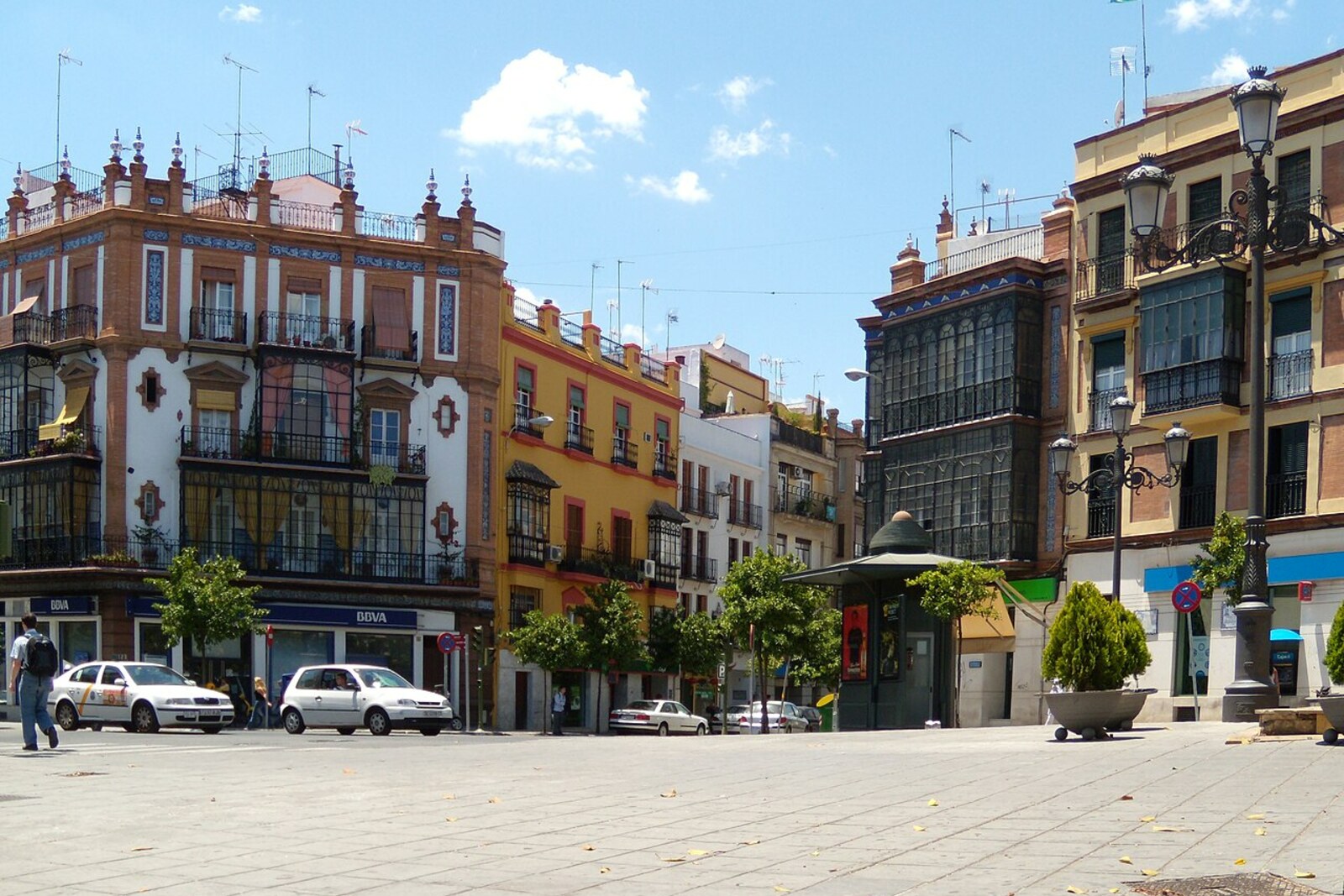
Look around first
What to notice
- The square in front of the bridge
- The mouth of Calle San Jacinto
- The raised approach to the crossing
The story of the place
The name Altozano is linked to a small rise by the river; city documents record it as early as fifteen thirty-three. The raised approach to the crossing brings together Calle San Jacinto, Calle Pureza, Calle San Jorge, and Baetis here. The square in front of the bridge serves as Triana's exit toward the Guadalquivir River and as the route back toward the neighborhood's inner streets. Pedestrians still cross it today on their way to the crossing.
On August twenty-seventh, eighteen twelve, French soldiers were removing planks from the bridge in front of this square. The present iron Triana Bridge did not yet exist: a deck laid over linked boats crossed the Guadalquivir River. Its western end met Plaza del Altozano. Had they managed to dismantle the deck, the advancing forces would have remained in Triana, while the French garrison could have left Seville without being pursued.
The French had occupied the city for two and a half years. Now the main forces of Marshal Nicolas Soult were retreating from Andalusia, while the rearguard had taken up position before the crossing: infantry, artillery, a trench, and a barricade. The Spanish general Juan de la Cruz Mourgeón and the British colonel John Skerrett wanted to seize the bridge before it was destroyed. The French repelled two assaults; the advancing forces suffered heavy losses.
Before the third attack, Juan Downie, commander of the Loyal Extremadura Legion, rode forward. This Scotsman had begun as a merchant in Trinidad, lost all his money when a bank failed, and made war his new profession. His own legion was meant to bring him rank and status. After two unsuccessful attacks, Plaza del Altozano gave Downie the chance to prove that he could command in battle.
In his hand he held a blade that the Marquesses of la Conquista family considered to be the sword of their ancestor Francisco Pizarro. Downie had already been wounded twice, but he led his men toward the barricade again. Almost alone, he guided his horse through the gap left by the removed planks. French grapeshot injured his right eye and ear; behind the barrier, he was knocked from the saddle and captured. Before his capture, Downie managed to throw the sword over the barricade to his soldiers, so that Pizarro's blade would not fall to the enemy as a trophy.
The charge itself was not enough to seize the crossing. Light infantry climbed over the remaining beams, artillerymen fired from the Triana waterfront, and residents brought planks and laid the passage again. Allied units entered Seville across the restored bridge. The French garrison withdrew from the city, leaving prisoners, guns, and supply wagons behind.
Downie was taken away with the retreating forces. He was so seriously wounded that he was soon released a few leagues from Seville; he had to receive treatment in Great Britain for almost a year. Yet the attack brought him the status for which he had risked his life: decorations, the rank of general, and, after the war, the post of keeper of the Seville Alcázar. The sword also remained with his men.
The old bridge, the barricade, and the removed planks are no longer here. Triana Bridge begins almost where the bridge of boats began. Calle San Jacinto, Calle Pureza, Calle San Jorge, and Baetis still converge at its end. The word “altozano” means a small rise: the name appears in documents as early as fifteen thirty-three and referred to the raised approach to the crossing. Pedestrians cross the square for the very reason Downie's soldiers converged here: to reach what was then the only route across the river.
Useful on site
Open public square; individual cafés, the market, and shops keep their own hours.
Checked: June 26, 2026. Check the official source before visiting.Check the view through the Juan Belmonte Monument without stepping onto the roadway; the square can be busy, so move away from the passageways.