 Guide On Map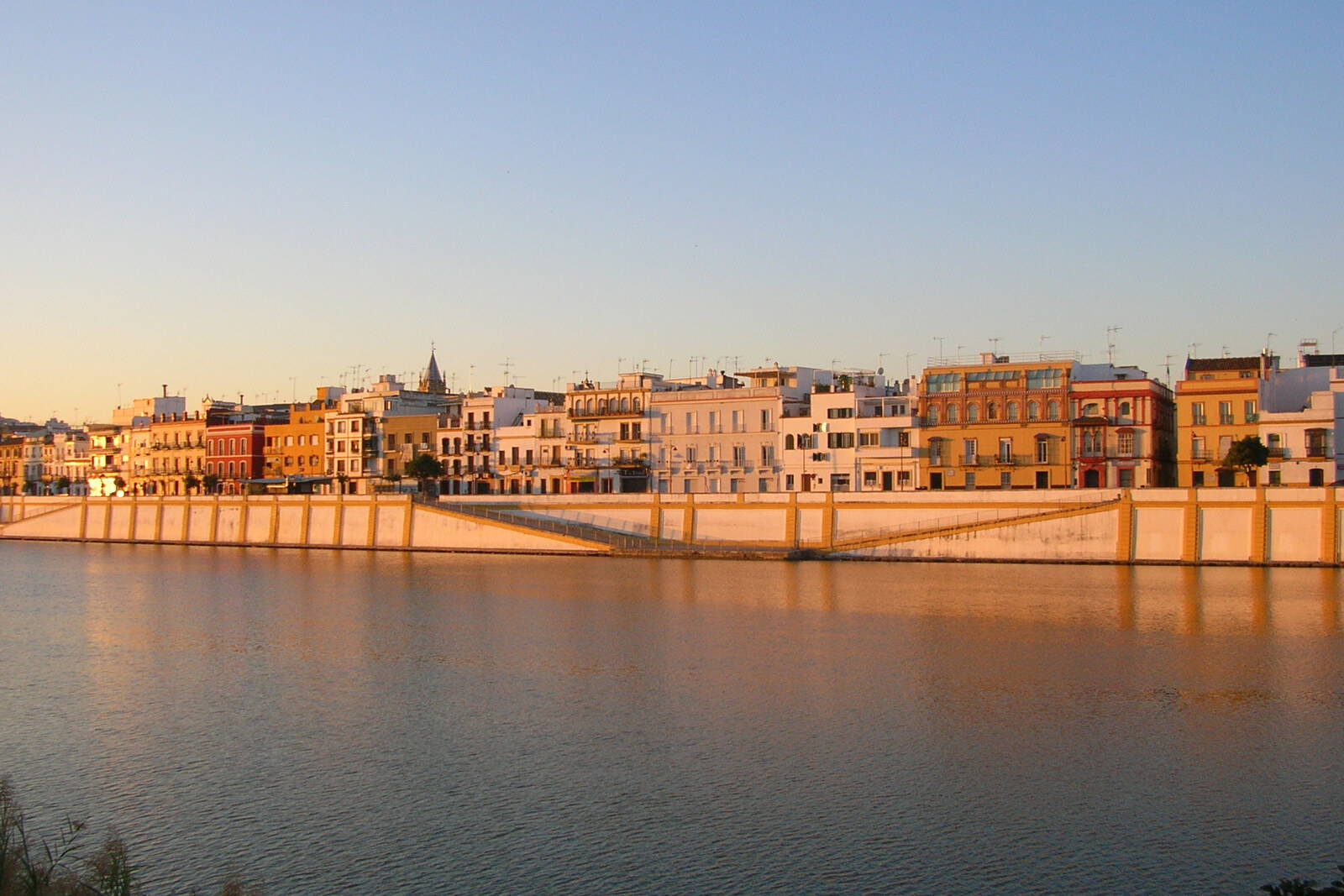
Look around first
What to notice
- White retaining wall
- Two diverging ramps
- Mooring platforms
- “Baetis” sign
The story of the place
In municipal records, this side of the river was called both Street of the River and Riverbank, while its current name preserved the ancient Roman name of the Guadalquivir River. The white masonry below the railing holds Triana at the height the district acquired after a series of floods; the two diverging descents recall that the street grew over a working river edge. The wall was set on wooden piles driven into the riverbed and gradually extended to Santa Ana Church. On one side of it lived shipowners, captains, and pilots; on the other began the water on which their income depended.
Betis Street is raised above the water on a tall white wall. Old ramps descend from the sidewalk to the river, and mooring platforms have survived at their base. This embankment was created for people who needed to stay close to vessels while keeping away from floods.
Until the end of the eighteenth century, a poorly fortified edge with houses and piers stretched along here. Its residents included shipowners, captains, pilots, and sailors: their income depended on ships, yet rising water entered the same quarter where they lived. During the flood of seventeen eighty-three, Triana was inundated, and the connection with the rest of Seville across the boat bridge of the time was almost cut off.
After that, the municipal architect Félix Caraza prepared an overall plan to protect the banks. First, builders raised a double stone wall opposite, on the El Arenal side. A fortified embankment, a roadway, and a promenade appeared there. However, the raised left bank blocked the water's former outlet. Now even a relatively small rise in the river directed it toward lower Triana.
For the residents on this side, Caraza planned a separate barrier. In seventeen eighty-seven, builders drove wooden piles into the riverbed and began raising an inclined stone wall on them from Plaza del Altozano. Two diverging ramps were built into the masonry: homes could be sheltered behind the wall, while the openings still allowed access to the berths. Funds ran out the following year, so the work dragged on; one of the berths was completed in seventeen ninety-four, and the wall was later extended to Santa Ana Church. The floods did not stop at once, but the bank acquired its present height and a clear boundary.
At first, this line was called Street of the River, then Riverbank, and River Promenade. In eighteen fifty-nine, the city council replaced the literal name with Baetis—the name the Romans gave to the Guadalquivir River. The ancient name of the water remained on the signs, and beneath the sidewalk lies the structure that made a street possible here at all: the white retaining wall and two descents to the former working berths.
Useful on site
Open street 24 hours; establishments on Betis Street operate according to their own schedules.
Checked: June 26, 2026. Check the official source before visiting.It is convenient to listen to the story on the open stretch by the water, without blocking house entrances or terrace space; evening light changes the view but is not essential.