 Guide On Map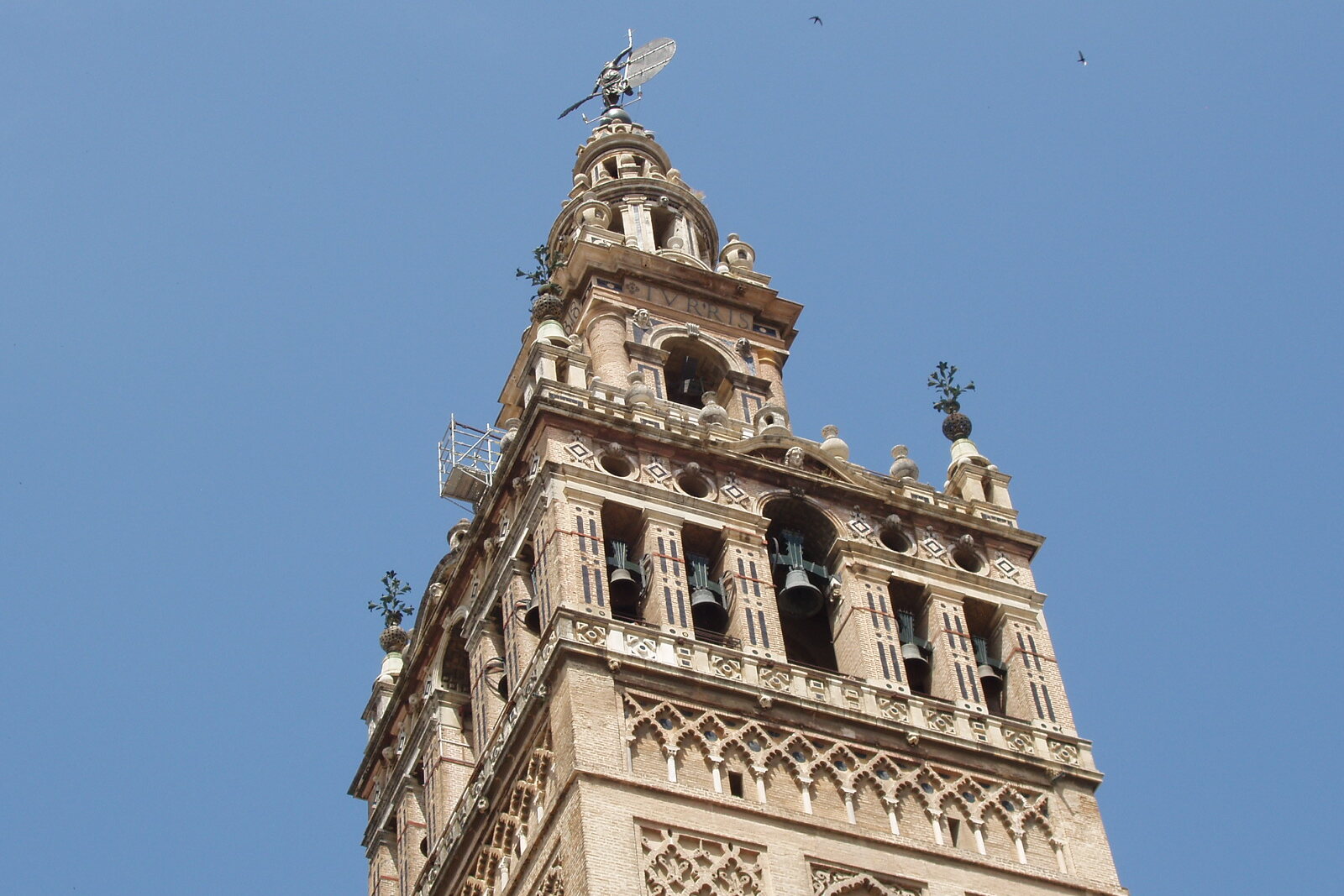
Look around first
What to notice
- The brick lower part of the tower
- The bell tier
- The bronze female figure
- The weather vane at the top
The story of the place
The lower tiers of the Giralda were built of brick in the days of the Great Mosque of Seville. The tower then served as a minaret, from which the muezzin called Muslims to prayer. When the mosque was turned into a Christian cathedral, bells were placed on the former tower, and their tier rose above the old brick base. At the very top, a bronze statue still turns with the wind—the statue from which the tower received its present name.
The bronze woman at the top looks small from here. In fact, she is a four-meter figure weighing around one and a half tons. In fifteen sixty-six, the caster Bartolomé Morel undertook to make her for the cathedral bell tower. Morel cast cannons and bells—his family lived on such commissions.
The lower brick part of the tower had already stood for almost four centuries by then. It had been built as the minaret of the Great Mosque of Seville: from here, the muezzin called Muslims to prayer. After the mosque was turned into a Christian cathedral, bells were placed on the tower, and the chapter commissioned a new crowning—Giraldillo, which was to serve as an enormous weather vane.
Morel was promised six hundred gold ducats. Two hundred were due after the casting, while the remaining four hundred were due only once the figure had been installed at the top and begun to turn. Morel's father stood surety for him. During the work, Morel's house and workshop burned down. Debts brought the caster to the Royal Prison of Seville.
Hernán Ruiz, the architect who needed to finish the bell tower, asked for Morel's release and undertook to settle with his creditor. The caster returned to the commission. The figure was cast from bronze in one piece, then raised onto the tower on August thirteenth, fifteen sixty-eight, and fixed to a rotating rod. After the installation, Morel again asked the chapter to reimburse the costs and losses this work had caused him.
At the end of the sixteenth century, Giralda was the name of the rotating figure itself. Later, Seville's residents transferred its name to the whole tower, while the statue came to be called Giraldillo, a diminutive of Giralda. Morel's original casting stands at the top: after restoration, it was returned there in two thousand five, and the bronze woman still turns with the wind.
Useful on site
The cultural visit to Seville Cathedral and the Giralda depends on services and works. On the verification date, a temporary change is in effect from 8—30 June 2026 because of work on the bell tower: check the official schedule before entering. Checked 2026-06-29.
Checked: June 29, 2026. Check the official source before visiting.The climb is part of the visit to the cathedral complex and requires separate consideration of your stamina; the story of the two tiers can also be fully read from the ground.