 Guide On Map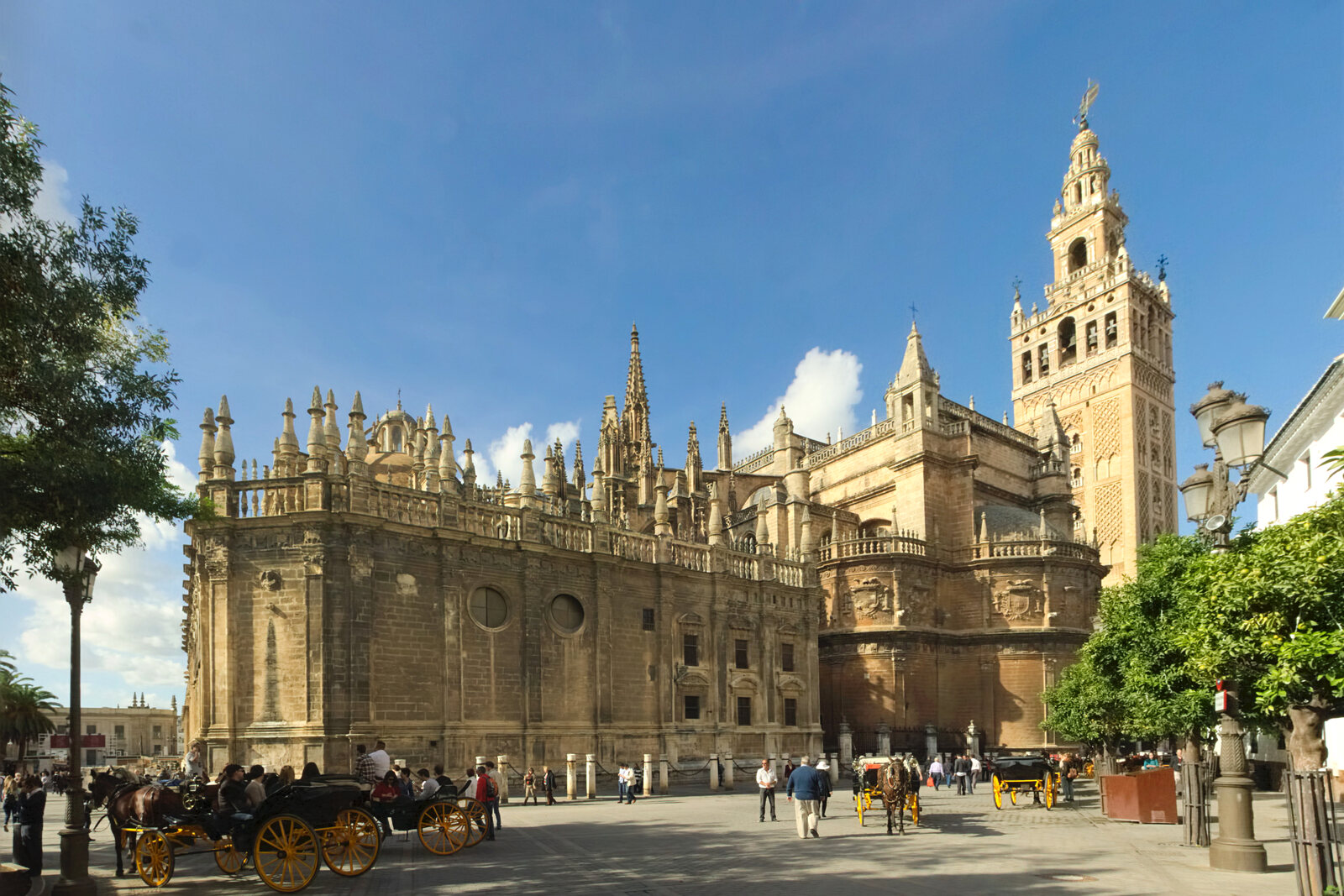
Look around first
What to notice
- South façade of the cathedral
- Gothic naves
- Royal Chapel
- Tomb of Fernando III of Castile
The story of the place
Behind the south façade of Seville Cathedral rise the Gothic naves, built on the site of the city's former main church. Before them, the Great Mosque of Seville stood here, and beside its prayer hall was the medieval Royal Chapel. When the Royal Chapel was dismantled for the new church, the remains of the city's conqueror and an ancient relic were moved to the new chapel; the relic is still carried through the interior naves each year in a civic rite together with the old banner.
In fourteen oh seven, Fernando, the younger brother of the dead king of Castile and guardian of his two-year-old heir Juan II of Castile, came here for his grandfather's sword. The present Gothic naves did not yet exist. Seville's main church was the former Great Mosque of Seville, turned into a Christian cathedral after the conquest of the city. Its Royal Chapel contained the tomb of Fernando III of Castile and his effigy, with a sword in its hand.
Fernando governed the south of Castile in the child king's name and was preparing to lead an army against the Emirate of Granada. His right to dispose of royal money, city troops, and taxes rested on his position as regent; a major failure would leave him the same royal uncle, but without the trust of the nobility and the cities. The sword of Seville's dead conqueror was meant to give the campaign legitimacy in the eyes of those who considered Fernando III of Castile a saint even before his official canonization.
Representatives of the city handed the weapon over to Fernando only after he publicly swore to return it. He took the sword from his grandfather's effigy and set out for the border. At first, the campaign promised success: the army captured the fortress of Zahara. Fernando then besieged Setenil. Stone cannonballs ran out, money and provisions were scarce, and men left the camp. After twenty days, the regent retreated. He still entered Seville ceremonially and fulfilled his oath here: he returned the sword to the Royal Chapel.
Three years later, Fernando asked for it again. This time the target was Antequera, a fortress that guarded the roads into the Emirate of Granada. The sword was brought from the cathedral to the camp; Fernando dismounted, went down on one knee, and accepted it. On September sixteenth, fourteen ten, Antequera surrendered. The victory gave the regent the name under which he entered the chronicles: Fernando of Antequera. Two years later, representatives of the lands of the Crown of Aragon chose him as their king.
Returning after the victory, Fernando made a ceremonial entry into Seville. The bare sword was carried ahead of the procession. In the cathedral, the regent took it in his hands, walked to his grandfather's tomb, and placed the weapon back in its place.
The hall of the former mosque and that medieval Royal Chapel disappeared during the construction of the present cathedral. The sword and the remains of Fernando III of Castile were preserved and moved to the new chapel. Every year on November twenty-third, the mayor of Seville carries this sword through the interior naves, while the youngest city councilor carries Fernando's banner. After Antequera, the sword returned here from war; now its route ends where it begins—in the Royal Chapel.
Useful on site
The cultural visit to the cathedral and the Giralda depends on services and work. On the date checked, a temporary change is in effect from 8—30 June 2026 because of work on the bell tower: check the official schedule before entering. Checked 2026-06-29.
Checked: June 29, 2026. Check the official source before visiting.A scheduled visit to the cathedral is needed for the tombs and interiors; outside, choose a safe spot from which the building's full vertical span is visible.