 Guide On Map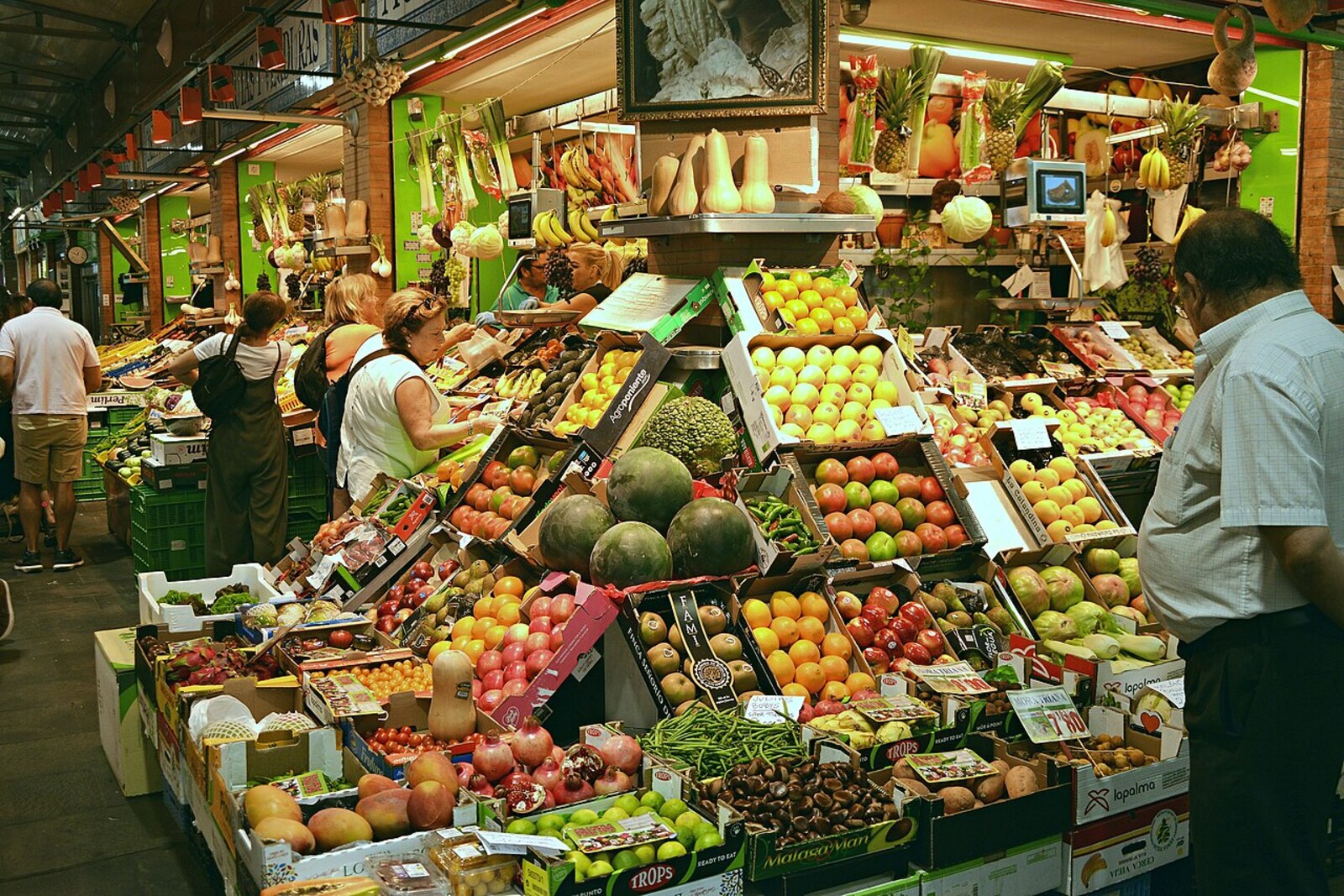
Look around first
What to notice
- Covered market rows
- Commemorative ceramic plaque
- Fruit stall
- Walls beneath the trading hall
The story of the place
On May fourteenth, nineteen ninety, Cristóbal Romero closed his fruit stall and left Triana Market. The city was planning to demolish the dilapidated pavilions, investigate the ground beneath them, and build a new market. The traders were promised that they would spend a year and a half in temporary premises.
For Cristóbal, this meant risking the loss of everything his family lived on. He had begun working here as an eight-year-old boy, in a bakery in the middle of the old market. When the baker retired, his parents bought the stall and converted it to sell fruit and vegetables. Customers had been returning to Cristóbal for years; after the move, they would have to look for him at the temporary market between Calle Alfarería and Calle Pagés del Corro. Some traders refused to leave at all, fearing that they would not be invited back.
The delay began beneath the dismantled pavilions. The market was established here in eighteen twenty-three, when farmers from Aljarafe and sellers of goods unloaded on the riverbank were already trading by the Guadalquivir River crossing. For a permanent square, the city set aside the ruins of Castillo de San Jorge. For three centuries, the Tribunal of the Inquisition in Seville had been housed in the castle; after it left, the upper structures were demolished, covered with rubble, and market rows were laid out on top.
This fill layer preserved the lower parts of the castle. Beneath the market, paved streets, the walls of the inquisitors’ houses, a chapel, and a courtroom were found. The remains proved more substantial than the original design had anticipated. Excavations, conservation work, and a new solution for the building were required. The promised year and a half stretched into eleven years. Cristóbal’s customers continued traveling to the temporary stall, but not all the traders were able to return.
Cristóbal served on the board of their association and throughout that time pressed for an underground parking garage to be included in the new design. He sold fresh produce and watched customers leave for supermarkets, where they could arrive by car and take their purchases away immediately. Technical specialists replied that building a garage here was impossible. Cristóbal kept saying: if they had managed to build a metro beneath Paris, they would manage to park cars beneath Triana. He met with officials, engineers, and architects until the parking garage was included in the design.
In June nineteen oh one, the traders returned to Plaza del Altozano. A three-level underground parking garage opened beside the market. Cristóbal returned to his fruit stall and supported the arrival of places where food is prepared and eaten on site: the old trade needed new reasons to bring people under this roof. Now butcher’s shops, fishmongers, vegetable stalls, and fruit stalls stand alongside small restaurants, bakeries, a cooking school, a cobbler, and a theater.
Cristóbal died in two thousand sixteen. His daughter Loli and son-in-law Juan Antonio Ramos continued his work. On the current market plan, fruit stall “Cristóbal and Sons” is still listed under number seventeen, and a commemorative ceramic plaque hangs on the stall itself. Beneath the trading hall, the walls that delayed the return by eleven years have been preserved; the market has the parking garage that Cristóbal had been told was impossible.
Useful on site
The market is usually open during the day and in the evening, but individual stalls/bars vary; Castillo de San Jorge is marked as temporarily closed as of the time checked.
Checked: June 26, 2026. Check the official source before visiting.Do not disturb sellers and customers while listening; access down to the ruins is possible only when it is open.