 Guide On Map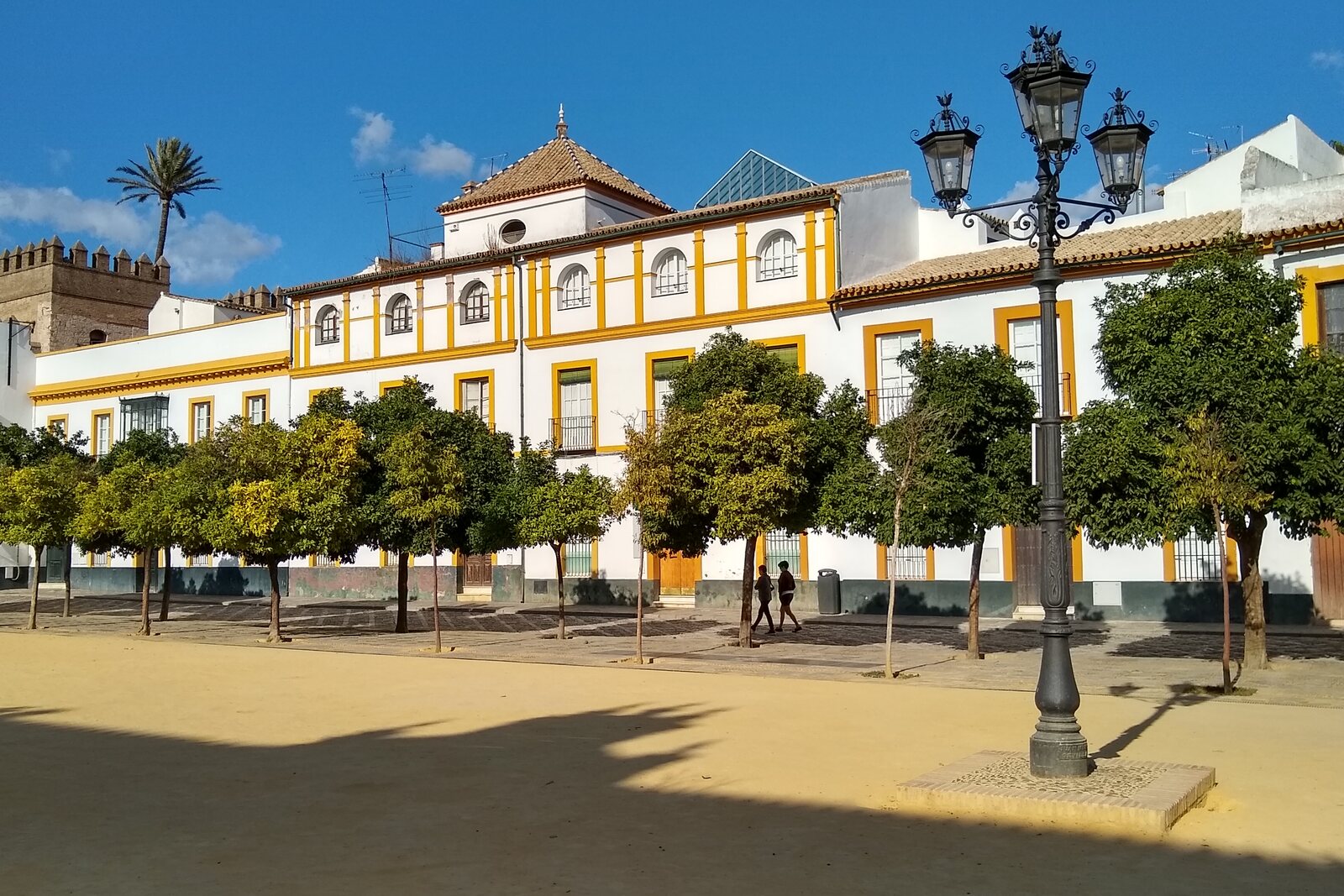
Look around first
What to notice
- Entrance arch
- Altar behind glass
- Image of the Immaculate Conception
- Residential houses around the perimeter
The story of the place
Patio de Banderas means the Courtyard of Flags. The flags themselves have been gone for a long time. The writer Cecilia Böhl de Faber, known by the male name Fernán Caballero, lived in house number one and recorded a local explanation: a bundle of banners was once painted as a fresco above the entrance arch. Who made this painting, and when, is unknown. The vanished image gave the square its name.
Flags suited its former purpose. The open rectangle within the walls was the parade ground of the first fortified core of the Royal Alcázar of Seville. Later, new monarchs were proclaimed here and banners were raised, while residential houses appeared along the walls. They belonged to the Crown, and some tenants were housed here by the personal order of a king or queen.
In eighteen fifty-seven, Queen Isabella II granted one such house to Fernán Caballero. The writer was already over sixty. Her family had gone bankrupt, her third husband soon died, and housing in the Royal Alcázar of Seville spared her expenses she could barely afford.
In September eighteen sixty-eight, Isabella II was overthrown. Houses listed under the Crown began to be sold, and tenants were ordered to move out. Fernán Caballero lost her apartment along with the patronage that had brought her here.
Before leaving, she tried to preserve at least one object in this courtyard: the street altar beneath that very entrance arch, where the flags had once been painted. When the altar was threatened with removal, the writer appealed to the new government and invoked a local legend: that Christopher Columbus had prayed before this image before sailing across the Atlantic. The request worked, and the altar was left in place.
The connection between the present altar and Columbus is a legend, not a fact. The gilded retablo with the Immaculate Conception is dated to the last third of the seventeenth century: it was made more than a century and a half after the navigator's death. Fernán Caballero had to leave Patio de Banderas; she spent her final years in a modest house on Calle Juan de Burgos, which now bears her literary name, and died there in eighteen seventy-seven. The fresco with the banners disappeared, but behind glass beneath the arch remains the altar she protected with a story older than the altar itself.
Useful on site
Free passage through the courtyard is usually open as an urban space; the Patio de Banderas crypt offers separate small pre-booked tours and is not part of the basic route. Checked 2026-06-29.
Checked: June 29, 2026. Check the official source before visiting.Respect the square's residential character and do not try to look for archaeological fragments behind private doors; view only accessible spaces.