 Guide On Map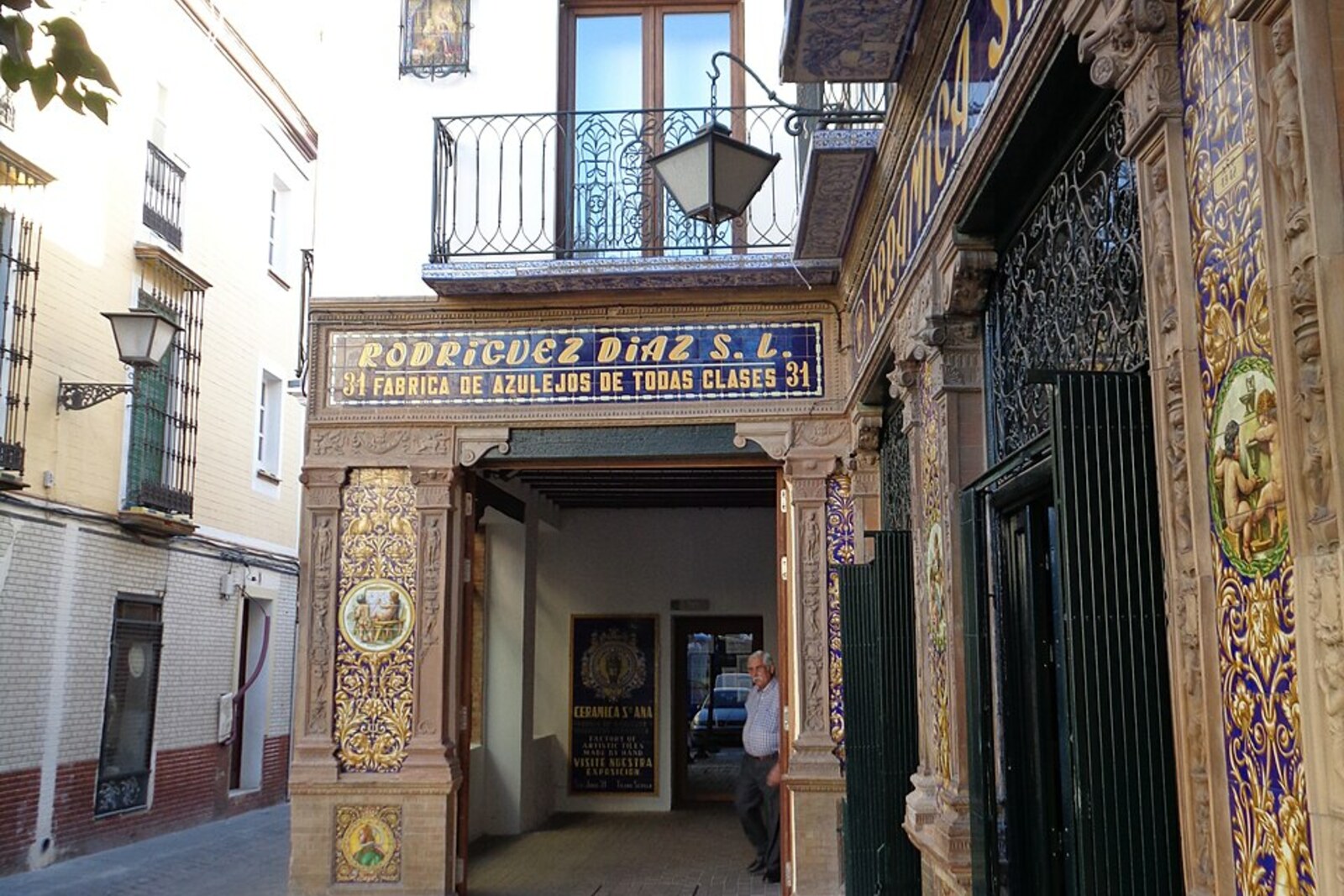
Look around first
What to notice
- The blue “Cerámica Santa Ana” sign
- Firing kilns
- Pigment mills
- Wells
The story of the place
Above the door of the former shop, the blue letters are still visible; when the factory was operating, finished tableware, tiles, and panels were displayed here. They were made in rooms hidden deep within the block, where there were kilns, wells, pigment mills, and artists' rooms. The route through Centro Cerámica Triana now runs among seven genuine kilns, while a collection of products is gathered upstairs.
In nineteen thirty-nine, the brothers Enrique Rodríguez Díaz and Eduardo Rodríguez Díaz took over the management of a ceramics factory operating on this site. Both had previously traded in tableware and glassware: the family had a warehouse and a shop. The brothers invested money, but for their own production they needed someone capable of taking responsibility for the design, glaze, and firing.
That person was Antonio Kiernam Flores, a ceramist whom the Rodríguezes already knew from commissions he had completed. At the age of ten, he became an apprentice in his uncle's workshop, and after his uncle's death, he continued his work. By nineteen thirty-nine, this craft had occupied almost his entire working life. In the new firm, Kiernam was given artistic direction, while the Rodríguez brothers provided the capital. On January first, nineteen forty, the business was officially registered as “Cerámica Santa Ana, Rodríguez Díaz y Hermano.”
Saint Anne is the mother of the Virgin Mary and the patron saint of Triana. Her name linked the factory to the neighborhood, while the Rodríguez surname indicated who had paid for the new business. Over time, the products came to be signed more briefly: “Cerámica Santa Ana.” Kiernam directed the artists until his death in nineteen seventy-six and recruited apprentices who later stayed to work here.
In the late nineteen forties, Kiernam painted the ceramic panels on the street facade. His colleague Manuel Soto Carretero made the blue sign bearing the factory's name. Behind this advertisement were kilns, storerooms, wells, pigment mills, and painters' rooms. Customers were shown finished dishes, tiles, and panels from the street side; everything needed to make them was housed deep within the block.
The Rodríguez family passed the business on to the next generation, but by the end of the twentieth century, the interior spaces and old kilns were already deteriorating. The last managers of the family firm, Antonio Rodríguez Bergillos and José Manuel González Reigada, began negotiations with the city to sell the production section and the factory collection. Under the agreement, Cerámica Santa Ana retained the premises where production and trade were intended to continue. However, in May two thousand thirteen, the firm ceased operations permanently. The remaining materials were moved to two rooms retained for the former owners.
In two thousand fourteen, Centro Cerámica Triana opened here. The ground-floor route runs among seven genuine firing kilns, wells, mills, and paint containers; upstairs, a collection of products was installed. The blue “Cerámica Santa Ana” sign remains on the facade of the former shop. The museum entrance now begins to its left, and behind the letters of the company that no longer exists stand the kilns where Kiernam and his apprentices worked.
Useful on site
VisitSevilla lists Tue-Sun 10:00-19:00; check the official website before your visit for holiday changes.
Checked: June 26, 2026. Check the official source before visiting.The center's interior requires a separate visit; if it is unavailable, look carefully at the exterior ceramics—they were themselves the factory's advertisement.