 Guide On Map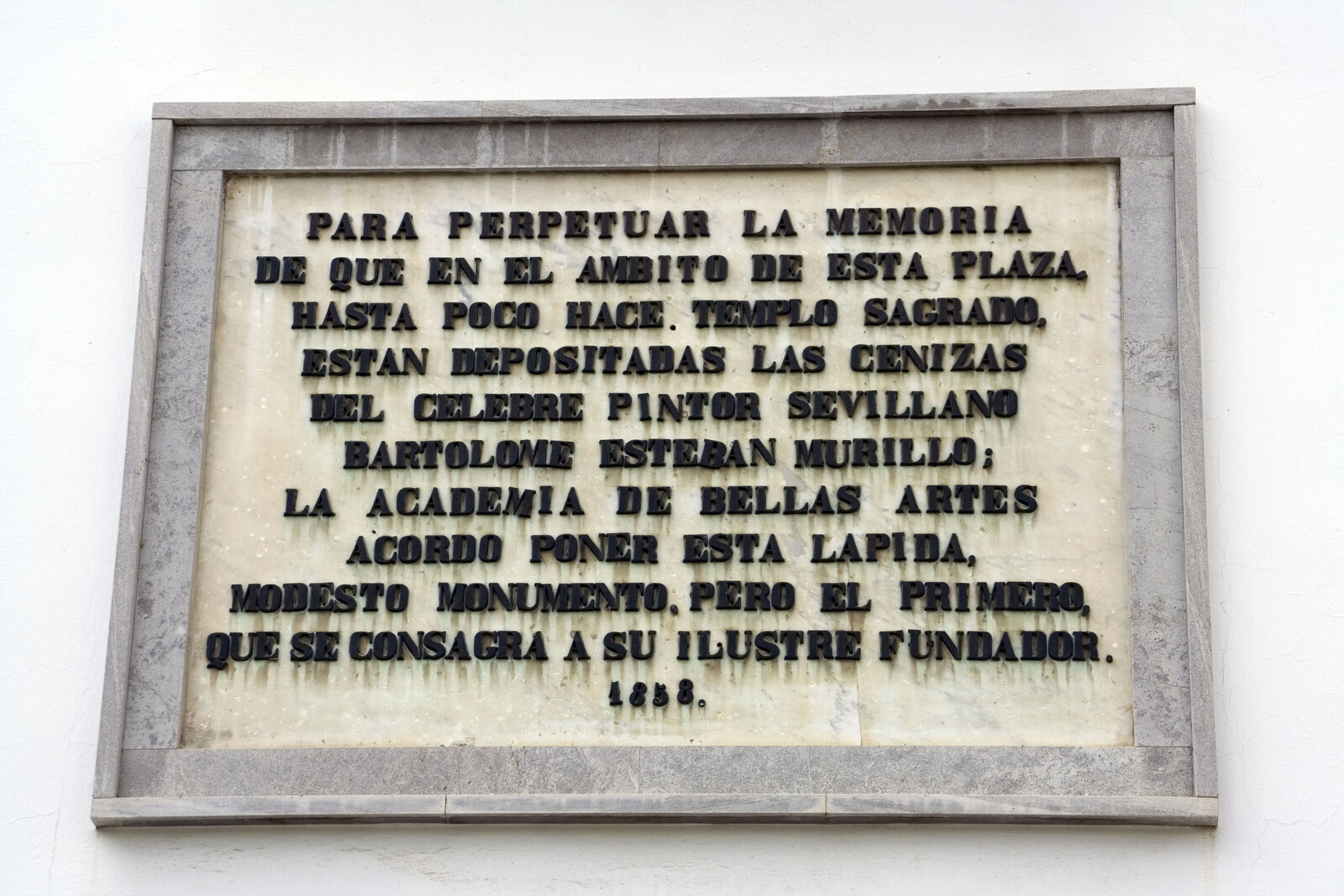
Look around first
What to notice
- Wrought-iron cross
- Four iron snakes on the base
- Commemorative plaque on the western side
- Garden around the cross
The story of the place
The square is laid out as a garden: amid the greenery stands an iron cross with four snakes on its base, while a commemorative plaque is fixed on the western side. Before the Christian parish, a synagogue of the Jewish quarter stood on this site. After the pogrom, the City Council established the Parish of the Holy Cross here; its name then passed to the square and the whole neighbourhood.
The wrought-iron cross in the middle of the garden did not belong to the church that once stood here. The municipality moved it here in the early twentieth century. The square itself came into being because people dismantled the church and then failed to rebuild it.
Until thirteen ninety-one, a synagogue of the Jewish quarter stood on this site. After the pogrom, during which some residents were killed while others were forcibly baptized or compelled to flee, the City Council established the Christian Santa Cruz Parish—Holy Cross—here. The name passed from the church to the parish district, then to the neighbourhood.
One of the parishioners was Bartolomé Esteban Murillo, who lived nearby. He earned his living painting for churches and brotherhoods, but in his own parish church he would linger for a long time before someone else’s painting—Pedro de Campaña’s The Descent from the Cross. Antonio Ponz later recorded the story of how a church servant asked the artist what he was waiting for in front of the canvas. Murillo supposedly replied: when will Christ finally be taken down from the cross? This is a story related by Ponz, but the burial place is documented: the artist, who died in sixteen eighty-two, was buried in a side chapel opposite the painting.
By the beginning of the nineteenth century, the church was cracking and needed serious repairs. In eighteen ten, Napoleon’s army occupied Seville. Joseph Bonaparte’s administration decided to create open space among the narrow streets: the parish was evicted and the church began to be dismantled.
After the French left, walls and heaps of stone remained. In eighteen thirteen, local residents asked for the ruins to be cleared away completely, while the cathedral chapter, by contrast, tried to restore the church. It sent a design for a new building to Madrid. The first design was rejected, and the revised one was approved, but construction never began. As late as eighteen thirty, remains of masonry still lay in what would become the small garden. The parish settled in another church, the square here was cleared, and the exact location of Murillo’s grave was lost.
The blacksmith Sebastián Conde made the cross at the center in sixteen ninety-two for the intersection of Calle Sierpes and Calle Rioja. Four iron snakes on its base recall its first location. When the cross obstructed street traffic, it was removed and sent to a museum, and the municipality later placed it here.
On the western side of the square, the Academy of Fine Arts installed a plaque in eighteen fifty-eight in memory of Murillo’s burial. It marks the site of the vanished church; exactly where his grave lay beneath today’s square is unknown.
Useful on site
Visit Sevilla lists a public square with 24/7 access; restrictions are possible only because of events, works, or crowd management.
Checked: June 27, 2026. Check the official source before visiting.The church and the burials lie beneath the modern square and are not marked by outlines above ground; do not take the plaque for the exact location of the grave.