 Guide On Map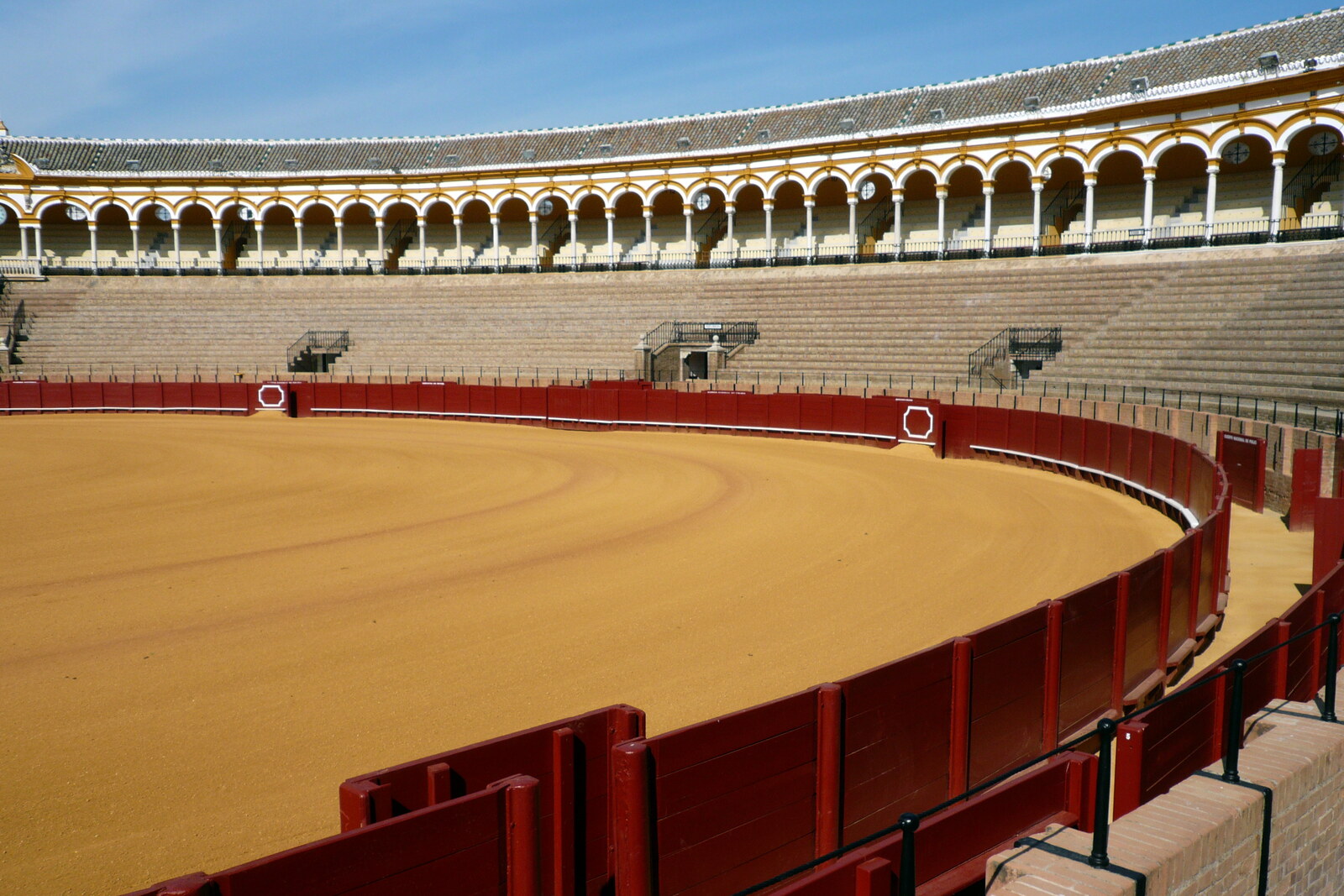
Look around first
What to notice
- White-and-ochre façade
- Prince's Gate
- Balcony above the gate
The story of the place
The bullring took its name from Seville’s noble society, where horsemanship and military arts were taught. Its riders practiced before bulls and held mounted contests; assistants who worked with the animals on the ground gradually became professional bullfighters, and the matador with cape and sword became the main participant in place of the nobleman on horseback. On the cleared El Baratillo hill in El Arenal, the Royal Cavalry Armory of Seville first erected a wooden bullring, then replaced it with a stone one. Prince's Gate, with its balcony, stands in the white wall with ochre trim facing Paseo de Colón: it was set aside for the head of the noble society.
On May nineteenth, nineteen sixty-six, Curro Romero entered this bullring alone against six bulls. Usually, three matadors divide them among themselves, with two for each. Curro was a professional bullfighter from Camas, a town beyond the Guadalquivir River, and he made his living from his appearances. During the preceding April Fair, he had appeared at the Real Maestranza Bullring three times and left without a trophy each time. After the last failure, someone shouted from the stands: “Curro, summer will still come.” For a matador whose next contracts depended on the audience’s reaction, this was a public defeat in Seville’s bullring that mattered most to him.
His apoderado—an agent who arranged appearances and fees—José Ignacio Sánchez Mejías proposed an answer. Outside the regular season subscription, he arranged a charity bullfight for the Red Cross: all six bulls were intended for Curro alone. The organizers wanted to add mounted bullfighters and famous banderilleros to strengthen the bill, but the matador refused. He intended to correct April’s failure himself. Had the evening ended the same way, the previous three failures would have become nine.
Curro worked with each bull and killed each one with a single estocada—the final thrust of the sword. Six bulls, six thrusts. For five of the six contests, he was awarded eight ears. This is no figure of speech: after the animal’s death, the audience asks for the reward with white handkerchiefs, the president of the bullfight makes the decision, and an ear is cut off and handed to the matador. One means recognized success; two, the highest assessment of work with that bull. Eight in a single evening remain the record of the Real Maestranza Bullring.
After the final bull, Curro was carried on shoulders through Prince's Gate and taken along Paseo de Colón to Hotel Colón. The April taunt received its answer on the same sand. Romero continued to enter this bullring for more than three further decades, but neither he nor any other matador has repeated eight ears here in a single bullfight.
The name of the gate leads to the name of the entire bullring. The Royal Cavalry Armory of Seville was an association of Seville’s nobility, founded in sixteen seventy to teach horsemanship and military arts. This is where the words “maestranza” and “cavalry” come from. These riders practiced before bulls and held public mounted contests; the assistants on the ground gradually became professional bullfighters, and the leading role passed from the nobleman on horseback to the matador with cape and sword.
Philip V of Spain granted the corporation the title Royal and the right to hold bullfights. One of his sons, Infante Philip of Spain, was appointed head of the association. A special balcony was intended for the prince, and the opening beneath it was given the name Prince's Gate. The Royal Cavalry Armory of Seville built its own wooden bullring here, on the cleared El Baratillo hill in El Arenal; it was later replaced by a stone one.
Prince's Gate still stands in the white-and-ochre façade on the Paseo de Colón side. It was made for the head of the noble corporation, and in nineteen sixty-six, viewers carried through it on their shoulders a man who had killed all six bulls in this bullring in a single evening.
Useful on site
Daytime museum visits are usually available, but VisitSevilla warns that hours change on event days; exterior viewing is unrestricted.
Checked: June 26, 2026. Check the official source before visiting.The exhibition and inner ring require a separate visit; outside, do not linger by service entrances, especially during events.