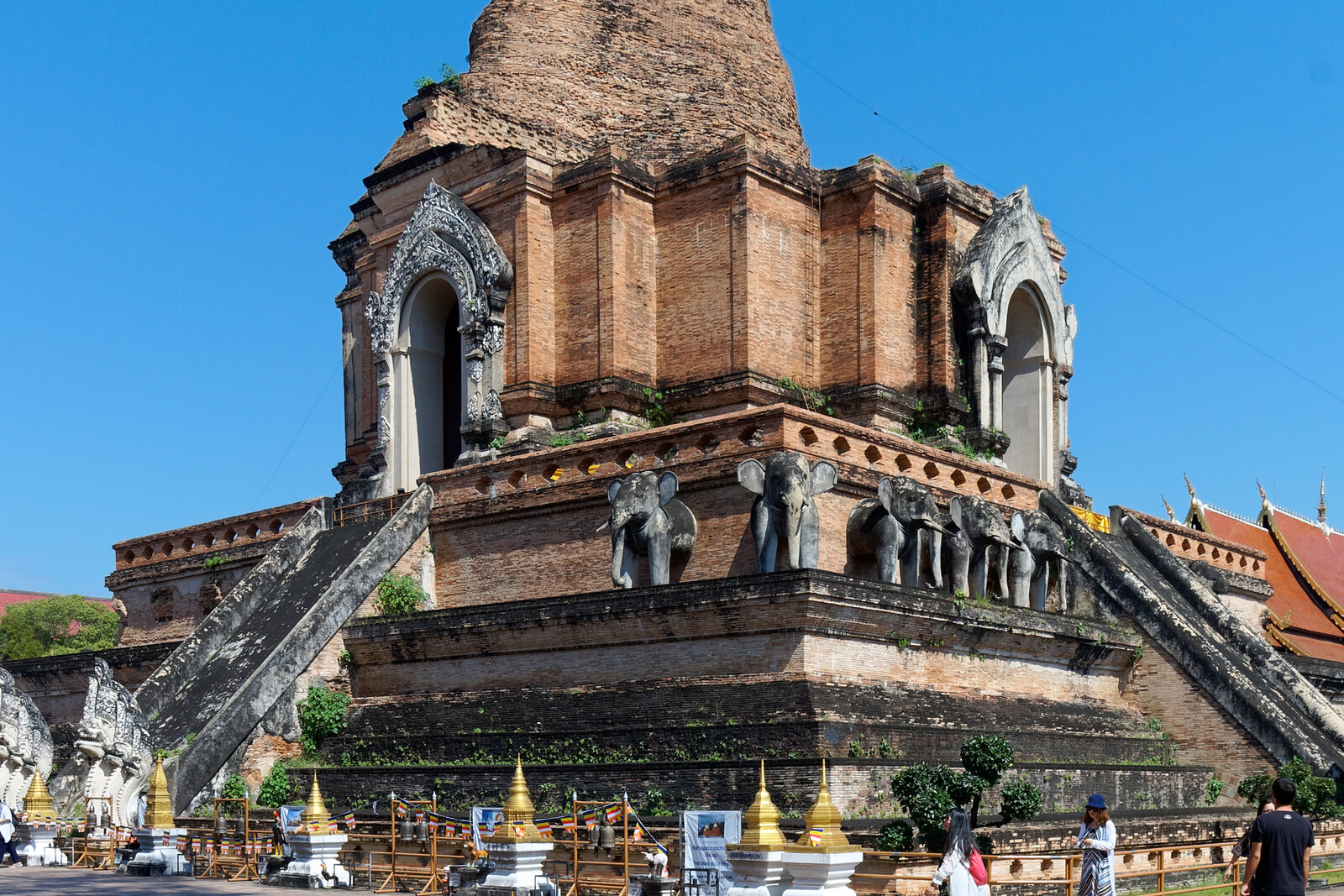
Wat Chedi Luang Sacred sites Wat Chedi Luang: story on the “Old Chiang Mai: How the Lan Na Capital Was Assembled” route The royal stupa will lead into a dispute over two crowns and the fate of a shrine that confirmed the right to rule.
Chansom Memorial Bridge History Chansom Memorial Bridge: story on the “Commercial Chiang Mai along the Ping River” route A personal donation will turn an unreliable seasonal crossing into a permanent connection between two trading riverbanks.
Chiang Mai Gate History Chiang Mai Gate: story on the “Wua Lai: Chiang Mai’s Silver Quarter” route Here you will learn why the craft quarter began beyond the moat and bears the name of another place.
East Moat History East Moat: story on the “Old Chiang Mai: How the Lan Na Capital Was Assembled” route This water boundary reveals the scale of a city that at first had no one to restore it, and then had to be defended.
Iron Bridge (Saphan Lek) History Iron Bridge (Saphan Lek): story on the “Commercial Chiang Mai along the Ping River” route A copy of a lost crossing shows how a transportation project from the nineties found an unexpected life in film.
Kruba Srivichai Monument History Kruba Srivichai Monument: story on the “Doi Suthep: Roads to the Shrine” route Here, the road's story begins with volunteer construction and the price its organizer would pay for his independence.
Monk's Trail Parks Monk's Trail: story on the “Doi Suthep: Roads to the Shrine” route The final stop will show how the automobile road took pilgrims, cargo, and the monks' daily descents away from the old route.
Nawarat Bridge History Nawarat Bridge: story on the “Commercial Chiang Mai along the Ping River” route The final crossing will show why the railroad required the distinctive steel spans to be replaced with a wide concrete bridge.
Sala Sip Mu Lanna Museums Sala Sip Mu Lanna: story on the “Wua Lai: Chiang Mai’s Silver Quarter” route Here you will see how learning a craft ceased to depend on being born into the right family.
Shrines of Kuan U and Pung Thao Kong Sacred sites Shrines of Kuan U and Pung Thao Kong: story on the “Commercial Chiang Mai along the Ping River” route This stop will show how merchants turned personal devotion into a way to support the whole lane.
Tha Phae Gate History Tha Phae Gate: story on the “Old Chiang Mai: How the Lan Na Capital Was Assembled” route Here it will become clear why the familiar symbol of the old city is also a modern reconstruction.
Three Kings Monument Square History Three Kings Monument Square: story on the “Old Chiang Mai: How the Lan Na Capital Was Assembled” route Here, the city's founding will appear as the result of negotiations between rulers rather than the joint feat of three builders.
Ton Lam Yai Market Streets and squares Ton Lam Yai Market: story on the “Commercial Chiang Mai along the Ping River” route Here, river trade appears as a chain of transformations, from an elephant yard to a flower market.
Warorot Market (Kad Luang) Streets and squares Warorot Market (Kad Luang): story on the “Commercial Chiang Mai along the Ping River” route Here begins the story of a commercial district that the princely family turned into a source of shared income.
Wat Ket Karam Temple and Museum Sacred sites Wat Ket Karam Temple and Museum: story on the “Commercial Chiang Mai along the Ping River” route The former abbot's house will connect the history of a vanished riverside quarter with the objects its residents preserved.
Wat Muen San Sacred sites Wat Muen San: story on the “Wua Lai: Chiang Mai’s Silver Quarter” route The finale will broaden the story of the neighborhood: its residents passed down not only craft techniques from hand to hand.
Wat Phan Tao Sacred sites Wat Phan Tao: story on the “Old Chiang Mai: How the Lan Na Capital Was Assembled” route This stop shows how a princely building could change its purpose and continue its life in a monastery.
Wat Phra Singh Sacred sites Wat Phra Singh: story on the “Old Chiang Mai: How the Lan Na Capital Was Assembled” route The final shrine will conclude the route with the story of a gift that proved more important than a lost struggle for the throne.
Wat Sri Suphan Sacred sites Wat Sri Suphan: story on the “Wua Lai: Chiang Mai’s Silver Quarter” route Here, masters of different generations will come together on a single project that lasted twelve years.
Wua Lai Walking Street Streets and squares Wua Lai Walking Street: story on the “Wua Lai: Chiang Mai’s Silver Quarter” route Here it will become clear how residents turned three temple fairs into a single street market.
Phra That Doi Suthep Temple Sacred sites Nearest audio-route stop: The White Elephant and the Outer Terrace — 10 m in a straight line, route Doi Suthep: Roads to the Shrine
Ang Kaew Reservoir Parks Anusarn Market Streets and squares Arak Road Streets and squares Art in Paradise Chiang Mai Museums Baan Kang Wat History Bamrung Buri Road Streets and squares Buak Hard Park Parks Buppharam Temple Sacred sites Central Chiang Mai Airport Plaza Streets and squares Central Festival Chiang Mai History Chai Mongkhon Temple Sacred sites Chai Phra Kiat Temple Sacred sites Chai Si Phum Temple Sacred sites Chaloem Phra Kiat Park Parks Chang Kham Temple Sacred sites Chang Klan Road Streets and squares Chang Kong Temple Sacred sites Chang Moi Kao Road Streets and squares Chang Moi Road Streets and squares Chang Phueak Gate Streets and squares Chang Phueak Gate Plaza Streets and squares Chang Phueak Temple Sacred sites Chang Taem Temple Sacred sites Charoen Mueang Road Streets and squares Chedi Liam Temple Sacred sites Chedi Sao Temple Sacred sites Chet Yot Temple Sacred sites Chiang Mai Arboretum Parks Chiang Mai City Arts and Cultural Centre Museums Chiang Mai Four Corners History Chiang Mai Historical Centre Museums Nearest audio-route stop: Wat Phra Singh — 110 m in a straight line, route Old Chiang Mai: How the Lan Na Capital Was Assembled
Chiang Mai National Museum Museums Nearest audio-route stop: Chiang Mai Gate — 120 m in a straight line, route Wua Lai: Chiang Mai’s Silver Quarter
Chiang Mai Night Bazaar Streets and squares Chiang Mai Old City Walls History Chiang Mai Philatelic Museum Museums Chiang Mai Railway Station Museums Chiang Mai Rajabhat University Museums Chiang Mai University Museums Chiang Mai University Art Center Museums Chiang Mai Zoo Parks Chiang Mai Zoo Aquarium Parks Chiang Man Temple Sacred sites Chom Thong Temple Sacred sites Chomphu Temple Sacred sites Dara Pirom Palace Museum Museums Doi Suthep Viewpoint Parks Doi Suthep-Pui National Park Parks Don Chan Temple Sacred sites Don Kaeo Temple Sacred sites Duang Di Temple Sacred sites Fa Ham Temple Sacred sites Fon Soi Temple Sacred sites Hang Dong Temple Sacred sites Highland People Discovery Museum Museums Huai Kaeo Temple Sacred sites Huay Kaew Arboretum Parks Huay Kaew Road Streets and squares Huay Kaew Waterfall Parks Inthakhin Sadue Mueang Temple Sacred sites Jedlin Temple Sacred sites Jing Jai Gallery Museums Jing Jai Market Streets and squares Kad Suan Kaew History Kalm Village History Kawila Market Streets and squares Kawila Monument History Kawila Road Streets and squares Khlong Mae Kha History Khuang Singh History Ku Kham Noi Temple Sacred sites Ku Kham Temple Sacred sites Ku Tao Temple Sacred sites Kuan Khama Temple Sacred sites Lam Chang Temple Sacred sites Lanna Folklife Museum Museums Lanna Traditional House Museum Museums Loi Kroh Road Streets and squares Lok Moli Temple Sacred sites Mae Hia Temple Sacred sites Mae Khao Temple Sacred sites Mae Ping River Parks Mae Rim Temple Sacred sites Mahawan Temple Sacred sites MAIIAM Contemporary Art Museum Museums MAYA Lifestyle Shopping Center Museums Moon Muang Road Streets and squares Muang Mai Market Streets and squares Mueang Mang Temple Sacred sites Mueang Sattra Luang Temple Sacred sites Mueang Wa Temple Sacred sites Muen Nguen Kong Temple Sacred sites Muen Tum Temple Sacred sites Museum of World Insects and Natural Wonders Museums Na Kham Temple Sacred sites Nantharam Temple Sacred sites Nimmanhaemin Road Streets and squares Nong Bua Temple Sacred sites Nong Buak Haad Public Park Parks Nong Hoi Market Streets and squares Nong Hoi Tai Temple Sacred sites Nong Hoi Temple Sacred sites Nong Kham Temple Sacred sites One Nimman History Pa Daeng Temple Sacred sites Pa Daet Temple Sacred sites Pa Kham Temple Sacred sites Pa Pao Nok Temple Sacred sites Pa Pao Temple Sacred sites Pa Phaeng Temple Sacred sites Pa Phrang Temple Sacred sites Pa Sak Temple Sacred sites Pa Tan Temple Sacred sites Pan Ping Temple Sacred sites Pang Kha Temple Sacred sites Pha Bong Temple Sacred sites Pha Lat Temple Sacred sites Pho Thip Temple Sacred sites Phra Chao Mengrai Temple Sacred sites Phra Non Temple Sacred sites Phra Pok Klao Road Streets and squares Phra That Doi Kham Temple Sacred sites Phuak Hong Temple Sacred sites Ping River Riverside Parks Prasat Noi Temple Sacred sites Prasat Temple Sacred sites Pratu Chiang Mai Market Streets and squares Puak Hong Tai Temple Sacred sites Puak Taem Temple Sacred sites Rajamontean Temple Sacred sites Ram Poeng Temple Sacred sites Ratchadamnoen Road Streets and squares Rimping Bridge History Royal Park Rajapruek Parks Saen Fang Temple Sacred sites Sai Moon Muang Temple Sacred sites Sai Moon Myanmar Temple Sacred sites Sala Temple Sacred sites San Kamphaeng Road Streets and squares San Kamphaeng Temple Sacred sites San Khue Temple Sacred sites San Klang Temple Sacred sites San Pa Khoi Temple Sacred sites San Pa Tong Temple Sacred sites San Pha Koi Temple Sacred sites San Phi Suea Temple Sacred sites San Phranet Temple Sacred sites San Sai Moon Temple Sacred sites Si Bun Rueang Temple Sacred sites Si Don Chai Temple Sacred sites Si Don Moon Temple Sacred sites Si Koet Temple Sacred sites Si Rong Mueang Temple Sacred sites Siri Wattana Market Streets and squares Sompet Market Streets and squares Sri Chum Temple Sacred sites Sri Don Chai Temple Sacred sites Sri Ping Mueang Temple Sacred sites Suan Buak Hat History Suan Dok Gate Streets and squares Suan Dok Gate Plaza Streets and squares Suan Dok Temple Sacred sites Suan Prung Gate Streets and squares Suthep Road Streets and squares Tha Kham Tai Temple Sacred sites Tha Kham Temple Sacred sites Tha Mai Temple Sacred sites Tha Phae Square Streets and squares Tha Phae Walking Street Streets and squares Tha Sala Temple Sacred sites Tha Ton Temple Sacred sites That Noi Temple Sacred sites Three Kings Square Streets and squares Ton Kwen Temple Sacred sites Tribal Museum Museums Umong Temple Sacred sites Wiang Kum Kam Archaeological Site History  Guide On Map