 Guide On Map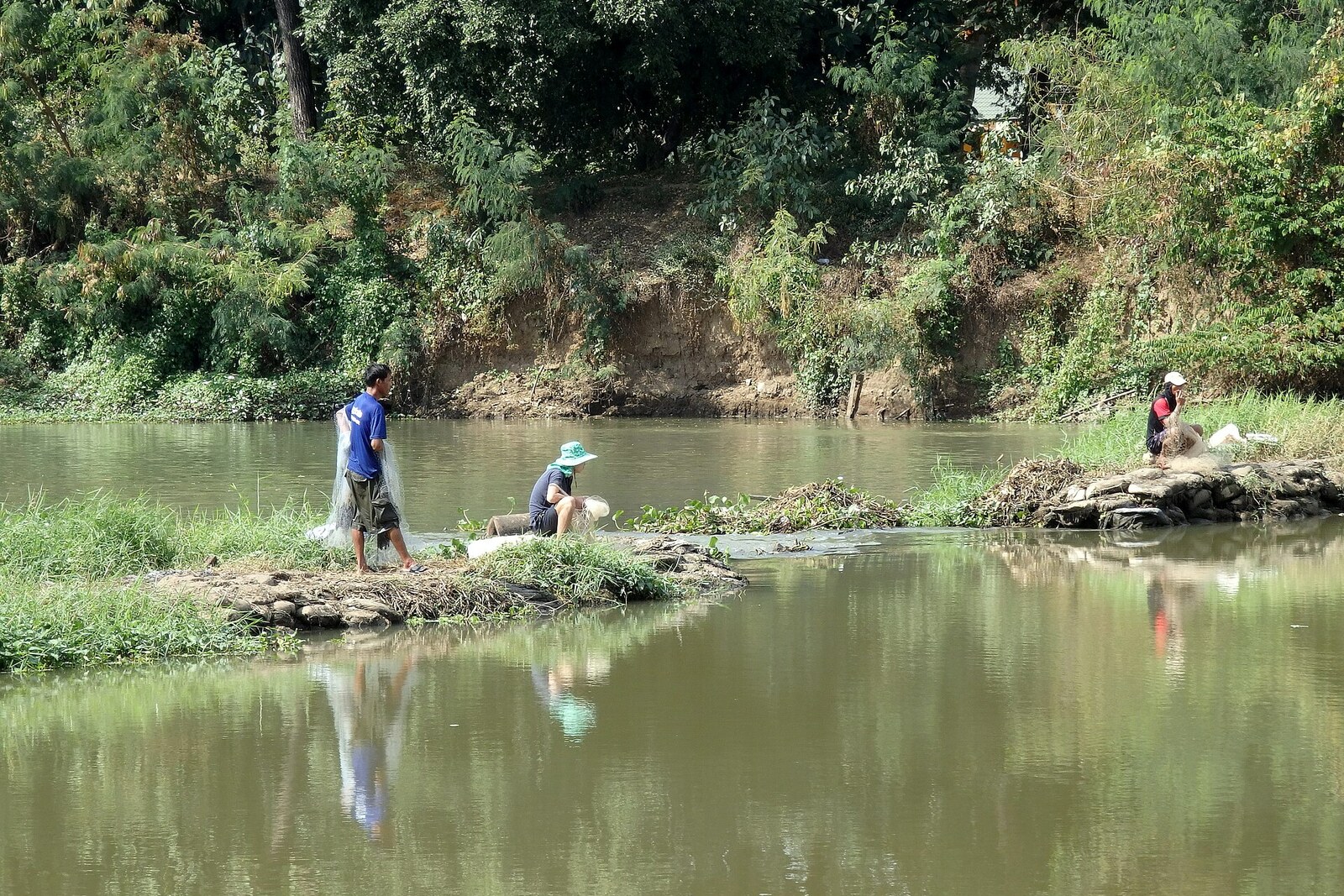
Look around first
What to notice
- Low wooden shop rows
- Clay-tile roofs
- Sectional plank doors
- Rear yards by the water
The story of the place
Charoen Rat Road runs through Ban Wat Ket, an old community on the eastern bank of the Ping River, named after the temple at its center. Chinese merchants, British offices trading in teak, missionary schools, and Indian and Burmese shops stood side by side here. When the railway arrived at the beginning of the nineteen twenties, merchants moved to the station and to Charoen Mueang Road, and the riverbank became residential. Low wooden rows with clay tiles and sectional plank doors remained among restaurants, hotels, and craft shops.
At the old houses on Charoen Rat Road, the façades face the road, but the district's former working side lay behind them, by the Ping River. In the middle of the nineteenth century, cargo boats from Bangkok and Pak Nam Pho moored here. Salt, dried fish, cloth, and tools went north; forest products were sent back. The eastern bank by Wat Ket became the city's port.
Chinese merchants settled near the mooring place because every extra time cargo had to be carried cost money. Their earnings were tied up in a boat for months while it passed the shallow and rocky stretches of the Ping River. Goods received had to be unloaded, stored away, and put up for sale at once. So the merchants built long wooden rows—huean pae. The front shutters faced what would become Charoen Rat Road and opened onto a shop; the family lived farther inside; the rear yard received cargo from the river. This is how Chiang Mai's first Chinese trading district grew up around Wat Ket.
The port also drew other people who needed the river. British companies set up offices for the teak trade on the eastern bank, American missionaries set up homes, a church, and schools, and Indian and Burmese merchants set up their shops and prayer buildings. The temple remained in the middle of the district, so this whole diverse community was called Ban Wat Ket—the settlement by Wat Ket.
At the beginning of the nineteen twenties, the railway reached Chiang Mai. The train brought more goods from Bangkok and took much less time for the journey. Merchants began moving their trade to the station and to Charoen Mueang Road—the road that linked the railway station to the river. Boat services stopped, business left Wat Ket, and the former port became a residential district for families whose businesses already operated elsewhere.
The old premises did not become completely empty. Some owners continued living behind their former shops; others turned them over to restaurants, hotels, galleries, and craft shops. Among the new signs, the low wooden rows with clay-tile roofs and sectional plank doors remained. These houses still have two sides: the entrance faces Charoen Rat Road, and the rear yards face the water, from which all the goods once arrived.
Useful on site
Open street; cafés, galleries, and shops keep their own schedules. Elephant Parade Land is separate and has its official address/hours outside this stop.
Checked: June 26, 2026. Check the official source before visiting.Do not enter the yards without an invitation: this is a residential district, not a historic park. Walk on the sidewalk where there is one, and cross the street carefully.