 Guide On Map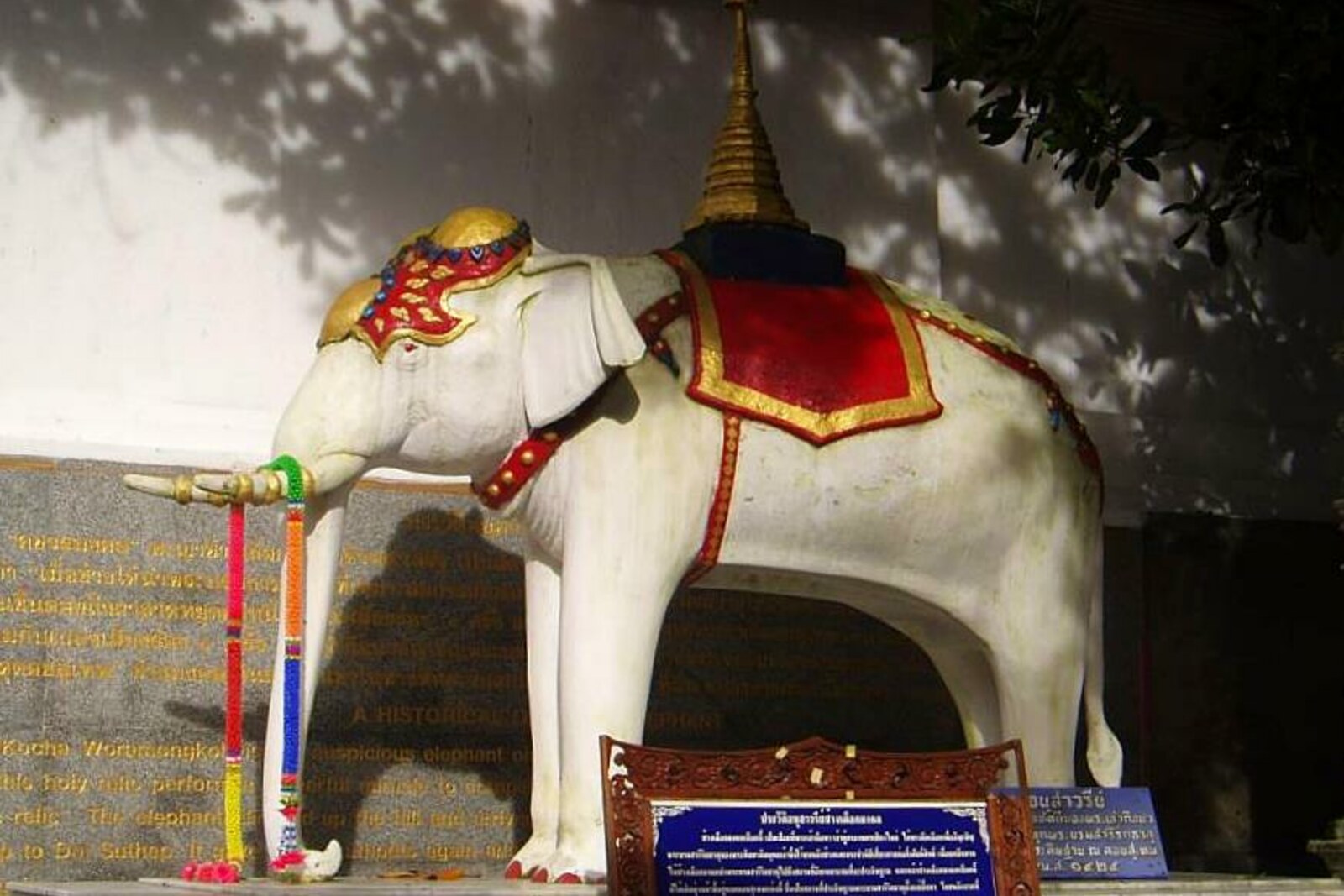
Look around first
What to notice
- The white elephant figure
- The gilded stupa on its back
- The outer terrace
The story of the place
While visitors walk around the outer terrace, the white elephant figure with a small gilded stupa on its back remains in the outer circle of the temple grounds. The monastery's most revered part lies farther on, inside the golden chedi. This arrangement separates the commemorative image from the place of worship: people stop at the sculpture, then continue toward the central sanctuary. Here, the elephant's whiteness conveys not its coloring but a special auspicious status that at court was associated with the ruler's merit.
A small gilded stupa stands on the white elephant's back. This is how the sculptor depicted the reliquary containing the Buddha relic—the very burden for which the monastery was built on this mountain. The words “phra that” in its name mean sacred relic.
In the second half of the fourteenth century, Kue Na, the ruler of Lanna, wanted to introduce into his kingdom a system of monastic ordination that had come from Sri Lanka through Sukhothai. For this, he invited the teacher Sumana Thera. The change was quite tangible: monks of the earlier school were to remove their robes and undergo ordination again with the newly arrived teachers. Sumana brought with him a sacred object venerated as part of the Buddha's remains.
Here the legend begins. The relic was to be placed at Wat Suan Dok near Chiang Mai, but it miraculously divided into two. One part was left there. Kue Na decided to use a white elephant to choose a place for the other.
A white elephant meant one with special auspicious signs, not an animal with snow-white skin. At court, such an elephant was considered a sign of the ruler's merit. Kue Na ordered the reliquary fastened to its back and the animal released: the path it chose was to be accepted as an indication from above.
According to monastery tradition, the elephant climbed Doi Suthep, circled the site three times, and trumpeted three times. Then it knelt down and died. Kue Na took this as an answer. People removed the reliquary, enclosed it in a stone container, and built the first stupa over it. Before the elephant's journey, no monastery existed on the summit: it was founded after the animal came to a halt.
The white figure remained on the outer terrace, while the relic for which Kue Na summoned Sumana from another kingdom is venerated farther on—inside the golden chedi erected, according to legend, on the chosen site.
Useful on site
The terrace is accessible during the temple complex's opening hours; ask at the entrance about the current fee and any possible restrictions.
Checked: June 28, 2026. Check the official source before visiting.View the sculpture from the main walkway, and do not hold up those heading toward the inner sanctuary.