 Guide On Map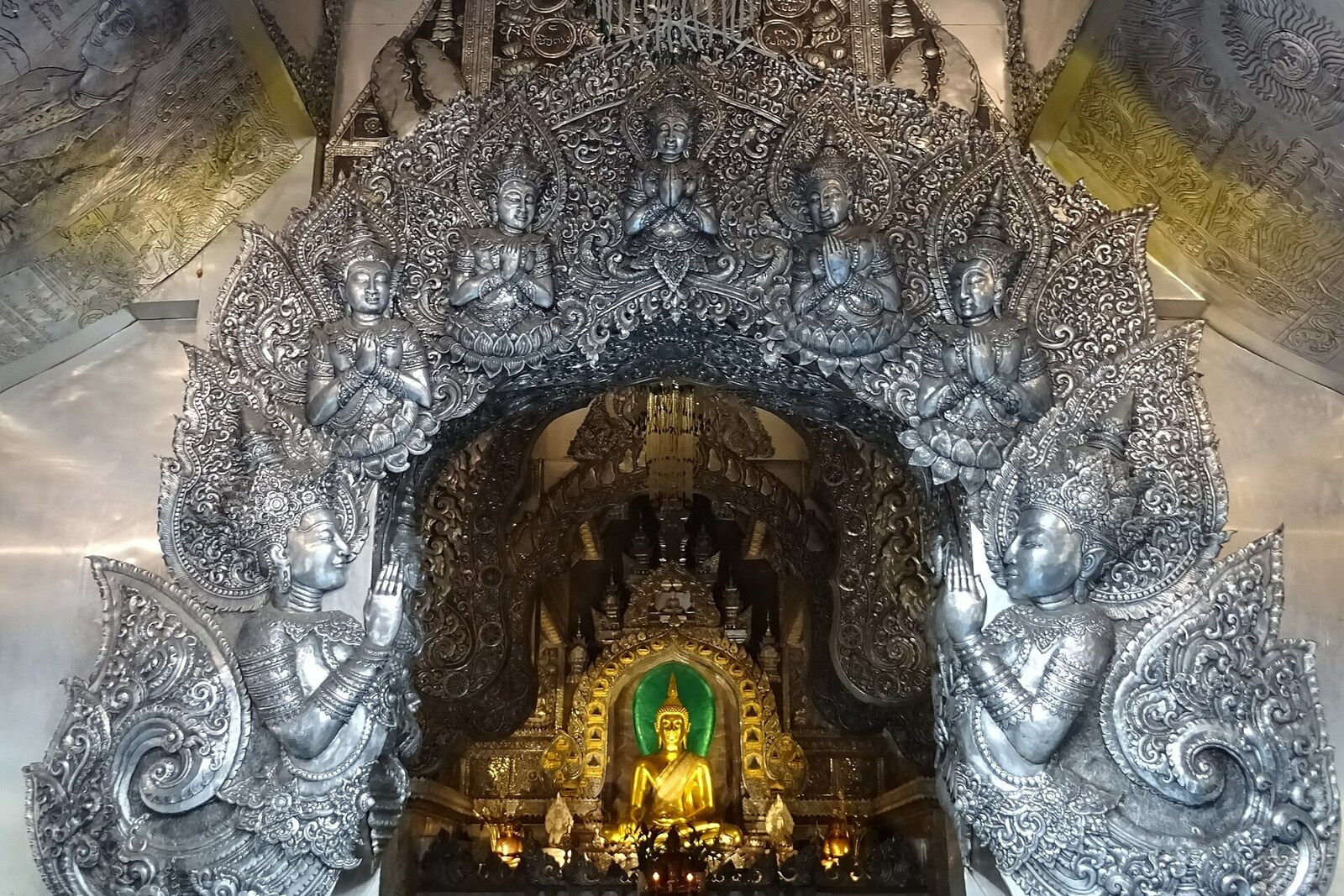
Look around first
What to notice
- Worktables
- Chased metal reliefs
- Display cases with silver and lacquerware
The story of the place
“Sala” means pavilion, and “sip mu” means ten groups of masters. The old list included draftsmen, metal chasers, carvers, model makers, molders, plasterers, lacquer workers, turners, casters, and engravers. A single temple needed almost all of them: one person prepared the design, another transferred it onto wood or metal, another cast the figure, lacquered it, and gilded it. That is why the center received the name of Lanna’s whole craft system, although Wua Lai was known above all for its silversmiths.
By the end of the twentieth century, this system was breaking down within families. Silver was becoming more expensive, commissions were growing fewer, and masters’ children were choosing other occupations. The skill that had once passed from parents to sons and daughters directly in the home workshop was increasingly ending with the grandparents’ generation. Phra Kru Pitak Sutthikhun, the abbot of Wat Sri Suphan, wanted to preserve the transmission of the craft itself. During the temple’s five-hundredth anniversary celebrations in two thousand, he brought the remaining Wua Lai masters together as one group and proposed that they teach beyond their own families.
The students were children from the temple school, young residents of the district, monks, and novices. For the latter, the stakes were especially clear. A novice might spend only a few years in the monastery and then return to lay life without a profession. A craft course gave him an occupation through which he could earn a living after leaving monastic life. The master, in turn, received a student even when the master’s own children had no intention of continuing the family trade.
In two thousand seven, the temple, the community of masters, the National Office of Buddhism, and the educational center College in the Palace established a permanent school here. A brief introduction took several hours; the full program could last up to eight hundred hours. A graduate of such a course gained the opportunity to teach monks, novices, and laypeople in turn. Thus, a chain that had previously depended on being born into the right family acquired its next link by choice.
Some Wua Lai families took up silver again after this. A place to sell their work opened at the center, and in two thousand thirteen the school became the official Chiang Mai branch of College in the Palace. Classes in drawing, metal chasing, and making relief metal images were held here for craftspeople, students, monks, and novices.
Today, a workshop, classes, and a small museum display of silver and lacquerware stand side by side at Sala Sip Mu. The “ten groups” named on the sign exist here as a curriculum: a master passes a tool to a person who may have been born far from Wua Lai and still leave here as the next teacher of the craft.
Useful on site
The center is on the grounds of Wat Sri Suphan; access to classes and demonstrations depends on the schedule.
Checked: June 30, 2026. Check the official source before visiting.The presence of a lesson or a working master is not guaranteed; participation in a class should be arranged separately, and if the premises are closed, limit yourself to the available displays.