 Guide On Map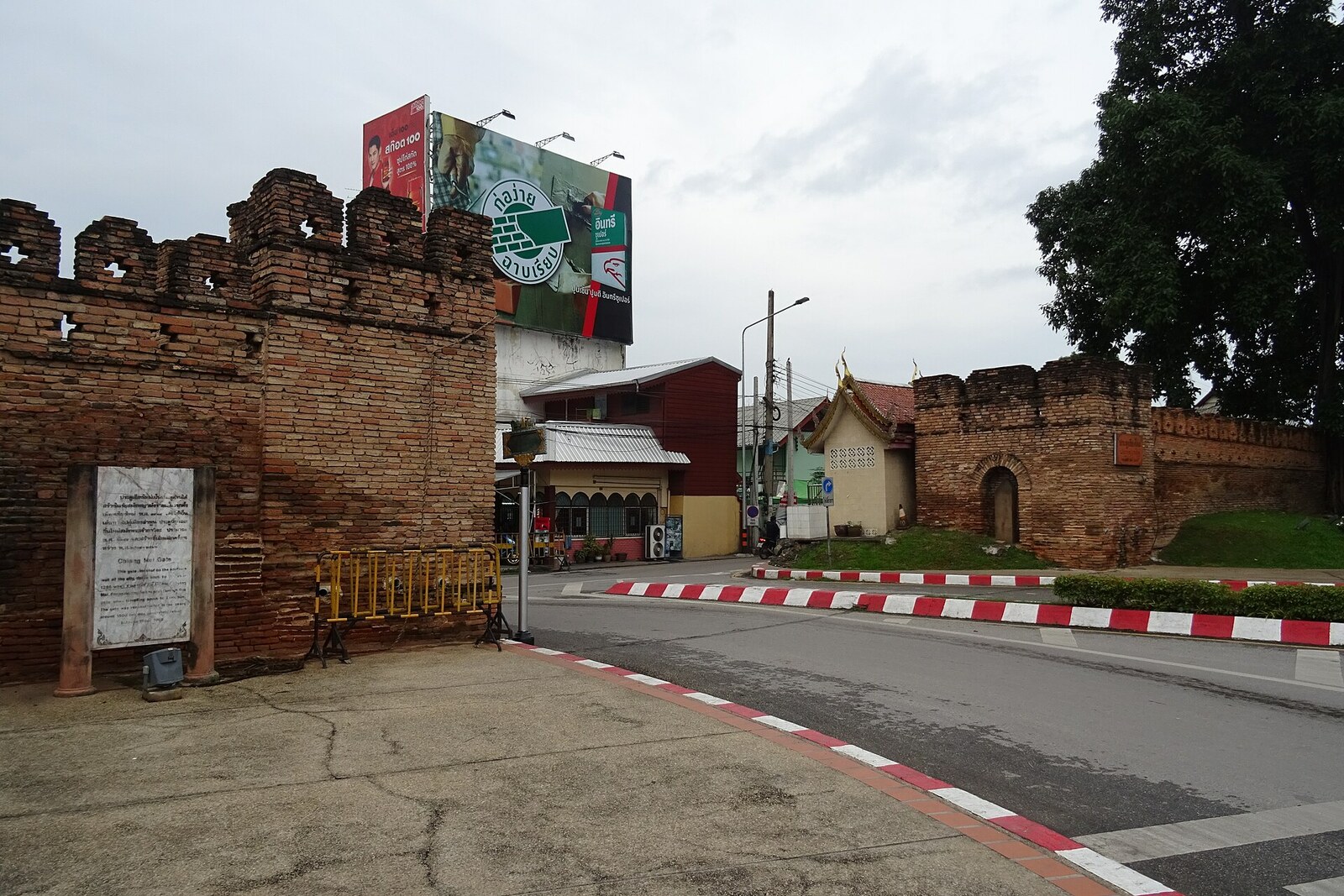
Look around first
What to notice
- Brick arch
- City moat
- Beginning of Wua Lai Road
The story of the place
There are two gates in Chiang Mai’s southern wall. This eastern one was originally called Tai Wiang—the gate of the southern part of the city. The road through it led to the former capital of Wiang Kum Kam and then on to Lamphun. The name “Chiang Mai Gate” appeared later.
By the end of the eighteenth century, there was almost no one to be led through these gates. After prolonged wars, the residents had abandoned Chiang Mai for about twenty years. Prince Kawila was appointed ruler of the city, but he remained farther south, in Pa Sang: the empty capital could not support his court, garrison, and household. To return, he needed people.
In Lanna, this policy was remembered in the phrase, “gather vegetables into a basket, gather people into a city.” The formula sounds practical, though it often meant forced resettlement. Kawila’s detachments took entire communities from neighboring principalities, along with their elders and craftspeople. The people gave restored Chiang Mai defenders, farmers, artisans, and taxes; they themselves lost their former homes and began earning a living where they were assigned to settle.
One such group was made up of silversmiths from the Salween River valley. Their home village was called Wua Lai. Under Kawila, the artisans were settled south of the inner wall, near these gates. Inside the fortified square stood the court, the nobility, and the main monasteries; craft communities were settled beyond the moat, along the roads leading out of the city. Here the silversmiths made bowls, trays, jewelry, and ceremonial vessels. The artisans passed their work on to their children, and by the first half of the twentieth century, almost every house in the quarter had its own workshop.
The brick arch before us was completely rebuilt in the nineteen sixties. Of the medieval gate, above all, its location has survived. The inner city ends at the moat, and across from it begins Wua Lai Road, where an evening market unfolds on Saturdays. The arch bears the name of Chiang Mai; the road beyond it bears the name of the village from which the silversmiths were once taken.
Useful on site
The gate and square are accessible at all times; food stalls and evening market rows follow their own schedule.
Checked: June 30, 2026. Check the official source before visiting.This is a busy passage near shops and traffic; look around carefully and do not linger in the path of movement.