 Guide On Map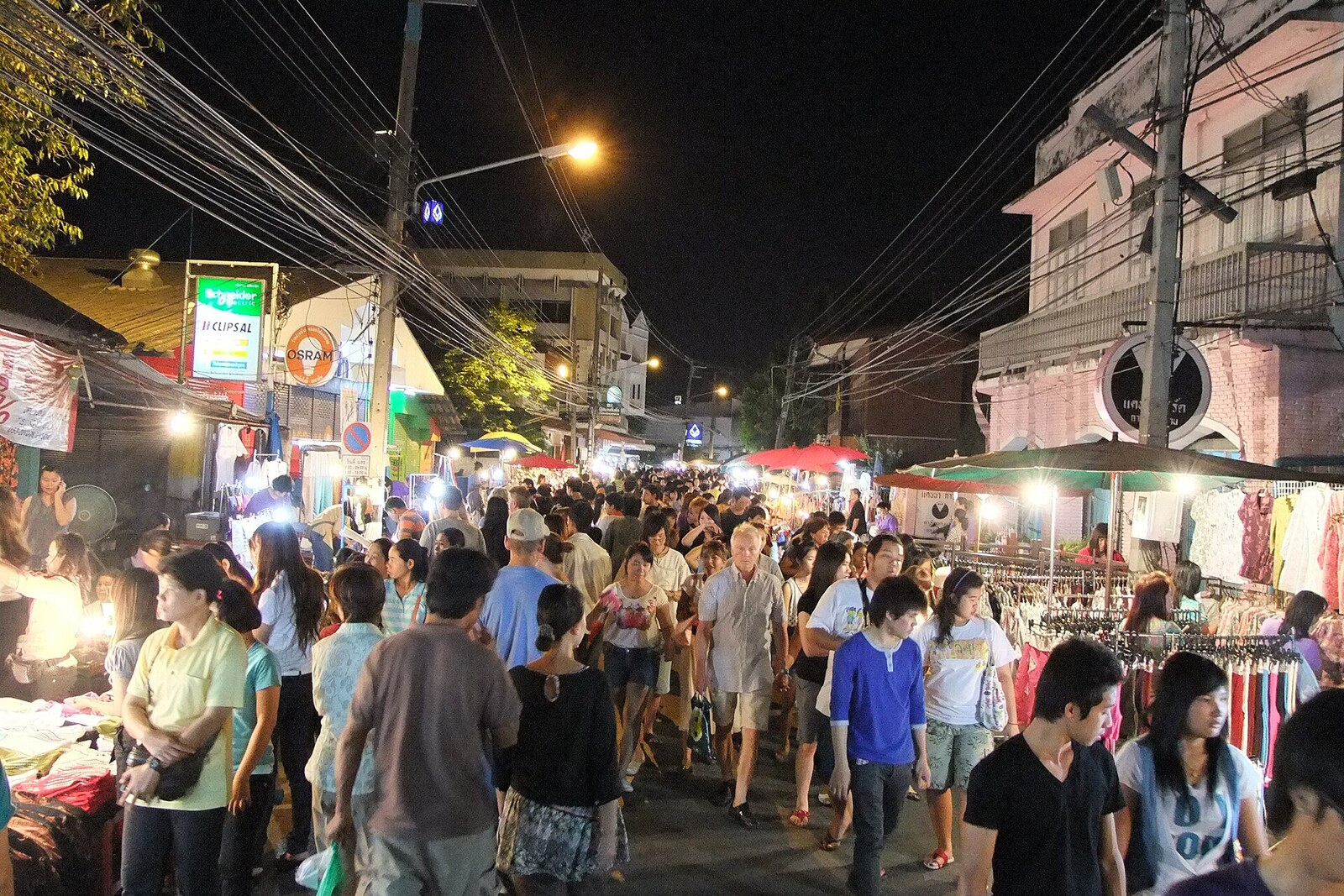
Look around first
What to notice
- Rows of market stalls
- Silverware
- Lacquer boxes
- Street loudspeakers
The story of the place
After nineteen ninety-two, fewer and fewer people were buying silver on Wua Lai. Craftsmen changed occupations, workshops closed, and those who continued chasing metal and trading took their goods to Tha Phae Gate—where a successful Sunday fair was already gathering.
Representatives of Wua Lai's three communities, responsible for the quarter's shared affairs, wanted to bring buyers back to where the craftsmen lived and worked. In two thousand two, they organized three fairs in turn in the courtyards of neighboring temples. One community hosted sellers of silverware and lacquerware, then passed the turn to another. Residents of nearby quarters brought their goods as well, shoppers came, and it became clear that the separate temple courtyards were already too cramped for this kind of trade.
The community committees then appealed to the municipality: only city services could close the roadway and permit trading directly on the road. In November two thousand four, vendors were given Wua Lai for ten Saturdays in a row. Silver bowls, jewelry, lacquer boxes, and chased metal panels came out of workshops and temple courtyards onto the street that linked all three communities.
Ten Saturdays did not yet mean a permanent market. When visitor numbers increased, five representatives were chosen from each community. They repeatedly asked for the permit to be extended until the municipality agreed to close Wua Lai to cars every Saturday. The condition was strict: from then on, the residents had to maintain the fair themselves.
The committee assigned spaces and checked exactly what the vendors intended to put on display. They took particular care to preserve the craft section—silver, lacquerware, and aluminum chasing. A trading space cost five baht, plus another ten for electricity. The money paid for garbage bags, cleaners, and the people who blocked the entrances; it also paid for loudspeakers to replace hand-held megaphones. What remained at the end of the year went toward gifts for vendors and small scholarships for their children.
Today, among the silver, there are stalls selling clothes, souvenirs, other crafts, and food. But the market's very form remains a trace of those communities' decision: three fairs from three temple courtyards came together into one long Saturday row on the roadway of Wua Lai.
Useful on site
The Saturday market takes place in the evening; the temple's official website gives approximately 16:00–22:30, but the stalls and road closures depend on the date.
Checked: June 30, 2026. Check the official source before visiting.The full rows appear on Saturdays; on any other day, treat this stop as part of a residential and working street, not as a missed attraction.