 Guide On Map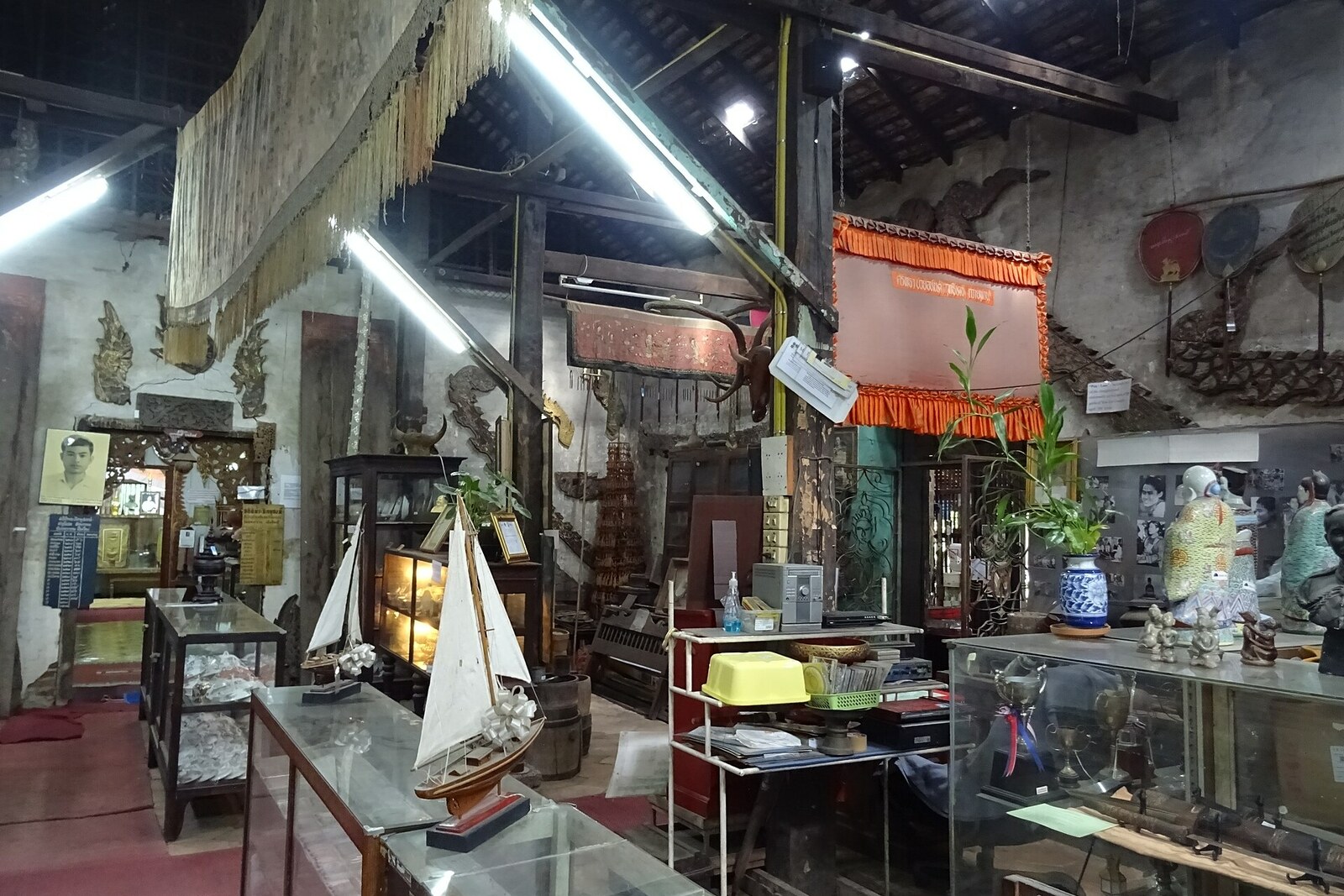
Look around first
What to notice
- The wooden house of the former abbot
- Simple museum shelves
- Old photographs
- Bowls, textiles, and musical instruments
The story of the place
In the late nineteen nineties, behind the temple halls of Wat Ket Karam stood a half-ruined wooden residence of a former abbot. It was called Hong Tu Chao Luang—the house of the senior monk. Some members of the temple community proposed demolishing the building; others wanted to leave it as it was. Jarin Bain (Uncle Jack), an elderly congregant known as Uncle Jack, proposed a third option: repair the house and give it over to objects that the temple and the neighborhood's residents had already stopped using but could not bring themselves to throw away. On December nineteenth, nineteen ninety-nine, the community entrusted him with creating a museum.
Bain had arrived here by his own family path. He grew up a few hundred meters from Wat Ket Karam, on the estate of the Borneo Company, which traded in teak. His father was the last manager of its Chiang Mai branch. Jarin himself worked for the company for twenty-two years and oversaw the rafting of logs down the Ping River to Pak Nam Pho; then he served at a bank for another nine years. By the time the museum was founded, river warehouses and rafts had already disappeared from everyday life. Bain knew this neighborhood before the railway and automobiles from family stories, and the teak trade from his own work.
The new museum team had almost no money. The roof leaked, and there were not enough display cases. Bain organized temple collections, asked residents to bring cabinets and shelves, and even begged the temple itself for lids from old coffins: they were adapted as display boards for the exhibits. While clearing out the former residence, he found Thai flags, images of the Buddha, amulets, tableware, photographs, and books. These objects made up the first exhibition.
Seeing that the old house would no longer be demolished, congregants began bringing belongings from their own families: textiles, coins, ceramics, musical instruments, and woven baskets. The photographer Boonserm Sattrabhaya donated photographs of old Chiang Mai, and the antiquarian Anan Rittidet donated objects from his personal collection. The museum opened in April two thousand. Bain remained its caretaker, manager, and guide all at once; neither he nor his assistants received regular pay. When the door was locked, visitors rang a bell, and Uncle Jack came from his home nearby.
After Bain's death in two thousand thirteen, his friend and co-founder Somwang Rittidet took over the keys; later, the monks took charge of the collection. In two thousand twenty-five, students from Chiang Mai University were again sorting through these collections, compiling an inventory, and updating the exhibition. Bowls, textiles, and instruments bearing donors' names remain on simple shelves, and the museum still occupies the former abbot's house that the community had planned to dismantle.
Useful on site
The temple grounds are accessible according to the local monastic rhythm; the museum may operate irregularly or be under restoration, so check on site.
Checked: June 26, 2026. Check the official source before visiting.Dress respectfully and consider the museum optional in advance: its accessibility may change. The temple grounds themselves are worth exploring even without going inside.