 Guide On Map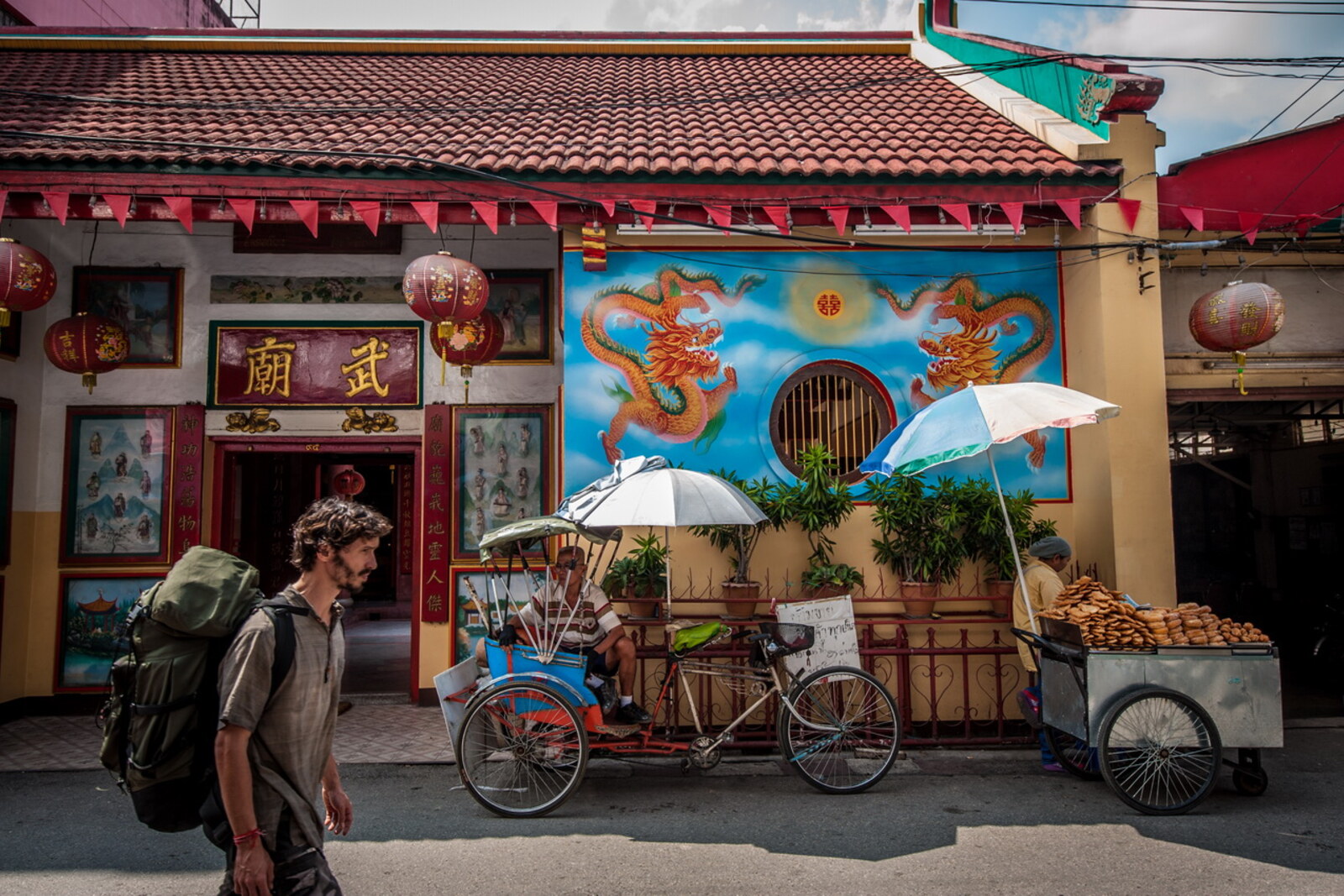
Look around first
What to notice
- Red-faced statue of Kuan U
- Altars to local patrons
- Inscriptions in Chinese and Lanna scripts
- Brightly colored shrine by the river
The story of the place
In the trading quarters by the Ping River, the Chinese community has preserved two shrines: one stands among the shops, the other, brightly painted, is closer to the river. The riverside shrine appeared when goods and people arrived here by boat; merchants asked there for protection before journeys and for a steady income for their families. The old building was eventually replaced by a new one, so the current walls are more than a century younger than the worship itself. Inside, alongside the red-faced statue, stand altars to local patrons, and Chinese and Lanna scripts can be seen on the tablets.
In the middle of the twentieth century, the cloth merchant Ngak Im entered the old wooden Kuan U Shrine adjoining her shop. According to neighbors' recollections, it was dark and dirty inside; homeless people slept there, and the dying sometimes remained there. A wooden tablet stood on the altar instead of a statue. Customers kept away from the building, and the residents of Trok Lao Zhou had almost stopped praying to their patron.
Ngak Im cleaned the room, painted the walls, and installed lighting. Then she brought a statue of Kuan U from Bangkok and placed it on the main altar. People began coming in again. For a cloth merchant, this was an understandable choice of deity: Kuan U is what Guan Yu is called here, an ancient Chinese military commander who, after his death, came to be revered as a protector of faithfulness to one's word. Among Chinese merchants, he also became a patron of fair dealing and commercial success.
On February thirteenth, nineteen sixty-eight, Ton Lam Yai Market caught fire. The fire crossed Wichayanon Road and destroyed the old buildings of Warorot Market. In Trok Lao Zhou, people lived above their shops or beside them: along with their homes, they could lose their goods and their only source of income. When burning debris flew in their direction, residents gathered in the shrine that Ngak Im had shortly before brought back to life and began asking Kuan U for protection.
The fire itself is confirmed by documents and photographs. Beyond that begins the community's story. Witnesses insisted that a red light appeared above the shrine, and then the wind turned toward the river. The red color was linked to Kuan U's red face. The buildings by the shrine survived, according to residents, and after the fire the deity's veneration became much stronger. This is a local legend, not an established cause of the change in wind direction. But its consequence is quite tangible: the shrine remains a place where merchants come with requests and where the community holds annual ceremonies.
One of them is called the “basket distribution.” In the seventh month of the Chinese calendar, shrine custodians and market sellers collect donations, commemorate their ancestors, and distribute food and essential items to people in need. Here, domestic veneration of the dead becomes a shared undertaking for the whole lane.
Besides red-faced Kuan U, inside are altars to Chiang Mai's ruler Inthawichayanon and his wife Thip Keson, as well as to Pung Thao Kong and Pung Thao Ma—the divine “grandfather and grandmother” of the local Chinese community. The names of the ruler and his wife are inscribed in Chinese and Lanna scripts. Descendants of settlers placed them among their own patrons as the masters of the land where Chinese merchants had been allowed to settle and trade.
Pung Thao Kong also has a shrine of his own closer to the Ping River. Its name means “original community” in Teochew. Chinese merchants began building it in the eighteen seventies, when goods and people arrived here by boat and the area near Wat Ket served as a river landing. Before voyages, merchants asked Pung Thao Kong for protection and for prosperity and a steady income for their families. This is how Chiang Mai's oldest Chinese shrine came into being.
The old building gradually deteriorated. In nineteen ninety-six, the shrine committee and worshippers decided to replace it with a new one and raised funds within the community. The work was completed by nineteen ninety-eight. That is why the bright building by the river is more than a century younger than the worship itself.
At Kuan U's altar, Pung Thao Kong still stands beside the tablets of Inthawichayanon and Thip Keson, while by the river he has a separate shrine dedicated to him. Between them lie the very trading quarters for which Ngak Im once washed an abandoned hall and brought a red-faced statue from Bangkok.
Useful on site
Active shrines by the market; access depends on the local rhythm, ceremonies, and cleaning. Plan on a brief stop outside.
Checked: June 26, 2026. Check the official source before visiting.These are active places of worship: speak more quietly, do not block the altar, and follow local rules if you see people praying.