 Guide On Map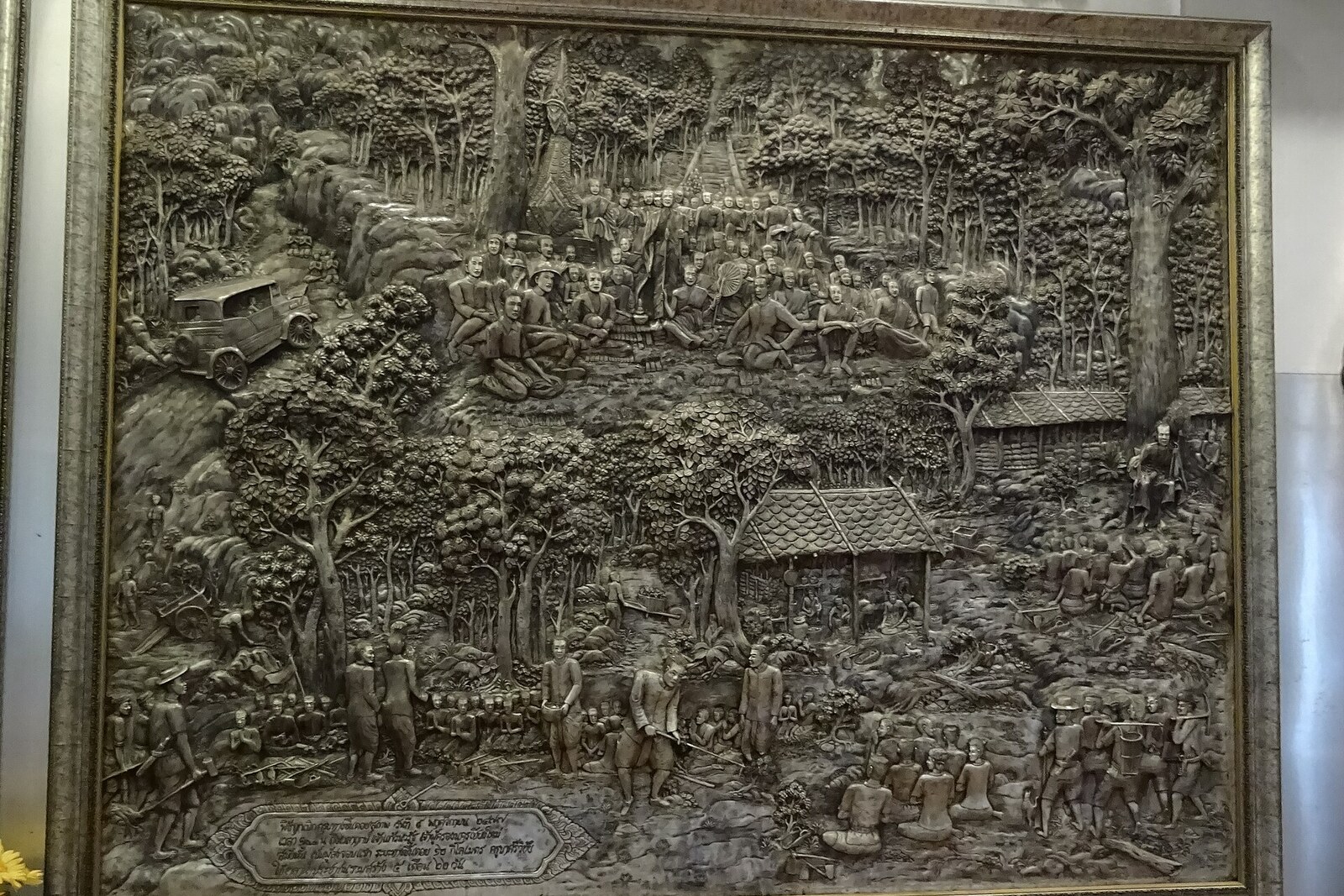
Look around first
What to notice
- Silver bowls
- Chased aluminum panels
- Chasing punches
The story of the place
Wua Lai grew as a quarter of home silver workshops: in the first half of the twentieth century, almost every family here lived by the craft. Several people could work on one bowl—one forged the shape, another applied the ornament, and a third gave it relief; wide salungs for ceremonies, kept as a sign of family prosperity, were especially prized. Beside the bowls and jewelry lie shining chased panels, while chasing punches reveal the work in which a design is created through blows on metal.
In twenty fifteen, the master craftsman Manop Chaikaew was raising the figure of an elephant on an aluminum sheet measuring one meter by one and a half. The sheet was laid on hardened resin: from the back, the master raised the metal with hammer blows, and from the front, he used chasing punches to work out the outlines and fine details. One such relief took about two weeks. Manop had no preliminary drawing. He said he already held the entire pattern in his head.
Manop was seventy-four at the time, and he had spent sixty of those years working in metal chasing. His parents and grandparents made silverware in the same quarter. His parents sent their son to school, but at fourteen he preferred to stay near the family workshop: he watched how the adults held the chasing punch and where they struck, then began to help. There was no separate course or set of ready-made templates—the design was memorized together with the sequence of movements.
That was how most of Wua Lai worked. In the first half of the twentieth century, there was a workshop in almost every house. It was family production, where different people could carry out different operations: one forged the shape of a vessel, another marked out the ornament, and a third gave the relief its volume. The most recognizable object was the salung, a wide silver bowl. These bowls, dishes, and trays were used in ceremonies and kept as evidence of a family's prosperity.
By Manop's old age, silver had become more expensive, and commissions for heavy silverware had grown rare. The master said that he could work only when a specific commission came in, and that the people who remained among the metal chasers were mainly from his generation. He himself transferred familiar ornaments to aluminum and other metals. Instead of a bowl used by one family, a customer could receive a large wall panel; the master's hand and the sequence of blows remained the same.
That is why, in Wua Lai's workshops, chased panels made of cheaper metal lie beside silver bowls and jewelry. Silver gave the quarter its craft and its name, but not every shining object in front of a workshop is made of silver. Manop's elephant was aluminum—and it still required two weeks of his work.
Useful on site
The street is accessible at all times; the workshops and shops are private and are more often open during the day and before the Saturday market.
Checked: June 30, 2026. Check the official source before visiting.A workspace is not always a public demonstration; do not enter without an invitation, and ask the craftsperson before taking photographs.