 Guide On Map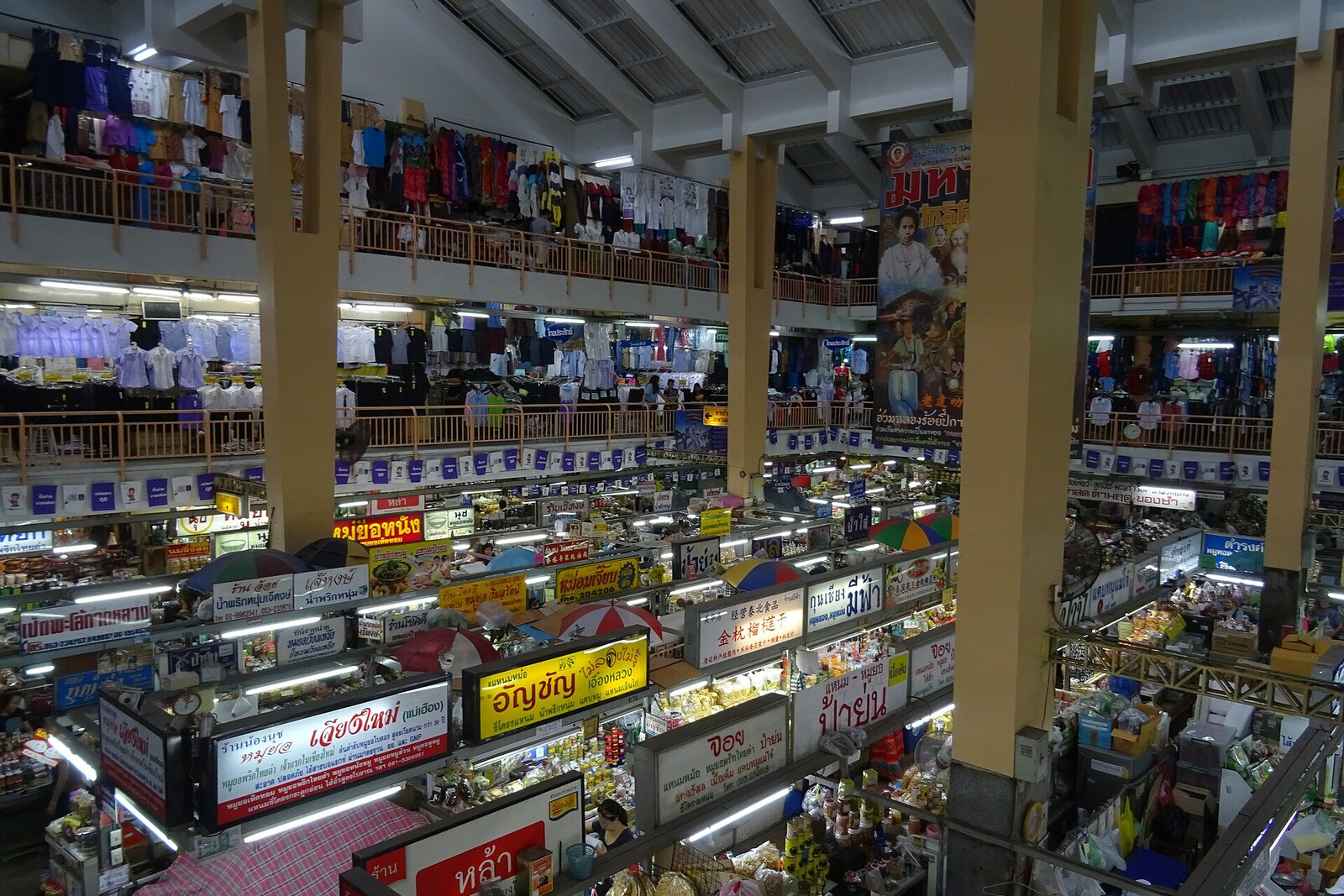
Look around first
What to notice
- Flower stalls
- Boxes of cut flowers
- Jasmine garlands
- The river side of the market
The story of the place
On the river side of Ton Lam Yai, flower stalls receive boxes of cut plants from gardens across northern Thailand. From here, consignments go on to temples, decorators, hotels, and guesthouses; local traders string jasmine into garlands. Under the market roof, vegetables, fruit, groceries, and household goods are still sold beside the flowers. The river remains part of the market's work: goods are unloaded along the bank, then sent onward through the city and to other provinces.
At the turn of the nineteenth and twentieth centuries, the Burmese timber merchant Mong Pan Yo leased this stretch of riverbank for working elephants. Later, the Siamese king granted him the name and title Luang Yonakan Phichit. His income depended on elephants: the animals hauled teak logs out of the forest for Borneo Company and Bombay Burmah Trading Corporation.
The site had already been prepared by the riverbank's earlier life. On the low ground, residents planted longan trees, and the rulers of Chiang Mai kept their elephants among the trees. In the northern part of the garden, mahouts took the animals to bathe in the Ping River. Hence the name: “Ton Lam Yai” literally means “longan tree.”
Mong Pan Yo paid for the construction of a row of houses for mahouts and other workers. The people who lived here permanently needed food and everyday goods, and traders began coming to their houses with their baskets. Cargo boats moored nearby, so the river route itself also brought buyers. The settlement by the elephant yard became a small market.
Then the Chinese entrepreneurs Luang Anusan Sunthon and Ui Liao built permanent market rows on this site. The pier delivered goods, while Warorot Market, which had appeared opposite, drew buyers. Under roofs of tin and tile, vendors sold clothing, dried goods, and local food; Burmese traders brought spices and medicinal herbs. In the open center, farmers laid out their harvest directly on the ground beneath large paper umbrellas. Trading continued throughout the day, and spaces for boats and rafts were left along the bank.
Now, Ton Lam Yai's river side is occupied mainly by flower sellers. Garden owners from across northern Thailand send cut plants here, and local traders distribute them further. Jasmine is strung here into garlands for temples; flowers from mountain plantations are collected by decorators, hotels, and guesthouses, while some consignments are packed for shipment to Bangkok and other provinces. Inside the market, vegetables, fruit, groceries, and household goods are still sold.
The longan garden, the elephant yard, and the mahouts' houses are no longer here. What remains of them is the name of a market where boxes of cut flowers are unloaded instead of working elephants.
Useful on site
An open market cluster; come in the morning, because individual flower and grocery stalls keep their own schedules.
Checked: June 26, 2026. Check the official source before visiting.It is best to come in the morning, when the flowers and fruit look their freshest. Watch your step: loading operations and shoppers share the same passageways.