 Guide On Map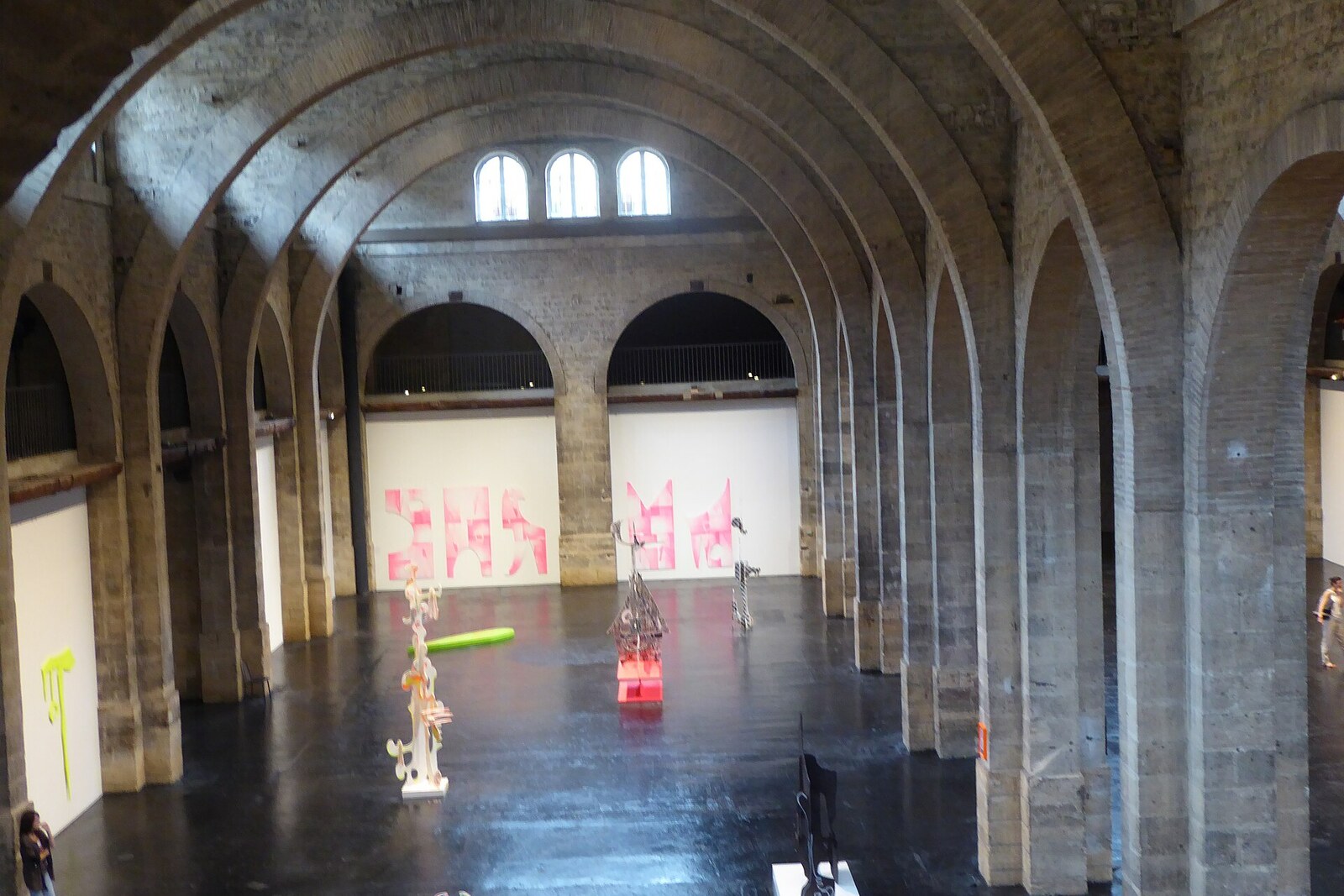
.JPG)
This place does not have an audited photo yet.
Selected place
CAPC Museum of Contemporary Art of Bordeaux
Local name: CAPC musée d'art contemporain de Bordeaux
Here you will see how a port building was preserved and adapted for art.
Start with 18 highlights or open the complete catalog of 143 curated places.
Highlights include CAPC Museum of Contemporary Art of Bordeaux, Grand Théâtre, Miroir d'eau, Musée du Vin et du Négoce — a house arranged around a barrel, Place de la Bourse, Place des Quinconces.
We have connected important places into ready-made walks with a clear order, stories and practical details.
Start with 18 highlights, or reveal all 143 curated places.
Local name: CAPC musée d'art contemporain de Bordeaux
Here you will see how a port building was preserved and adapted for art.
Here you will see how a port building was preserved and adapted for art.
The opera house will serve the route as the place where a parliamentary dispute ended a writer's career as a deputy.
This modern square will explain how an engineering solution became a new way of using the waterfront.
The layout of the house shows how living quarters, an office, and work with barrels fit under one roof.
The ensemble shows how a dispute between a provincial court and a royal official changed the entrance to a port city.
Here you will understand why Bordeaux’s main esplanade repeats the dimensions of a vanished citadel.
Here you will see how a military order became a private concession and a toll-paying city crossing.
The tower will show why freeing the monument from the neighboring houses nearly led to its destruction.
This stop is about one successful renaming that proved stronger than the revolutionary ban.
Here a royal order will run up against a tender that no one wanted to enter.
The city bell will link a revolt, the loss of privileges, and the townspeople’s attempt to learn how to tell time again.
The pavilion will show the result of a transformation in which the architects did not add anything new, but removed a later shell.
The finale will bring together the market gardeners’ nighttime journey, the sale of their harvest, and the return load for the next planting.
This stop will take you beneath the city pavement to a Roman statue and a long-filled-in inner harbor.
The lone arch shows which part of the ceremonial imperial entrance actually remained in stone.
The final stop will explain the gap between the cathedral and its bell tower, which remained without bells for several centuries.
The new church will explain how parishioners preserved the memory of a dismantled church but did not get the square they had planned.
Beneath the ordinary paving lies a long and uneasy history of how the townspeople dealt with the burials they found.
Nearest audio-route stop: Jardin Public — the city’s living room among the trees — 10 m in a straight line, route Chartrons: From Wine Warehouses to Jardin Public
Nearest audio-route stop: Place des Quinconces — 70 m in a straight line, route Stone Bordeaux Between the Garonne and the Cathedral
Nearest audio-route stop: Rue Notre-Dame — 80 m in a straight line, route Chartrons: From Wine Warehouses to Jardin Public
Nearest audio-route stop: Quai des Chartrons — trade at the river's edge — 10 m in a straight line, route Chartrons: From Wine Warehouses to Jardin Public
Nearest audio-route stop: Grand Théâtre — 80 m in a straight line, route Stone Bordeaux Between the Garonne and the Cathedral
Nearest audio-route stop: Rue Notre-Dame — 10 m in a straight line, route Chartrons: From Wine Warehouses to Jardin Public
Nearest audio-route stop: Grand Théâtre — 130 m in a straight line, route Stone Bordeaux Between the Garonne and the Cathedral
Nearest audio-route stop: Rue des Faures — 10 m in a straight line, route Saint-Michel: Gates, Craft, and Market
Nearest audio-route stop: Saint-André Cathedral / Tour Pey-Berland — 50 m in a straight line, route Stone Bordeaux Between the Garonne and the Cathedral
Nearest audio-route stop: Saint-André Cathedral / Tour Pey-Berland — 50 m in a straight line, route Stone Bordeaux Between the Garonne and the Cathedral
Nearest audio-route stop: Saint-André Cathedral / Tour Pey-Berland — 80 m in a straight line, route Stone Bordeaux Between the Garonne and the Cathedral
Nearest audio-route stop: Grand Théâtre — 90 m in a straight line, route Stone Bordeaux Between the Garonne and the Cathedral
Nearest audio-route stop: Grosse Cloche — 70 m in a straight line, route Stone Bordeaux Between the Garonne and the Cathedral
Nearest audio-route stop: Grosse Cloche — 20 m in a straight line, route Stone Bordeaux Between the Garonne and the Cathedral
Nearest audio-route stop: Grosse Cloche — 120 m in a straight line, route Stone Bordeaux Between the Garonne and the Cathedral
Nearest audio-route stop: Porte Cailhau — 40 m in a straight line, route Stone Bordeaux Between the Garonne and the Cathedral
Nearest audio-route stop: Grand Théâtre — 110 m in a straight line, route Stone Bordeaux Between the Garonne and the Cathedral
Nearest audio-route stop: Place Saint-Pierre — 110 m in a straight line, route Stone Bordeaux Between the Garonne and the Cathedral
Nearest audio-route stop: Place de la Bourse — 10 m in a straight line, route Stone Bordeaux Between the Garonne and the Cathedral
Nearest audio-route stop: Grosse Cloche — 30 m in a straight line, route Stone Bordeaux Between the Garonne and the Cathedral
Nearest audio-route stop: Musée du Vin et du Négoce — a house arranged around a barrel — 60 m in a straight line, route Chartrons: From Wine Warehouses to Jardin Public
Nearest audio-route stop: Place de la Bourse — 80 m in a straight line, route Stone Bordeaux Between the Garonne and the Cathedral
Nearest audio-route stop: Grand Théâtre — 130 m in a straight line, route Stone Bordeaux Between the Garonne and the Cathedral
Nearest audio-route stop: Place Saint-Pierre — 100 m in a straight line, route Stone Bordeaux Between the Garonne and the Cathedral
Nearest audio-route stop: Saint-Michel Basilica — 80 m in a straight line, route Saint-Michel: Gates, Craft, and Market
Nearest audio-route stop: Saint-André Cathedral / Tour Pey-Berland — 50 m in a straight line, route Stone Bordeaux Between the Garonne and the Cathedral
Nearest audio-route stop: Place des Quinconces — 40 m in a straight line, route Stone Bordeaux Between the Garonne and the Cathedral
Nearest audio-route stop: Saint-André Cathedral / Tour Pey-Berland — 50 m in a straight line, route Stone Bordeaux Between the Garonne and the Cathedral
Nearest audio-route stop: Saint-André Cathedral / Tour Pey-Berland — 60 m in a straight line, route Stone Bordeaux Between the Garonne and the Cathedral
Access and construction years come from OpenStreetMap and Wikidata, snapshot of August 25, 2026: database data, not a check on the ground.