 Guide On Map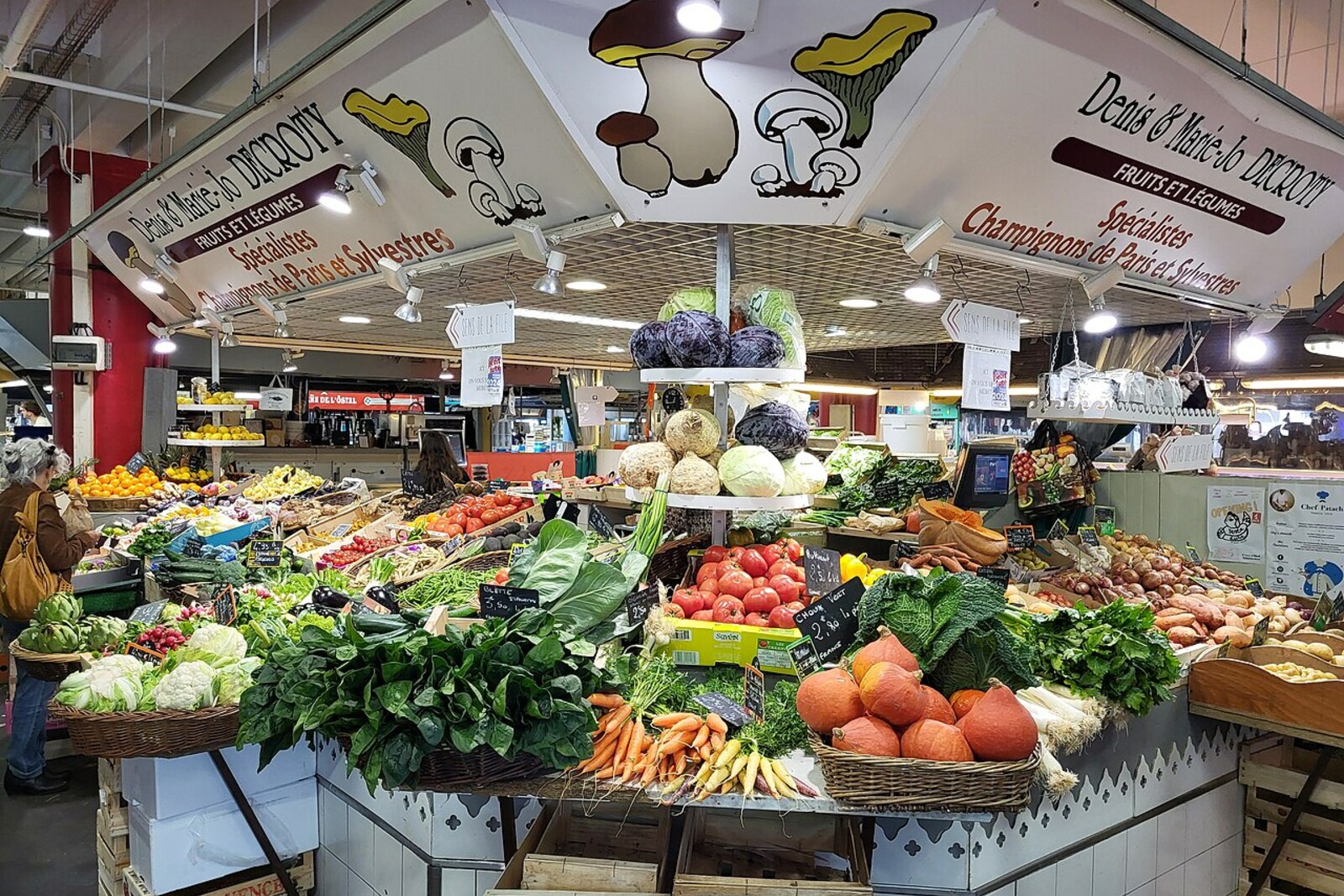
Look around first
What to notice
- Concrete market buildings
- Vegetable stalls
- Meat stalls
- Fish stalls
The story of the place
Behind the concrete buildings with vegetable, meat, and fish stalls is a site that long supplied the whole city wholesale. Harvests from the suburbs were brought here, and traders bought them in lots for shops in Bordeaux and the surrounding area; household purchases were only part of the business. At the end of the nineteenth century, two iron pavilions with a glass gallery were built over the trading area; horse-drawn transport passed beneath it, and carts unloaded there. Later, concrete replaced iron, and large wholesale deals moved to another market, leaving the familiar daily trade here.
The market has a monastic name, although the Capuchins did not create the trade that made this place famous. In sixteen oh one, François de Sourdis, Archbishop of Bordeaux, settled a community of mendicant friars nearby. He set aside for them a plot belonging to the plague hospital and wanted to establish a permanent community of preachers in the southern suburb. The friars lived on alms and wore coarse brown habits with pointed hoods—“capuce” in French. From this hood came the name of the Order of Friars Minor Capuchin, and from the order came the names of the monastery, the district, the square, and the market.
During the French Revolution, the community was dissolved. From its monastery on Rue du Hamel, a covered gallery around an inner courtyard survives. The monks have long been gone from the square itself; their hood remains in the word “Capucins.”
The market’s main story began later. In eighteen fifty-seven, city officials set aside the square for a first-sale market. Producers were to bring their harvest here, while wholesale middlemen bought it in lots and resold it to shopkeepers in Bordeaux and the surrounding area. Household shopping at the counter was only one part of the business. Above all, this was where food was distributed for the whole city.
For the market gardeners of Eysines, this market was where it was decided whether the harvest they had grown would pay off. In eighteen fifty-six, market gardening supported six hundred seven people there—every fourth resident of the commune, not counting hired workers. Three times a week, families loaded their carts in advance, set off around midnight, and reached Bordeaux by two o’clock. Before the market, they had to pass through the octroi, the city tollgate where a levy was charged on incoming goods. Officially, trading was to begin only at dawn, but some deals were struck earlier in neighboring taverns. On the square, each suburban commune had its own allotted place.
The carts returned from Bordeaux with a different load. Eysines’ sandy market gardens constantly lacked fertilizer, so twice a week the farmers carried manure out of the city: first from its many horses, later from the slaughterhouse. Potatoes or watercress sold here gave a family money, while the return load prepared the next planting.
By the end of the nineteenth century, municipal builders had covered the trading area with two iron pavilions and joined them with a glass gallery. Horse-drawn omnibuses passed beneath it, carts unloaded nearby, and wholesale and retail trade continued both day and night. That was when Capucins acquired the nickname “the belly of Bordeaux.”
Those pavilions are not in front of you. In nineteen fifty-seven, they were dismantled and replaced with concrete buildings. After Brienne Market opened in nineteen sixty-three, large lots gradually stopped being sold at Capucins. Today’s vegetable, meat, and fish stalls occupy the site of the former wholesale market, but carts from Eysines no longer enter here for nighttime earnings and a return load of manure.
Useful on site
Market website and tourist office: Tuesday–Friday 06:00–14:00, Saturday–Sunday 05:30–14:30; closed Monday. The city page gives a shorter window, so come before noon for food and shopping.
Checked: June 30, 2026. Check the official source before visiting.Come during the first half of the day, and do not stand in the aisles while sellers serve customers. The historic World’s Fair pavilions were demolished, so the current market should not be mistaken for a structure from the XIX century.