 Guide On Map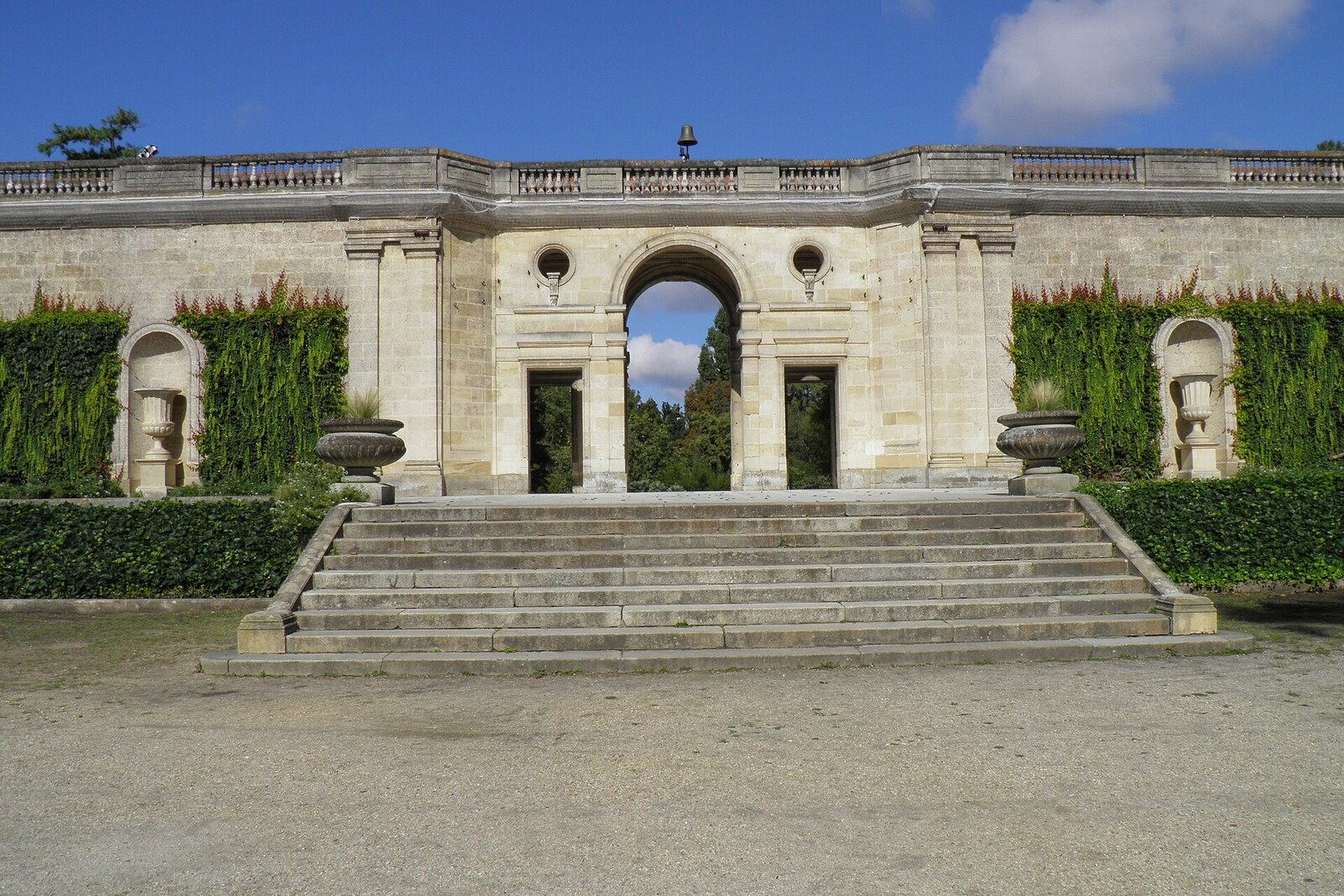
Look around first
What to notice
- Southern terrace
- Stone portico
- Winding paths
- Body of water
The story of the place
The paths here curve between the trees and lead to the body of water because the former formal garden was later remade into a landscape park. At the southern edge stand the terrace and stone portico, which survived that old layout of straight avenues and formal flowerbeds. On the northern side, blocks border the garden, having grown up on land once allocated for development. Now families, runners, and puppet-theater spectators stroll among the trees.
Today’s Jardin Public began as a place for business conversations. In seventeen forty-six, the royal official Louis-Urbain-Aubert de Tourny proposed creating a garden here that would link old Bordeaux, Chartrons, and the suburb of Saint-Seurin. At the time, damp meadows, vegetable gardens, and mediocre vineyards lay between them. Tourny called the new garden an evening exchange: wine merchants could meet after the day’s business and agree on a deal while walking.
Today’s Jardin Public was then called Jardin Royal. The land, however, already had owners. Madame Mitchell, the widow of the owner of a glassworks, resisted especially stubbornly. After her husband’s death, she continued the family business, which made bottles for Bordeaux’s growing wine trade. To her, the vineyards and plots near Chartrons were capital, not vacant land for improvement.
In April seventeen forty-seven, Tourny took part of her property without a prior valuation. The house, garden, and vines were demolished. Madame Mitchell filed a complaint with the Crown’s chief administrator of finances and refused to accept, in exchange, inconvenient remnants of the former plot. Tourny explained her refusal as a whim. Negotiations continued for five years.
In seventeen fifty-two, the parties agreed on an exchange. The city received the land for the garden, while Madame Mitchell was allocated more level plots along the new road, suitable for building houses. Even Tourny acknowledged that, once streets had been laid out, their value could rise twofold or threefold. Later, the widow’s son, François-Patrice Mitchell, divided the family land by the garden into building plots; all of them were sold within two years.
The garden opened in the middle of the seventeen fifties. Its original straight avenues and formal flowerbeds have not survived to the present day. In the eighteen fifties, Mayor Antoine Gautier commissioned the neglected grounds to be remade into a landscape park—hence the present winding paths, body of water, and loose groups of trees.
From Tourny’s garden, the southern terrace and portico remain. Rue du Jardin Public and the blocks along the northern edge grew out of the land deal with Madame Mitchell. Between them, walkers, runners, children, and puppet-theater spectators can still be found today—on the site Tourny had set aside in advance for conversations after the trading day was over.
Useful on site
Usually open daily from 07:00; closing is seasonal: around 18:00 in winter, 20:00 in spring/fall, and 21:00 in summer.
Checked: June 28, 2026. Check the official source before visiting.For the finale, choose a quiet spot by the water or on an avenue; after rain, take the condition of the paths and lawns into account.