 Guide On Map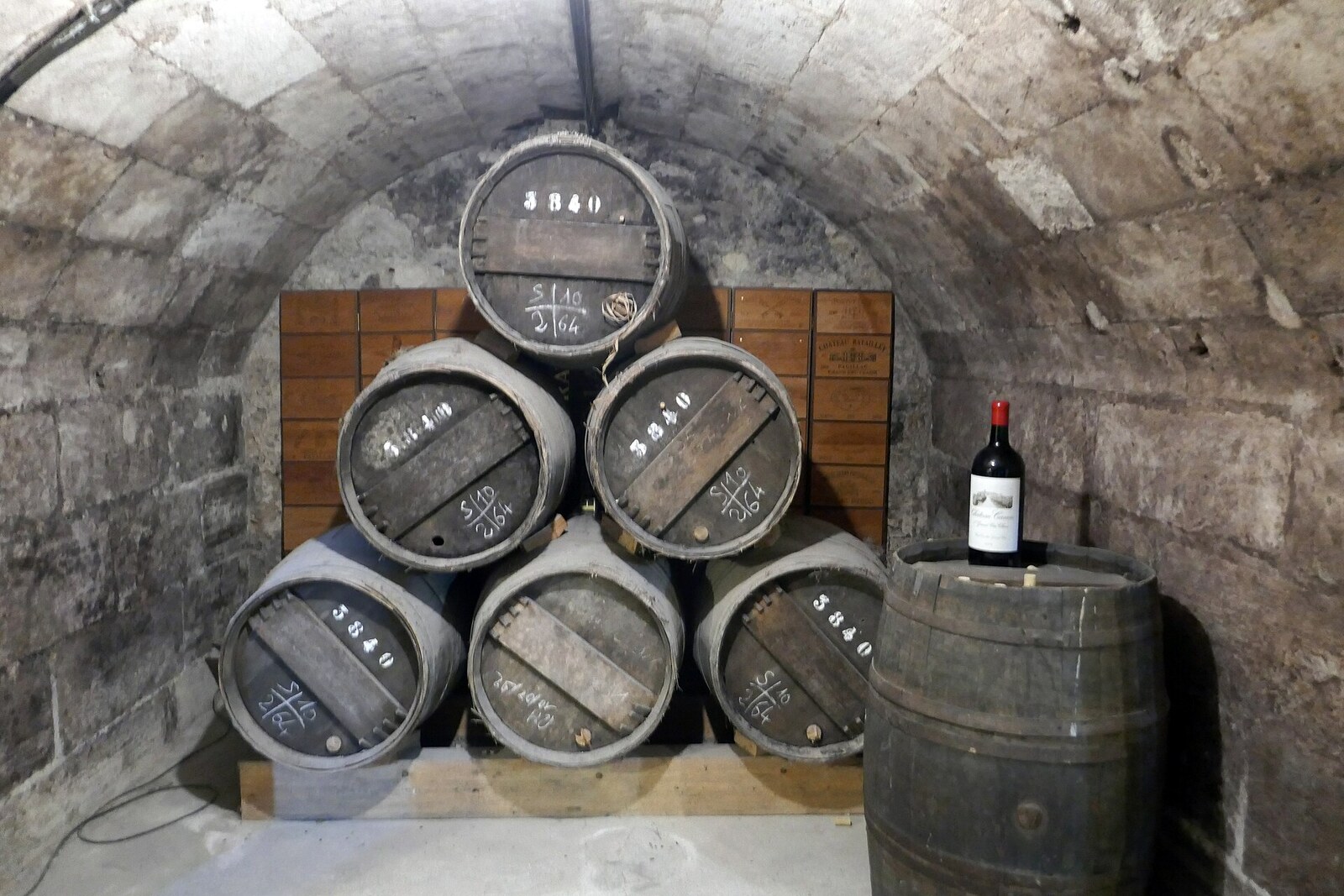
Look around first
What to notice
- Stone passage
- Cellar vaults
- Antique bottles
- Coopering tools
The story of the place
Behind the narrow façade on Rue Borie lies a long wine house extending deep into the block. A stone passage leads to the former cooperage and vaulted cellars, where barrels once made at the house were rolled. Down below, wine was aged before sale; above were the owner's office and living rooms. Today, the cooperage houses the ticket office and shop, while the cellars are filled with bottles, documents, and tools of the wine trade.
One morning in two thousand seven, Bordeaux wine merchant Grégory Pecastein was unpacking a box of tourist brochures in his office. One contained a route to Irish addresses in Bordeaux, prepared for the Rugby World Cup: the city was expecting sixteen thousand Irish supporters. Among the stops, Pecastein saw his own address—number forty-one on Rue Borie. He worked there without knowing why his office had been included in the route.
The address was part of the history of Francis Burke, an Irish wine merchant and royal broker to Louis XV. A broker brought sellers and buyers together, arranged transactions, and received a commission; Burke also earned money from the wine trade. Around seventeen twenty, he had an office, living quarters, and wine cellars combined here.
The house was narrow on the street side and extended very far into the block. Barrels made by the cooper who worked at the house were rolled through the stone vestibule. Beyond it were storage rooms and semi-underground vaulted cellars, where wine merchants aged purchased wine before selling it. The owner lived one floor above. The formal façade displayed Burke's prosperity, while the long cellars stretching behind it showed what that prosperity rested on.
By the supporters' arrival, the building had preserved this layout almost unchanged. The former Musée des Chartrons, which had occupied the same premises, had by then been closed for about five years. Pecastein prepared an account of Burke and opened the cellars to the championship's visitors. Four thousand people came here over several weeks.
After that, Pecastein decided to restore museum life to the house. He created the Bordeaux Histoire Vini association, began archival research, met with historians, and assembled a new exhibition about the profession by which he himself made a living. The present Musée du Vin et du Négoce opened in June two thousand eight.
Today, the ticket office and shop occupy the former cooperage, while documents, bottles, and tools are displayed in the cellars where barrels once stood. The visit ends with a discussion of Bordeaux wines and a tasting. The stone passage through which barrels once entered now leads to a museum that came into being after its future founder accidentally read his own address in an Irish brochure.
Useful on site
Usually open daily 10:00–18:00; check tickets, tastings, and workshops on the museum's official website.
Checked: June 28, 2026. Check the official source before visiting.The cellars are part of the museum visit; if you do not enter, you can listen to the account outside the house without blocking the passage.