 Guide On Map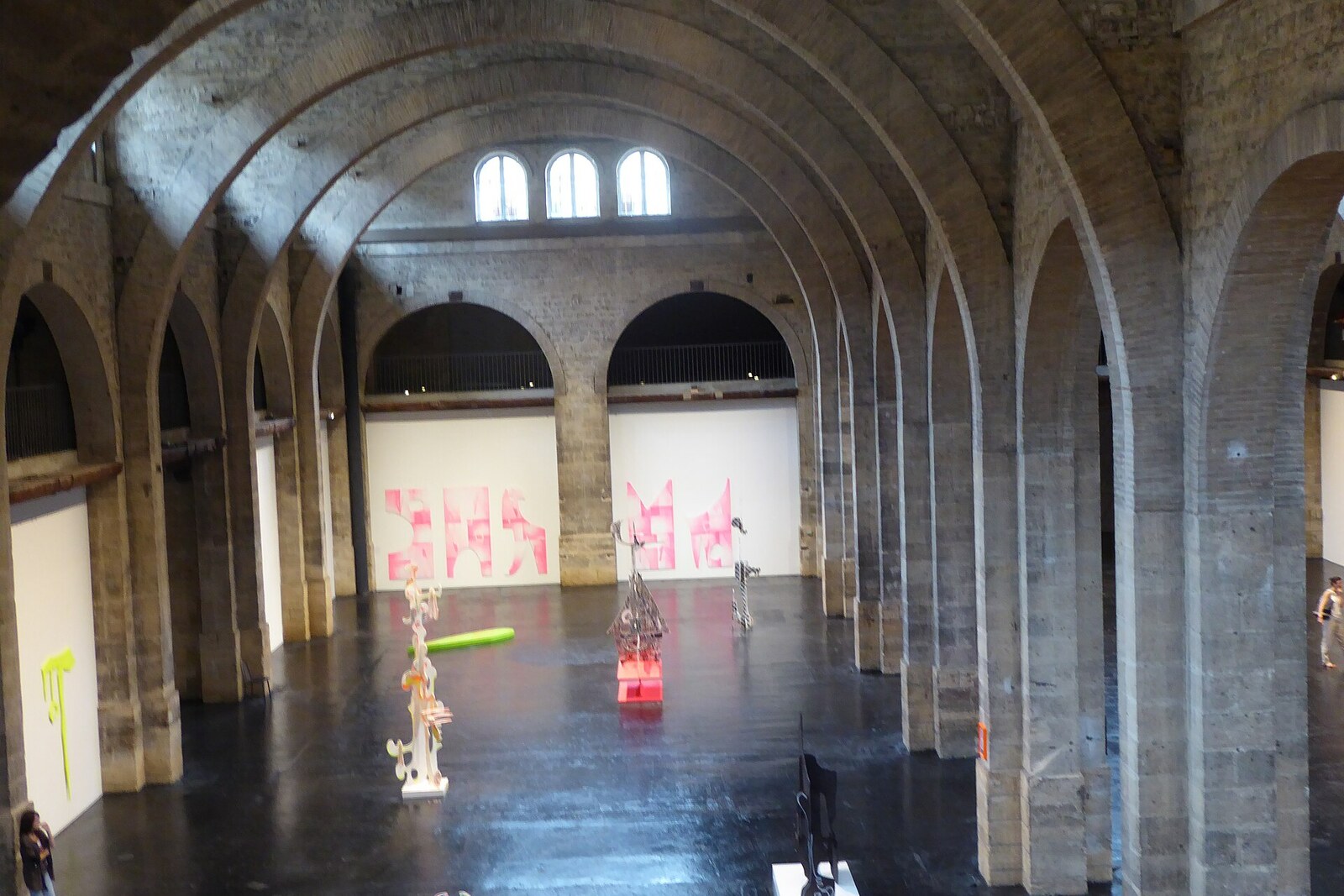
Look around first
What to notice
- High stone arches
- Central nave
- Concrete elevator shaft
- 10-meter figure
The story of the place
The high stone arches around the central nave remain from the customs warehouse: sugar, coffee, cotton, and indigo were unloaded beneath them, while the platforms above the arches turned the walls into additional storage levels. While cargo lay here under customs supervision, merchants did not pay duty until it was sold or sent onward through Europe. When port operations moved to the northern basins, this building nearly disappeared along with the second building in the complex. Today, a contemporary art museum operates in the nave and on the concrete walls, and a human figure two stories high can be seen from the elevator.
In eighteen twenty-four, Joseph-Henri-Joachim Lainé invested in the construction of a large bonded warehouse beside the Garonne and helped launch the project as a government minister under King Louis XVIII. Lainé was a lawyer and member of parliament, but his interest in colonial goods came at a family cost: his parents owned a plantation in the French colony of Saint-Domingue and brought enslaved people from there to Bordeaux. After the revolution, the former colony became the independent state of Haiti, and the family lost the plantation. Later, Lainé and his brother received more than seven thousand francs in compensation from Haiti, which the young state paid under pressure from France.
After the Napoleonic Wars, Bordeaux merchants were once again expanding trade with the colonies. They needed a place where sugar, coffee, cotton, and indigo could remain under customs supervision before being sold or sent on through Europe. Such a warehouse was called “real”: the goods were actually kept here, while duties remained suspended. For a merchant, that meant not having to pay customs immediately.
Lainé became one of the principal investors. Just two years after it opened, seventy ships from the West Indies arrived in Bordeaux; sugar made up two-thirds of the volume of colonial imports. Until slavery was abolished in the French colonies, it was grown by enslaved people. Goods were unloaded in the central nave, while the platforms around the high arches served as additional storage floors. The neighboring square was named after Lainé for his help with the construction, and the warehouse took the square’s name.
By the middle of the twentieth century, cargo operations had moved north, to the Bassins à flot. One of the two warehouse buildings was demolished in nineteen sixty-five. The main building closed in nineteen seventy-two and was also prepared for demolition.
Then two Bordeaux residents, Anne Claverie and Nicole Schiller, began a campaign to preserve the building. They won the support of Mayor Jacques Chaban-Delmas. On January twenty-fifth, nineteen seventy-three, the warehouse was listed as a historic monument, and the city then bought it. This building is what survived from the former complex.
The vacant spaces were given to Jean-Louis Froment, an exhibition organizer who needed a permanent home for the new CAPC Museum of Contemporary Art of Bordeaux. The museum’s name comes from the center’s French name. In nineteen seventy-four, Froment occupied part of the first floor even before the full renovation. Artists soon began receiving the entire nave and were allowed to work with its arches, staircases, terraces, and concrete walls. In nineteen eighty-four, the center became a municipal museum.
A year later, Froment staged here the first solo museum exhibition in Europe by the American artist Keith Haring. A few hours before the opening, Haring painted a human figure, about ten meters high, directly onto the concrete of the elevator shaft in acrylic. The exhibition was dismantled, but the figure remained: it stretches along two floors and is still visible from the museum elevator.
Useful on site
Accessible from outside as a city street; the CAPC Museum is usually open Tuesday–Sunday 11:00–18:00, closed Mondays and public holidays.
Checked: June 28, 2026. Check the official source before visiting.Without entering, you can appreciate the building’s imposing exterior; the central nave and exhibition works can only be seen on a separate visit to the museum.