 Guide On Map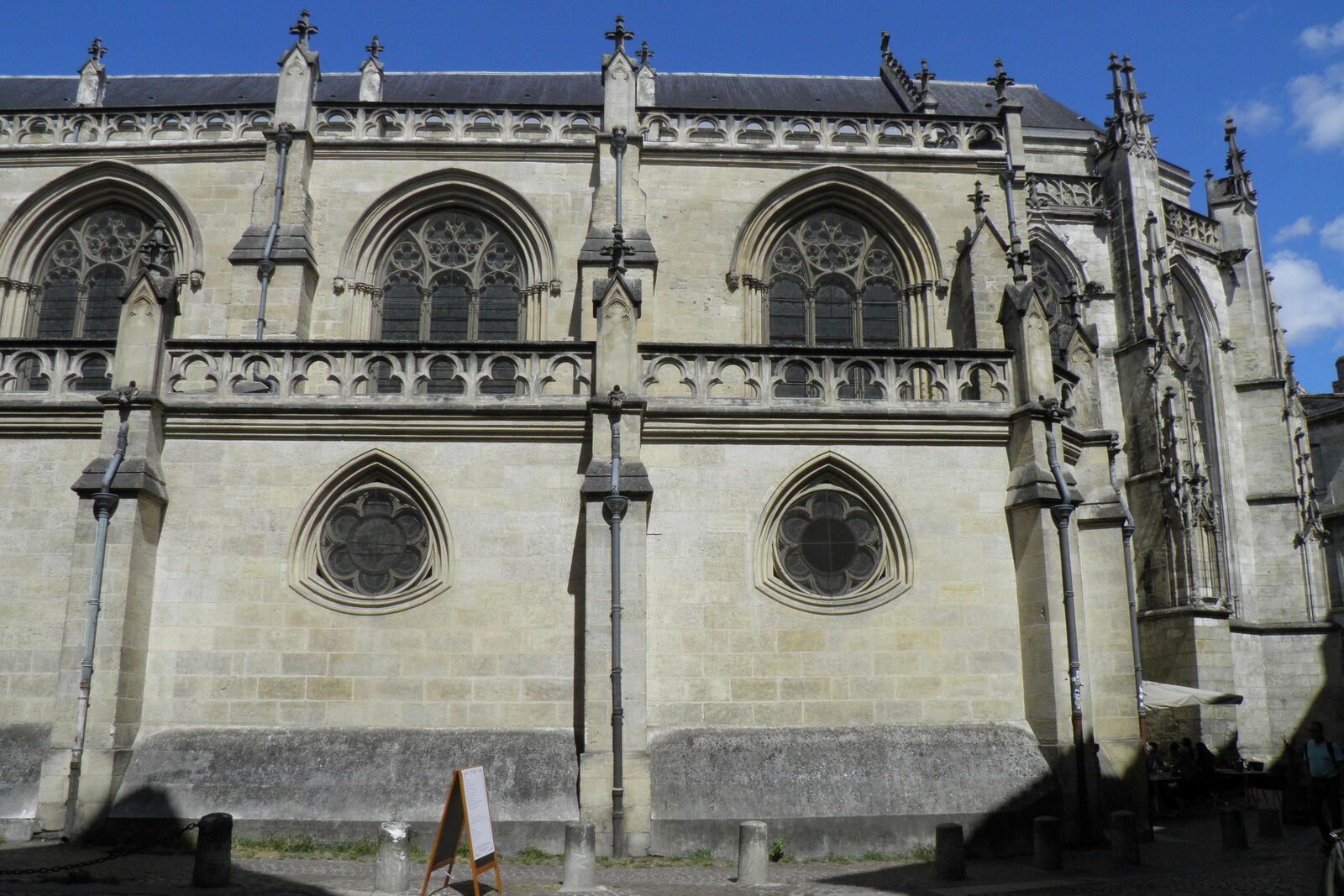
Look around first
What to notice
- Façade of Saint-Pierre Church
- Stone square
- Terraces in front of the church
- Streets of the old quarter
The story of the place
Before the façade of Saint-Pierre Church, the streets of the old quarter fan out, and the stone terraces occupy the place of the parish of people who lived from river fishing and cargo transport. The church was named for the apostle Peter, a Galilean fisherman and the patron of fishers and sailors. So work on the water remains here not on a signboard, but in the name of the parish and the square.
In eighteen thirty-two, workers were digging out the drain of a house a few steps from Saint-Pierre Church. They pulled more than twenty bronze fragments from the ground. They recognized a person in them by the lion skin wrapped around the left arm: beneath the square lay Hercules, cast at the end of the second or beginning of the third century.
François Jouannet, custodian of the city's collection of antiquities, had to save the find from destruction. The owners of the bronze feared it would continue to oxidize and agreed to give it to the city for five hundred francs. The purchase, however, still did not restore Hercules's human form. Ten years later, Jean-Adolphe Labet, an employee temporarily keeping the inventory of the city's antiquities, found the fragments on the floor of a lower room. They had been stacked one inside another, like scrap. Again and again, Labet laid out the pieces, matching the joins.
It was not until eighteen sixty-five that he fastened the bronze together from the inside with metal strips and screws. The right leg and part of the left were missing, but the statue could already be placed upright. It was shown at a major exhibition in Bordeaux, later sent to the World's Fair in Paris, and assembled once more for an exhibition at the Louvre. Jouannet did not live to see this: he acquired the Hercules found here, but did not see it standing.
The findspot explains the square better than its façades. In the days of Roman Burdigala, the entrance to an inner harbor lay here, built at the mouth of the small Devèze River. Researchers suggest that the bronze Hercules stood at this entrance. By the twelfth century, the old harbor had been filled in, the quays had been moved farther south, and a district had grown over the former water.
The church was named for the apostle Peter—a Galilean fisherman revered as the patron of fishers and sailors. This dedication was chosen for a parish of people who lived from river fishing and cargo transport. Their harbor disappeared, but its purpose remained in the name Saint-Pierre.
Hercules himself is no longer in the square: the assembled figure, with incomplete legs, is kept in the Museum of Aquitaine. The exact findspot survives by the church, while the terraces in the square occupy the former entrance from the Garonne into the inner harbor.
Useful on site
The square is always open. Access to Saint-Pierre Church may be irregular; on this route, the stop is intended primarily as an outdoor urban scene.
Checked: June 28, 2026. Check the official source before visiting.Do not look here for visible remains of the harbor or an ancient statue: Hercules is in the Museum of Aquitaine, and the harbor is hidden beneath the modern city. Outside, it is more important to compare the cramped quarter with the unexpectedly open approach to the church.