 Guide On Map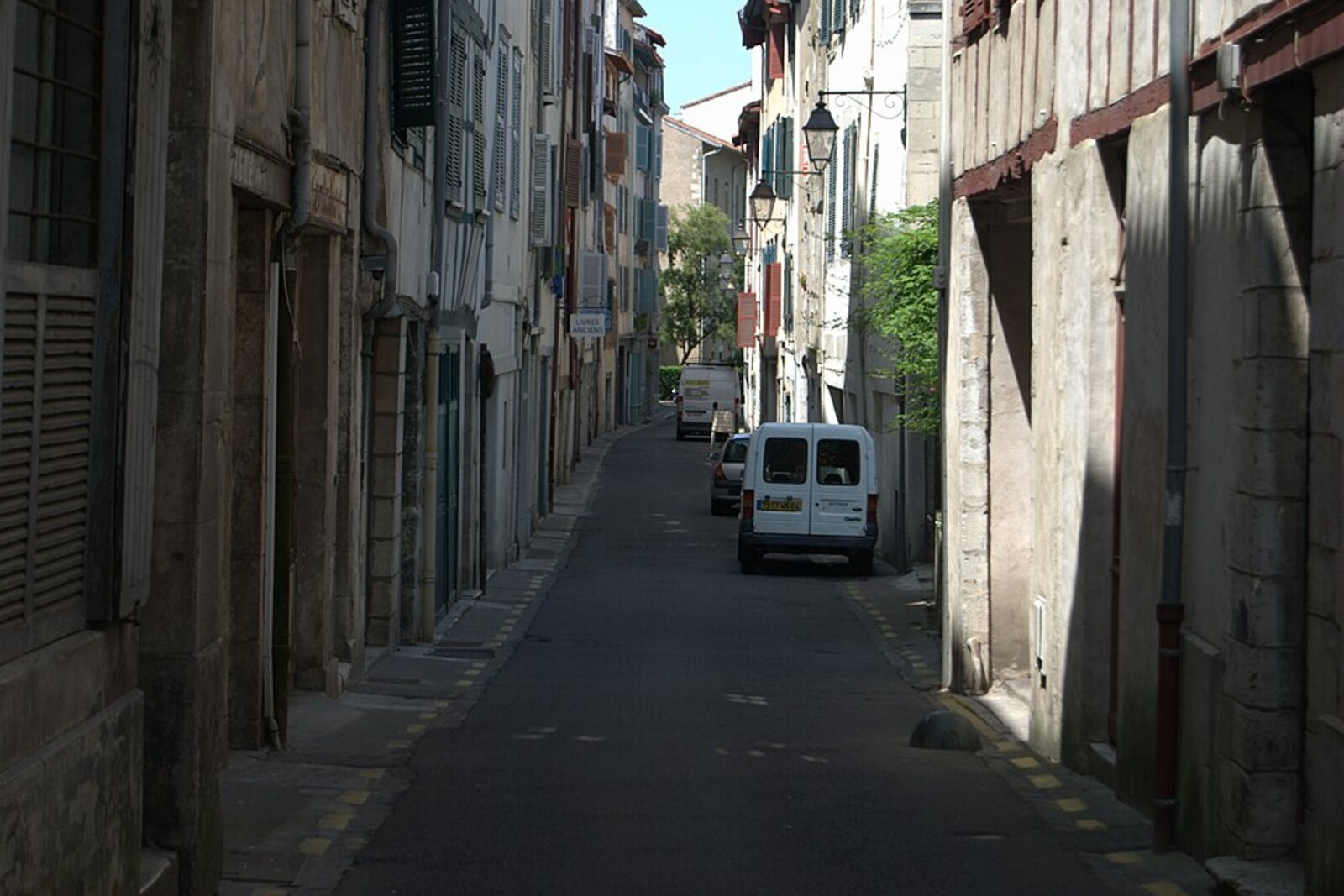
Look around first
What to notice
- Street sign
- Facades along the street
The story of the place
The name on the sign refers to the people whose workshops occupied this street. “Foar” is the old Gascon name for a blacksmith, rendered in French. The blacksmiths and armorers of Saint-Michel worked here.
This clustering of trades developed around the port. Aquitaine had no metal deposits of its own. Iron arrived by sea from Biscay, and copper from Flanders. On neighboring streets, carpenters and coopers made vessels, crates, and wine barrels; blacksmiths supplied them with metal fittings. They also lived on weapons commissions: forging swords, spearheads, shields, and chain mail. As early as the eleventh century, Bordeaux-made goods were sent across the Pyrenees, and in the fourteenth century chroniclers singled out the short Bordeaux swords—rigid and sharp.
In thirteen fifty-eight, this reputation brought a client here from another kingdom. Louis of Navarre, the king’s brother and regent of Navarre, wanted to establish armor production in his own lands. He summoned three master armorers from Bordeaux and five of their assistants. These men knew how to assemble chain mail, make bascinets—helmets with movable visors—and forge the metal plates from which body armor was assembled.
For the eight craftsmen, the commission meant exchanging their own workshops and familiar customers for work at a foreign court beyond the Pyrenees. They depended on costly imported iron and charcoal: without a steady supply of materials, a master earned nothing, however highly his skill was valued. The Navarrese court took responsibility for the supplies. On May fifteenth, thirteen sixty, its administrators ordered wood, iron, and charcoal to be issued to the three Bordeaux armorers. By then, they were already working at Olite Castle. Louis gained armor production beside his residence, while the masters from Rue des Faures gained a court that paid for their labor and delivered everything they needed.
No material trace of these forges remains on the street. The Maison du Forgeron, on the corner of today’s Cours Victor-Hugo, lasted longer than the others: a timber-framed building from the beginning of the sixteenth century, with a shop beneath an awning on the ground floor. In the nineteenth century, city planners straightened the streets and dismantled the house. Its wooden window shutters were moved to the Musée d'Aquitaine. Only the masters’ collective name survives here; part of the actual house of one of them is now at the other end of the city.
Useful on site
Public street accessible at all times; shops keep their own hours.
Checked: June 30, 2026. Check the official source before visiting.Both addresses remain part of a residential and commercial street, so view them from outside and do not disturb the residents. The doors of the Maison du Forgeron are in the museum, not on the former corner.