 Guide On Map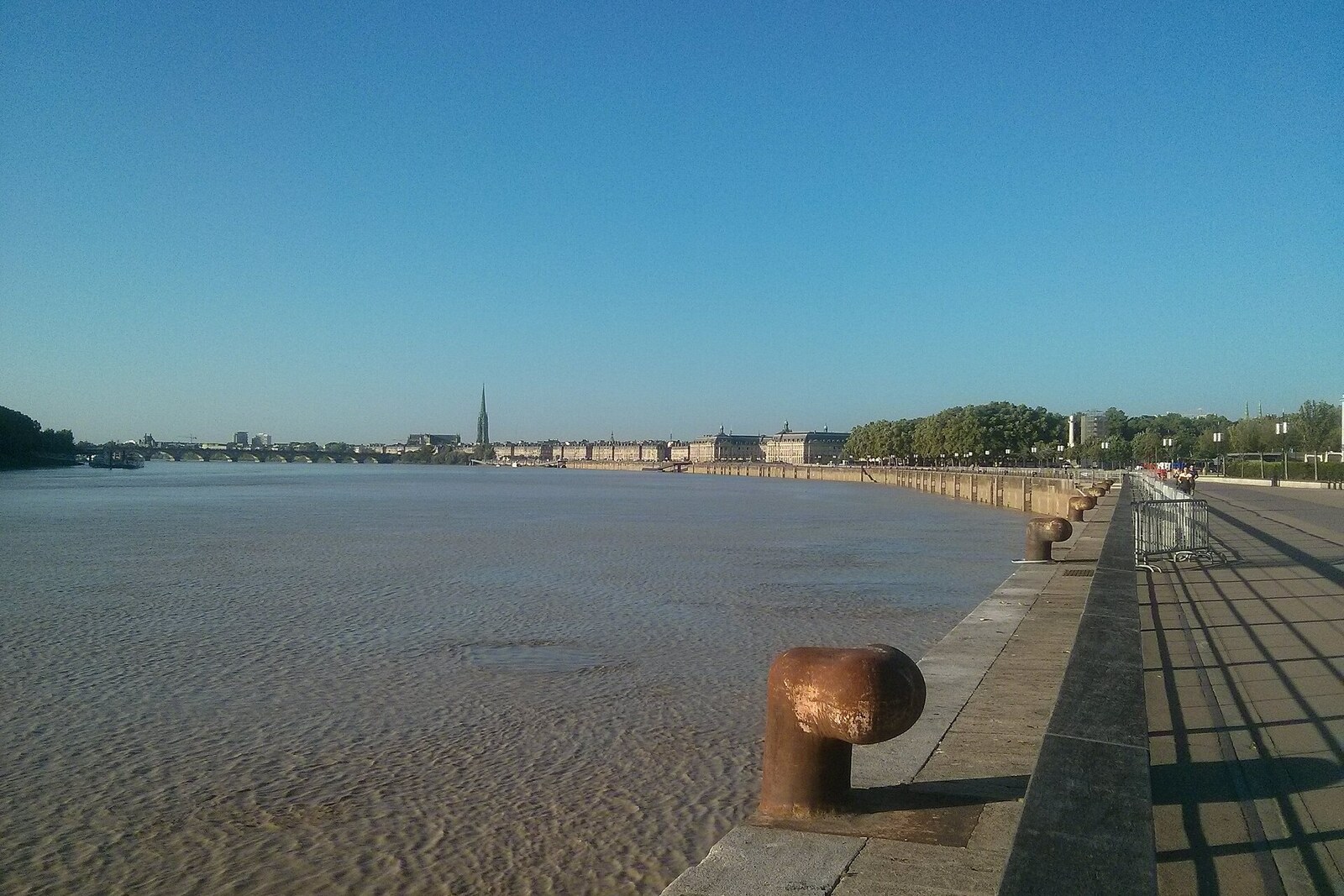
Look around first
What to notice
- Stone façades
- Wide warehouse gates
- Garonne
- Wharves
The story of the place
The name Chartrons preserves the memory of a Carthusian monastery: as early as the end of the fourteenth century, monks settled beyond the city wall, and later their name remained with the suburb. Merchants were later drawn here because they needed a strip between the city and the Garonne: offices and stocks fit behind the stone façades, while wide gates led goods out to the wharves. Grapes grew far from Bordeaux, but here barrels were received, aged, resold, and sent farther along the river to the ocean. The quay linked the warehouse, the market, and the river port.
In February eighteen fifty-nine, an unusual auction was being prepared on Quai des Chartrons. Thousands of bottles of Château Margaux, Yquem, and Clos d’Estournel, old stocks of other expensive wines, and ships belonging to the merchant house Veuve Delbos et Fils were for sale. It was the sell-off of a firm that one woman had led from here toward overseas markets for almost forty years.
Julie Delbos was widowed in eighteen oh eight. Her husband Jean-Baptiste, a wine merchant and co-owner of the family business, died, leaving her with ten children. The eldest daughter was eighteen, and the youngest son was ten months old. The family's income depended on trade: wine was bought from estate owners, resold, sent to customers, and money was advanced against future deliveries. If Julie had ceded the firm to a new partner or remarried, control of the property and contracts would have passed to a man. She rejected both marriage proposals and offers to merge the business with other merchant houses.
Before long, the name Veuve Delbos appeared on the documents. Julie answered letters herself, managed real estate, and assigned her children to different parts of the enterprise. She sent her eldest son to London, where he was to look for buyers and run the office. Later, the firm developed connections with Hamburg, Saint Petersburg, Odesa, the United States, Peru, and Chile. Julie managed everything from Chartrons.
The address was part of the calculation. On this side of the Garonne, a merchant could keep an office, wine warehouses, and access to ships close together. Julie owned several houses on the quay—numbers eight, fourteen, and sixteen in the numbering of the time. Earlier still, the family had lived at number forty-four. Deals were made behind the stone façades, and goods crossed the river on their way to the ocean. In eighteen thirty-three, the firm had at least eight ships: some sailed to New York and California, others to Guadeloupe and the Mediterranean Sea. One ship disappeared on the way to Charleston. For Julie, maritime trade did not mean an abstract turnover of goods, but ships of her own, money invested, and the risk of losing an entire cargo.
By eighteen forty-three, her house had obtained the right to sell one fifth of Château Margaux's production. That was how Chartrons worked: grapes were grown far from here, but it was the merchants here who decided which barrels to age, to whom to offer them, and under what name to send them abroad.
The quay's name itself predates the wine trade. At the end of the fourteenth century, Carthusian monks settled beyond the city wall; the people of Bordeaux called the area around their monastery Chartrons. The monks left, but the name passed to the suburb, where foreign and French merchants later moved. They needed a strip between the city and the Garonne—enough space for warehouses and direct access to river transport.
In the eighteen forties, Julie handed day-to-day management over to her sons. In eighteen forty-nine, she left Bordeaux, and a year later she died. Without her, the merchant house did not last long: liquidation had already begun in eighteen fifty-six. At the February auction, more than nine thousand bottles of Château Margaux from one vintage and over sixteen thousand from the next were put up for sale. The ships were sold along with the wine.
On this quay stood Julie Delbos's houses, office, and warehouses. Veuve Delbos et Fils and its flotilla are gone; the firm's last major operation here was the sell-off of what it had failed to preserve after the death of its mistress.
Useful on site
The quay is accessible as a public urban space; the Sunday Chartrons market follows the city schedule and depends on weather/events.
Checked: June 28, 2026. Check the official source before visiting.Listen away from the bicycle and pedestrian flow; there is no need to enter private houses.