 Guide On Map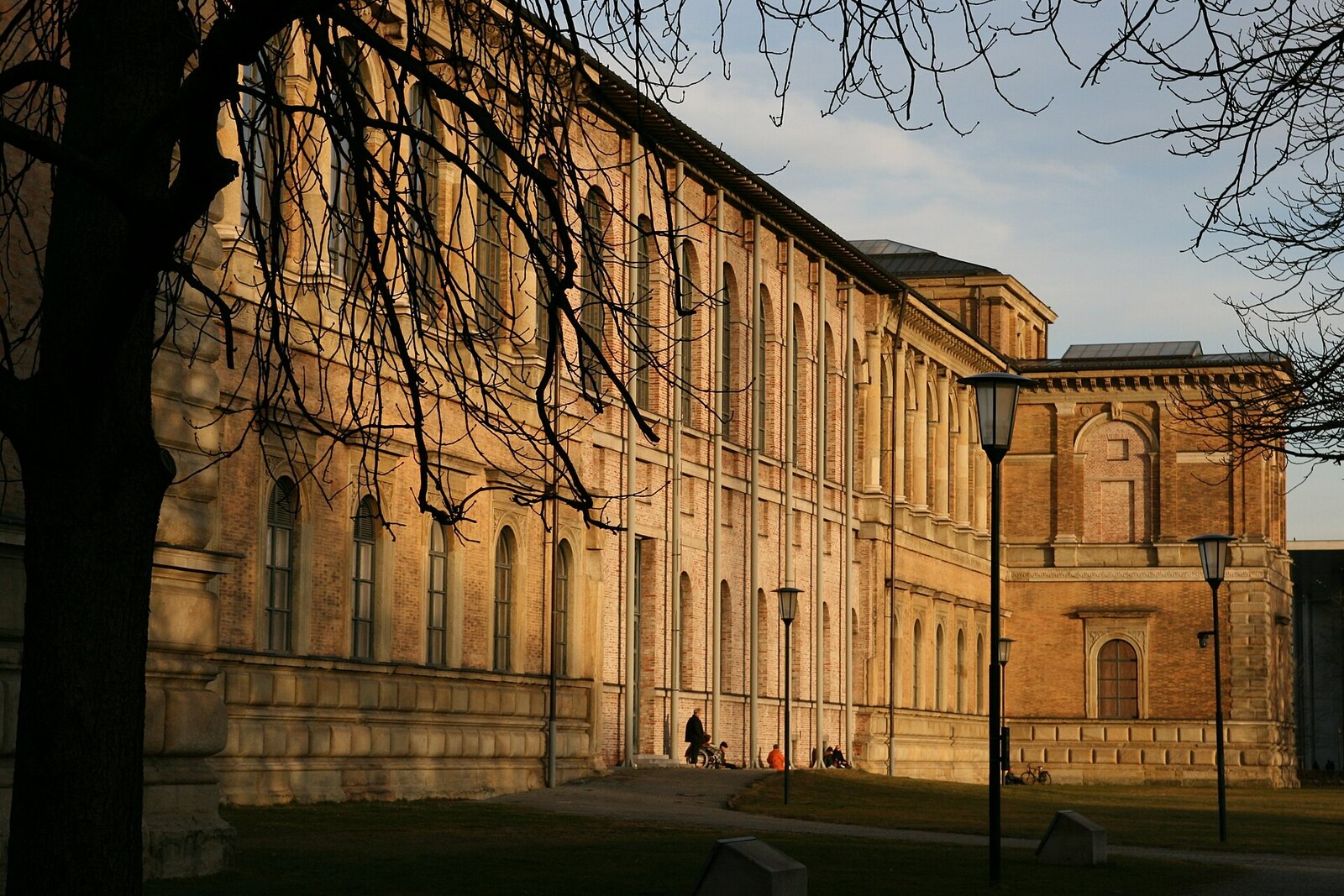

This place does not have an audited photo yet.
Selected place
Alte Pinakothek
Local name:
To see the postwar restoration that did not hide the site of destruction.
Start with 23 highlights or open the complete catalog of 153 curated places.
Highlights include Alte Pinakothek, Alter Hof, Amalienburg, Badenburg, Documentation Centre for the History of National Socialism, Frauenkirche.
We have connected important places into ready-made walks with a clear order, stories and practical details.
Start with 23 highlights, or reveal all 153 curated places.
Local name:
To see the postwar restoration that did not hide the site of destruction.
To see the postwar restoration that did not hide the site of destruction.
The courtyard shows how a dispute over the right to the crown turned Munich into a refuge for the excommunicated.
Explains how the owner's personal passion determined the design of an entire pavilion.
Shows how the elector’s return from exile took the form of a bathing palace.
To move from ceremonies in the square to the party headquarters, where the purge changed the structure of National Socialist power.
Here you will see how the city brought an enormous church as far as the vaults when ordinary funds were not enough.
To understand a restoration after which there is no return either to the fragments as found or to the nineteenth-century version.
It completes the park's water line and the story of two architects who succeeded one another.
Brings together the garden's old geometry and working water technology at a single point.
Here you will find out why the old gate looks younger than its side towers.
To compare the Nazi remaking of the square with an earlier royal reworking of uncomfortable military memory.
To see how a royal ensemble was first adapted for Nazi ceremonies, then remade again.
To begin with a private house where commissioned portraits and rescued avant-garde art created two different museum histories.
The square will show the price the city paid for its preserved houses and streets.
The finale examines the place where police stopped the putsch and where the later regime tried to rewrite its memory.
It shows which part of the unrealized Karlstadt you are walking through on your way to the palace.
It makes it possible to distinguish the first summer house from the additions of later generations.
It preserves the architectural trace of a vanished court game.
To conclude the route with a contemporary answer to an old question: how to give different collections a shared home.
Here, an unrealized district becomes a story about a production that nevertheless endured.
This stop will connect the postwar ruins with the people, photographs, and fragments that brought back the church interior.
To recognize, in today’s museum of antiquities, a former venue in the struggle for the right to show modern art.
Here, the market will prove to be the result of relocating people and vacating the hospital courtyard.
Nearest audio-route stop: Documentation Centre for the History of National Socialism — 20 m in a straight line, route Königsplatz and Kunstareal: Art, Power, Memory
Nearest audio-route stop: Documentation Centre for the History of National Socialism — 40 m in a straight line, route Königsplatz and Kunstareal: Art, Power, Memory
Nearest audio-route stop: Karlstor — 110 m in a straight line, route Old Munich: Gates, Squares, and Residences
Nearest audio-route stop: Frauenkirche — 20 m in a straight line, route Old Munich: Gates, Squares, and Residences
Nearest audio-route stop: Glyptothek — 30 m in a straight line, route Königsplatz and Kunstareal: Art, Power, Memory
Nearest audio-route stop: St. Peter's Church and Petersbergl Hill — 110 m in a straight line, route Old Munich: Gates, Squares, and Residences
Nearest audio-route stop: Munich Residenz and Odeonsplatz — 140 m in a straight line, route Old Munich: Gates, Squares, and Residences
Nearest audio-route stop: Frauenkirche — 110 m in a straight line, route Old Munich: Gates, Squares, and Residences
Nearest audio-route stop: State Collections of Antiquities — 50 m in a straight line, route Königsplatz and Kunstareal: Art, Power, Memory
Nearest audio-route stop: Lenbachhaus — 10 m in a straight line, route Königsplatz and Kunstareal: Art, Power, Memory
Nearest audio-route stop: Alter Hof — 140 m in a straight line, route Old Munich: Gates, Squares, and Residences
Nearest audio-route stop: Marienplatz (formerly Schrannenplatz) and New Town Hall — 30 m in a straight line, route Old Munich: Gates, Squares, and Residences
Nearest audio-route stop: Marienplatz (formerly Schrannenplatz) and New Town Hall — 30 m in a straight line, route Old Munich: Gates, Squares, and Residences
Nearest audio-route stop: Alter Hof — 120 m in a straight line, route Old Munich: Gates, Squares, and Residences
Nearest audio-route stop: Munich Residenz and Odeonsplatz — 80 m in a straight line, route Old Munich: Gates, Squares, and Residences
Nearest audio-route stop: Nymphenburg Palace — 30 m in a straight line, route Nymphenburg: Palace and Park
Nearest audio-route stop: Lenbachhaus — 80 m in a straight line, route Königsplatz and Kunstareal: Art, Power, Memory
Nearest audio-route stop: Alter Hof — 140 m in a straight line, route Old Munich: Gates, Squares, and Residences
Nearest audio-route stop: Lenbachhaus — 100 m in a straight line, route Königsplatz and Kunstareal: Art, Power, Memory
Nearest audio-route stop: St. Peter's Church and Petersbergl Hill — 120 m in a straight line, route Old Munich: Gates, Squares, and Residences
Nearest audio-route stop: St. Peter's Church and Petersbergl Hill — 20 m in a straight line, route Old Munich: Gates, Squares, and Residences
Nearest audio-route stop: Documentation Centre for the History of National Socialism — 130 m in a straight line, route Königsplatz and Kunstareal: Art, Power, Memory
Nearest audio-route stop: Karlstor — 70 m in a straight line, route Old Munich: Gates, Squares, and Residences
Nearest audio-route stop: Pinakothek der Moderne — 20 m in a straight line, route Königsplatz and Kunstareal: Art, Power, Memory
Access and construction years come from OpenStreetMap and Wikidata, snapshot of August 25, 2026: database data, not a check on the ground.