 Guide On Map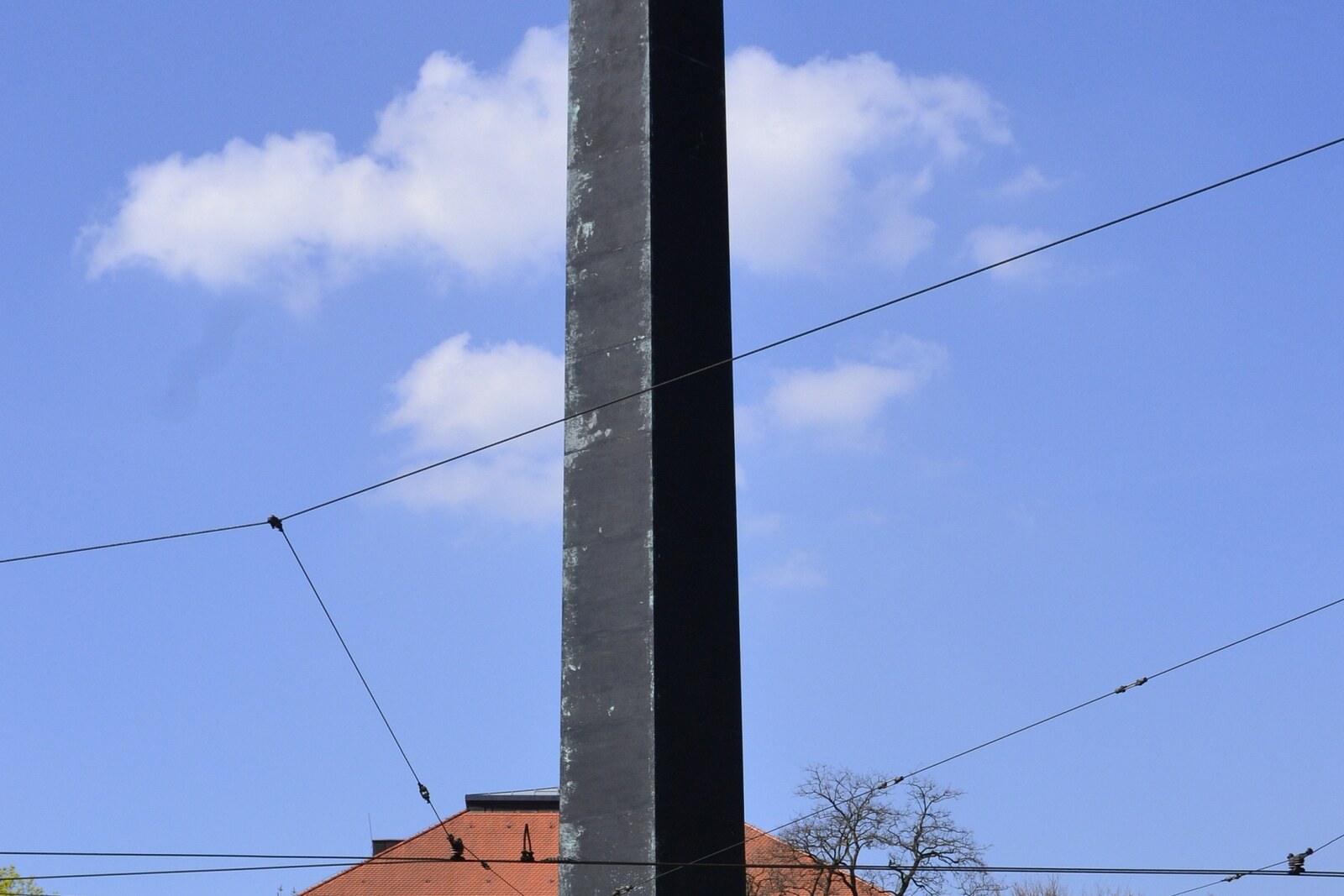
Look around first
What to notice
- Black bronze plates
- Inscription about the liberation of the fatherland
- Inscription bearing Ludwig's name
The story of the place
Karolinenplatz appeared in eighteen oh nine, when King Maximilian I Joseph of Bavaria was expanding Munich beyond its old fortifications. He named the new district Maxvorstadt after himself, and dedicated its round intersection to his second wife, Caroline of Baden, Queen of Bavaria. The name does not commemorate any deed of Caroline's: her husband wrote his family into the plan of the new capital.
The black obelisk at the center of the square appeared later. The inscription on its base dedicates the monument to thirty thousand Bavarians who died in Napoleon's Russian campaign. In eighteen twelve, Bavaria was allied with him and sent around thirty-five thousand soldiers to Russia. About five thousand returned.
One of the two Bavarian units was commanded by General Bernhard Erasmus von Deroy, a career soldier who was to lead his men through the campaign as part of the Grande Armée. He was mortally wounded near Polotsk. Already in September, while the campaign was still continuing, Bavarian officers and rank-and-file soldiers agreed to erect a monument in Munich to Deroy and his comrades. They had lost their commander and wanted to preserve the name of the man alongside whom they had risked their lives. They were unable to raise the money, and the plan was postponed.
After Ludwig I of Bavaria ascended the throne, he returned to this project but changed whom it was for. Instead of the monument conceived by soldiers for Deroy and his fellow servicemen, the king commissioned a monument to the entire fallen army. On October eighteenth, eighteen thirty-three, Ludwig himself unveiled the obelisk at Karolinenplatz.
By then, the past required an explanation. A year after the disastrous campaign, Bavaria left its alliance with Napoleon and joined his opponents. Ludwig ordered this inscription on the obelisk: “And they died for the liberation of the fatherland.” The word “they” linked the soldiers who died on Napoleon's side with the subsequent struggle against him. The king timed the opening date to coincide with the anniversary of the Battle of Leipzig, which had become a symbol of Napoleon's defeat.
Ludwig chose the location as well. Brienner Straße and Barer Straße, named after battles in which Bavarians had already fought against the French army, intersect here. Inside the obelisk is brick masonry; on the outside, it is covered with darkened bronze plates. One side of the base bears an inscription about the thirty thousand dead, another about liberation, and a third carries Ludwig's name. Deroy's name is not there: from the first plan, the form of the obelisk remained, but the man for whom his comrades had intended to erect it disappeared.
Useful on site
A city route stop; if you plan to go inside, check the schedule and visiting rules on the venue's official website.
Checked: date not specified. Check the official source before visiting.Stop at the edge of the square before approaching the center: traffic around the obelisk requires attention. The buildings matter as historical addresses, not as places to enter.